Talha and Reform
Region & History
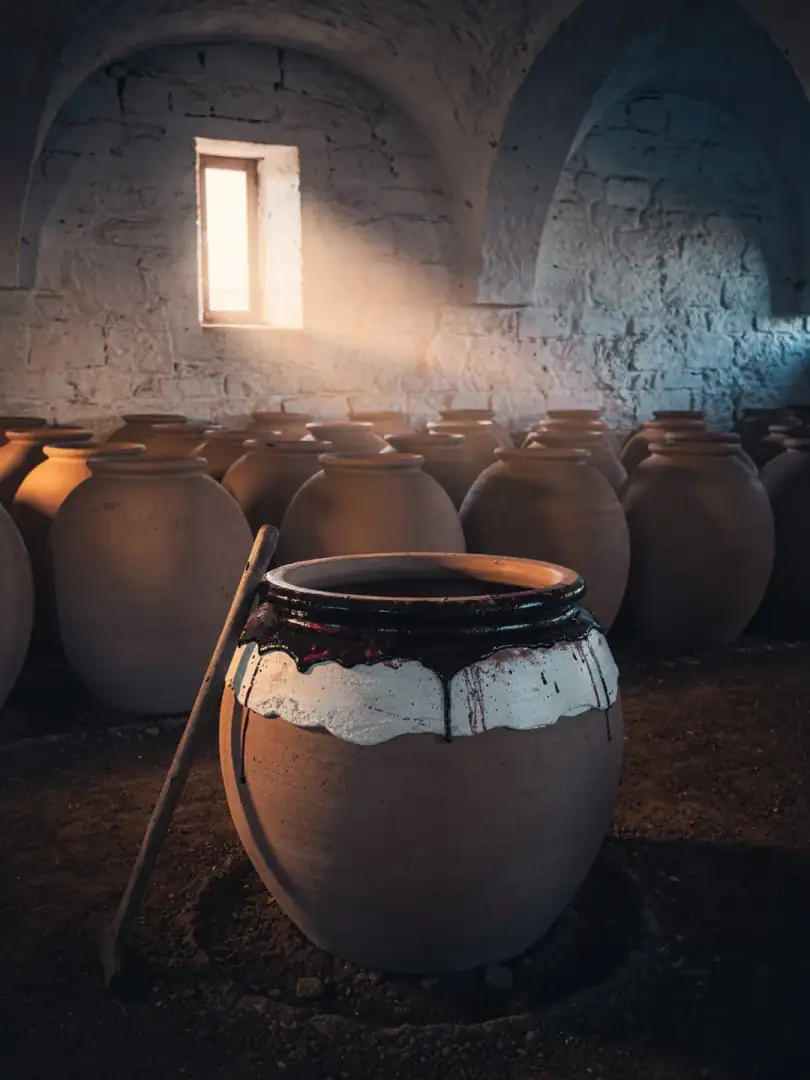
The Tartessians planted vines here long before the Romans arrived. This ancient people lived in what is now southern Spain and southern Portugal, and winemaking was already established in the Alentejo when the Romans came. The Romans expanded it further; they shipped wine from here to Rome, and they brought with them a vessel that still defines the region today: the talha. This is a bulbous clay vessel in which grapes ferment along with their skins and stems. Inside, it was sealed with pine resin so the porous clay wouldn't absorb the wine. Two thousand years later, the same shape still stands in some cellars.
In the eighth century came the Moorish invasion, which pushed winemaking back, though it never disappeared entirely. After the Reconquista, it flourished again. In the sixteenth century, the wines from Évora were considered the best in the country. Then came a crisis from within: the Estado Novo, Portugal's dictatorship until 1974, favored wheat over wine in the twentieth century. Vines retreated to the poorer soils at the edges of the fields.
Only late did the region find its own order. In 1988, the Alentejo's first appellations were officially regulated. A year later came the CVRA, the regulatory body that still oversees origin and quality today. In between came the Carnation Revolution of 1974. It brought a land reform in 1975: farmworkers occupied more than a million hectares, under the slogan that the land belongs to those who work it. Cooperative wineries emerged from this movement; with simple, reliable wines at fair prices, they built the Alentejo's reputation throughout Portugal. The effects are still felt today.
Not every estate survived the reform unscathed. Esporão winery was nationalized in 1975. It wasn't returned to its owners until 1982, and the first vintage under their old, new leadership went on sale in 1985. A little later, in 1990, João Portugal Ramos bought his first five hectares near Estremoz. Until then, he had only been a consultant for other cellars; now he began bottling under his own name. Within a few years, a region of cooperatives also became one of individual estates, though the old clay form never vanished from the cellars.