Acidity Meets Tannin
Tasting
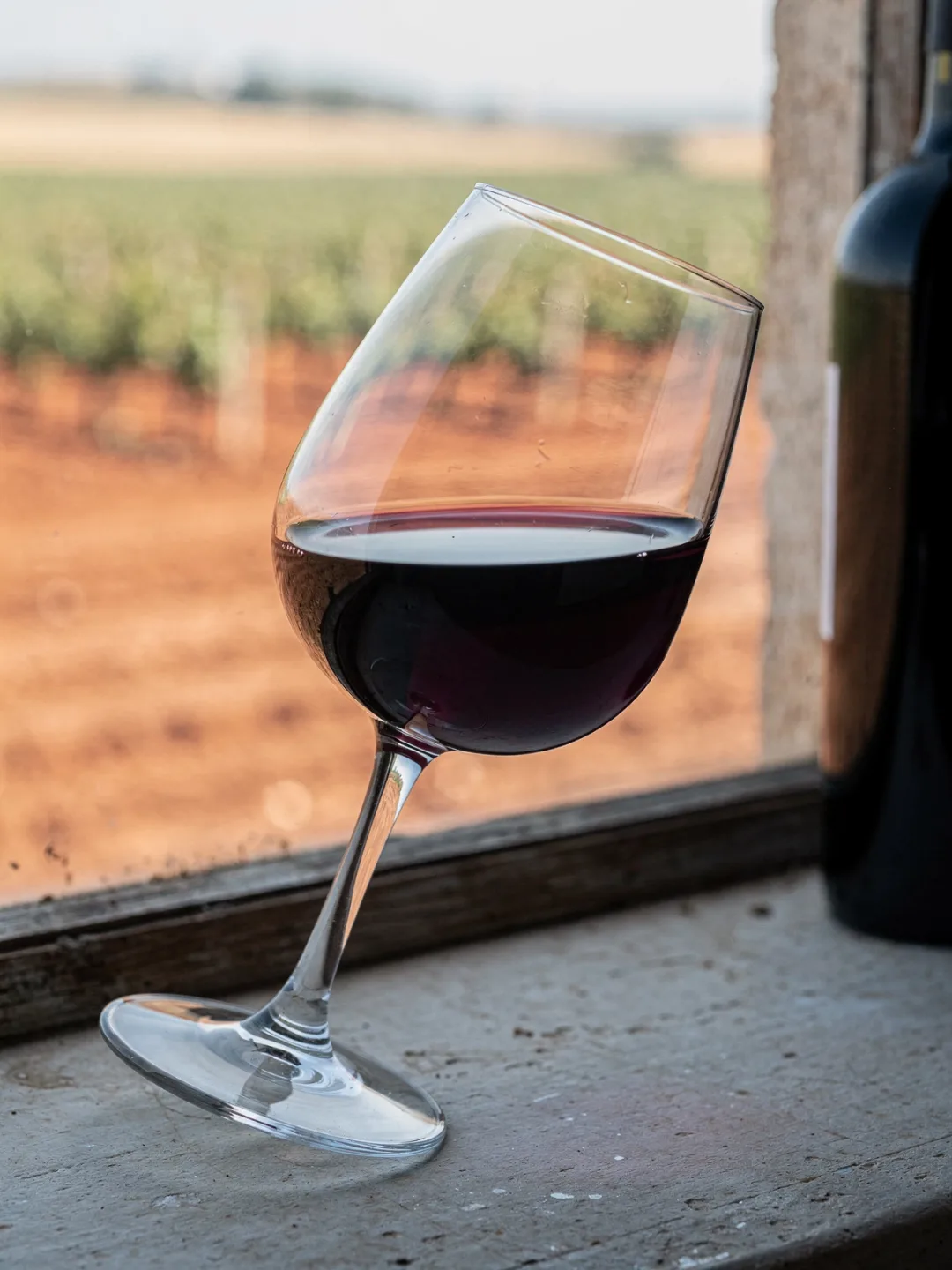
Young Baga reveals its origins right in the color: deep, almost violet ruby, darker than most Portuguese red wines. After ten or fifteen years, this fades into a muted brick tone. It's precisely at this stage that the comparison to Barolo makes sense. Both need patience before revealing their true character.
On the nose, dark forest berries dominate at first, often with an earthy, almost wild note underneath. After a few years in the cellar, leather, dried plums, and a hint of tobacco emerge, sometimes with a touch of smoke. Smell it for the first time, and you'd rarely guess it's from Portugal — the aromatics recall northern French or Piedmontese red wines more than anything else.
In the mouth, Baga is an exercise in contrasts. The acidity immediately makes your mouth water along the sides of the tongue, while the tannin simultaneously drags a dry, almost dusty sensation across the gums. Together, both make the wine austere when young. It's exactly this structure that carries it through twenty or thirty years, provided there's enough fruit behind it to fill out the frame.
Bairrada's white wines, made from Bical or Maria Gomes, taste different: paler, with citrus and stone fruit aromas, but likewise marked by striking acidity, a family trait of the whole region. With espumante, the bead is what counts: it should be fine and persistent, a sign of long time on the lees. Coarse, quickly vanishing bubbles, on the other hand, hint at shortcuts taken in the cellar. Try a red espumante made from pure Baga once — a rarity even here — and you won't forget it easily.