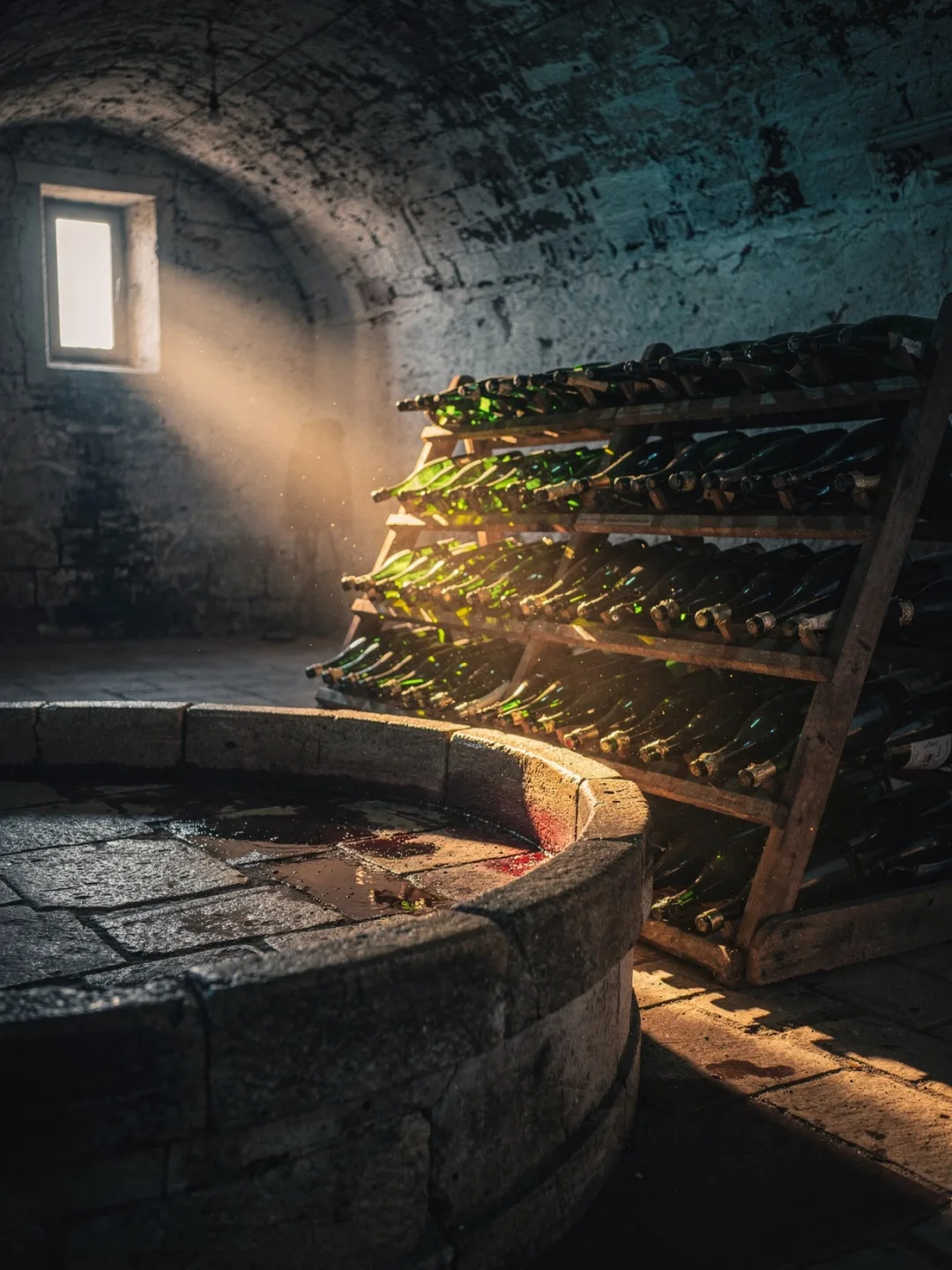
Lagares and Second Fermentation
Production
Traditionally, Baga was fermented with stems included, known as engaço, and trodden by bare feet in stone lagares. The result: wines of brutal harshness, tannin you could still feel in your mouth years later. It wasn't until 1985 that winemaker Luís Pato began destemming the grapes before fermentation. He was also the first to bring new French oak into the region. This double innovation transformed how Baga tastes today, even though some producers deliberately stick to the old method.
For espumante, the law allows no shortcuts: only the classic method of bottle fermentation, the same second fermentation that builds pressure in Champagne, may be called Bairrada espumante. The bottle must then rest for at least nine months before the wine can be sold. This rule has stood since 1979 and no one has since questioned it. For the base wines, the additional method of bica aberta applies: an open run-off, where the must drains away without extended skin contact, keeping color and tannin out.
Red wine has it harder. It may not be bottled until at least eighteen months after harvest, one of the longer mandatory ageing periods among Portugal's designated wine regions. White wine and rosé have no such limit and can be bottled as early as the start of the new wine season. The same logic applies here as with the soil: Baga needs time to soften its tannin, and the law gives it that time whether the winemaker wants it or not.
There are limits on quantity too. No more than fifty-five hectoliters per hectare are allowed for red wine, seventy for white, rosé, and espumante. The must must also reach at least ten percent natural alcohol before fermentation even begins. Exceed these limits, and you lose the right to the appellation for the entire harvest. It's an incentive that has kept Bairrada's vineyards disciplined for decades.