Posta & Cabrito
Wine & Food
What people eat in the Douro Valley comes from hard work on the hillside, not from a menu. Trás-os-Montes, the region surrounding the river, was long one of the poorest areas in Portugal. Its cuisine has stayed hearty. Expect plenty of pork, plenty of beans, and little fuss.
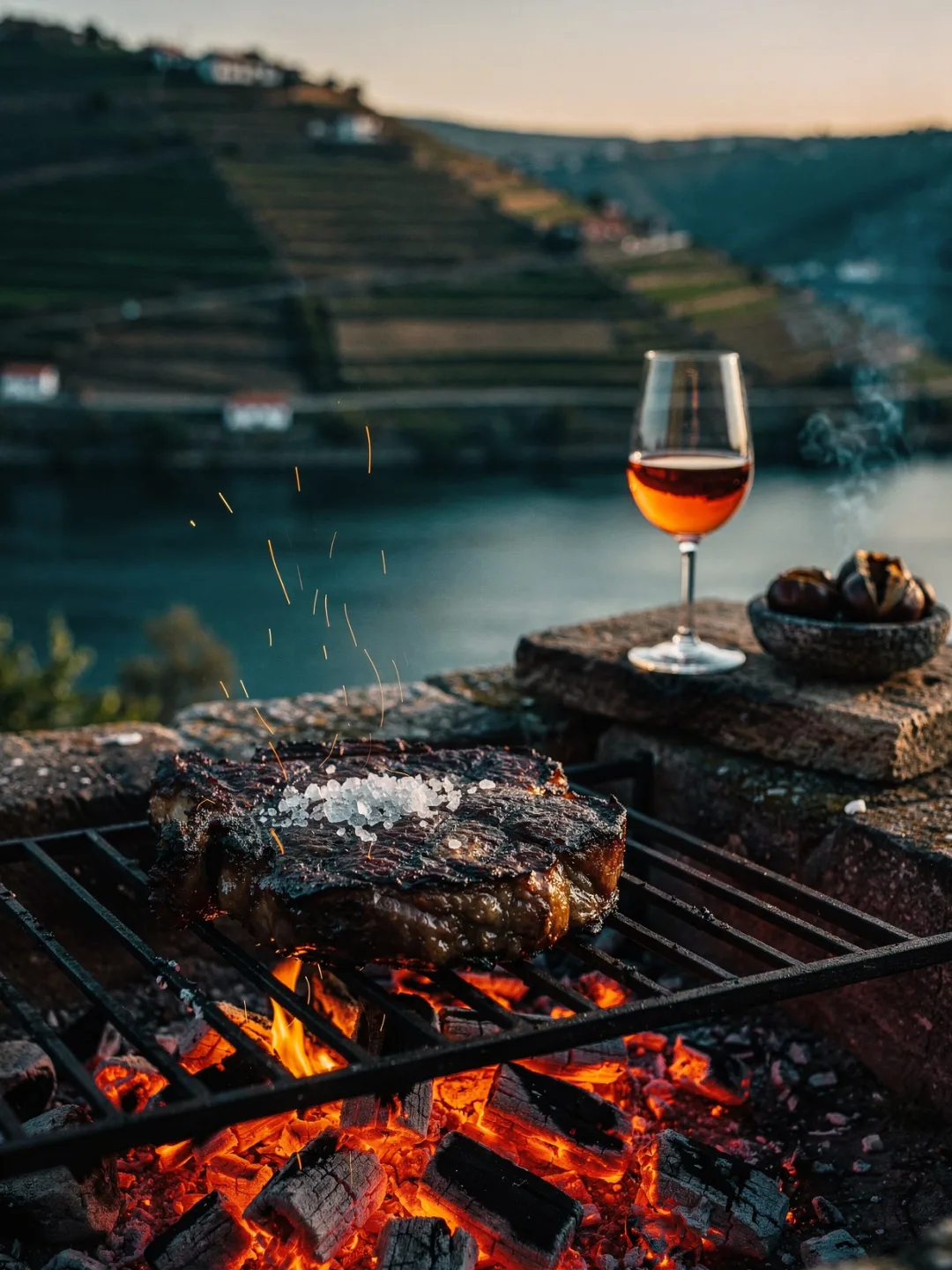
Posta mirandesa is a thick cut of beef from the protected Mirandesa breed, barely seasoned, grilled just briefly and hot so the inside stays essentially raw. It pairs well with a young, powerful Douro red made from Touriga Nacional and Touriga Franca. Its tannin cuts through the fat, much like a squeeze of lemon on a schnitzel, making the rich meat feel lighter in the mouth.
Cabrito assado, oven-roasted young goat, is often marinated here a day in advance with white wine, paprika, bay leaf, and plenty of garlic before it roasts for hours alongside potatoes and chestnuts. This spiced, fatty meat calls for a red wine with substance. A Reserva with a few years of barrel aging carries the spices along instead of fading beside them.
Things get even heartier with feijoada à transmontana: red beans with ear, trotter, snout, sausage, and ham from the pig, all slow-braised for hours. A wine that's too refined or too tannic feels out of place here. A simpler, fruitier Douro red suits it better, carrying the fat without competing for attention itself.
At the end of the meal, a bowl of almonds or a piece of dark chocolate often appears on the table. This is exactly what an old Tawny was made for. Its notes of walnut and dried fig meet the bitterness of the chocolate without the wine tasting sweeter than it actually is. Sugar in a dish, by contrast, makes a dry wine taste thin and sour — which is why dessert in the Douro almost always calls for a Port that's sweeter than the dessert itself.