Vintage Alongside Tawny
Tasting
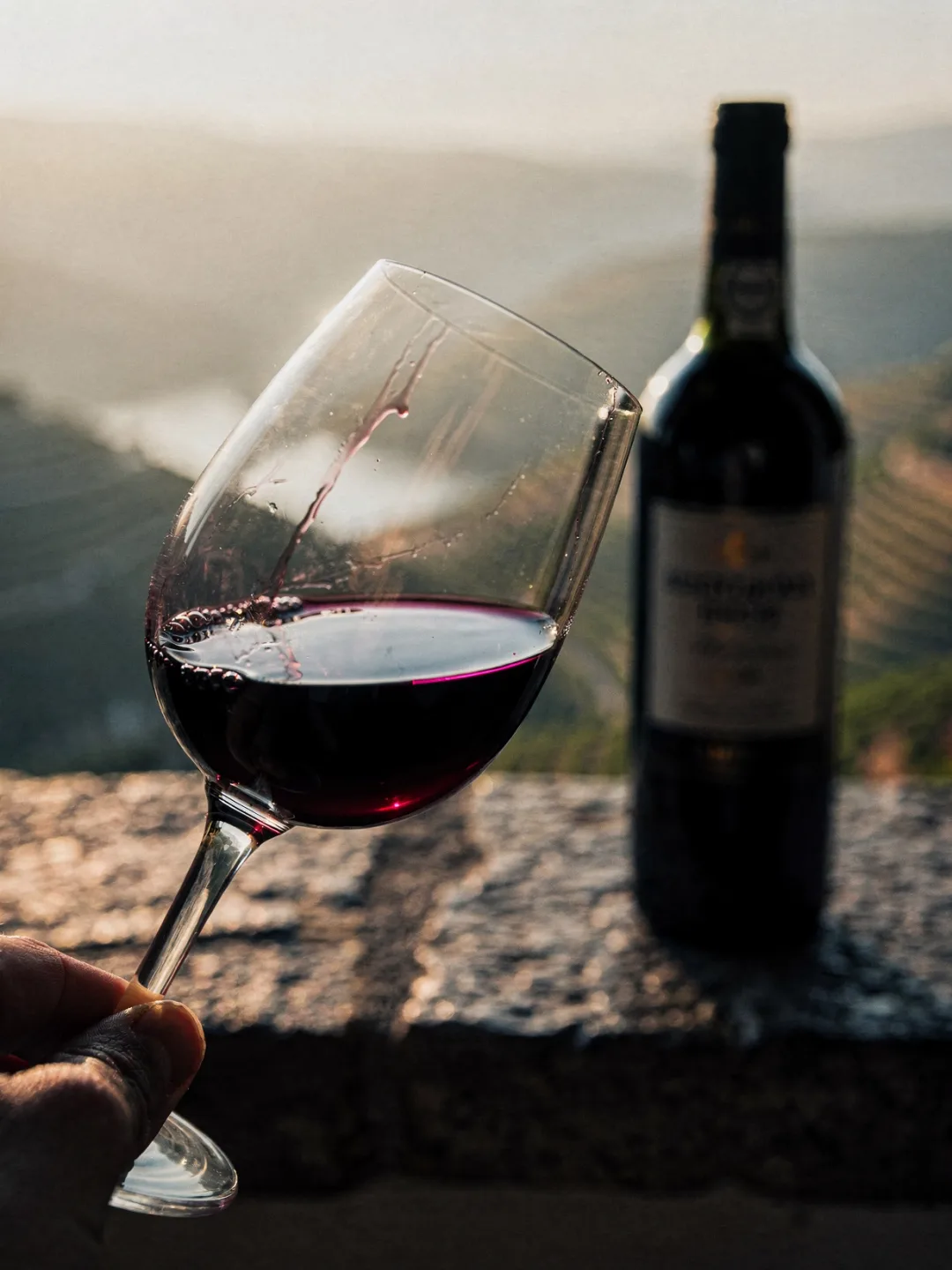
Hold a glass of young Vintage Port up to the light, and you can barely see through it. The color is nearly black with a violet rim, dense from the small, thick-skinned berries of Touriga Nacional and Touriga Franca. A twenty-year-old Tawny shows the exact opposite: amber to reddish-brown, translucent, because it matured not in the bottle but in the barrel, where oxygen has slowly been working on it.
On the nose, the two worlds differ almost completely. The young Vintage smells of black cherry, blackberry, and a hint of violet. This is the signature of Touriga Nacional, which comes through even in small proportions. The old Tawny, by contrast, has long since traded fruit for dried fig, walnut, and caramel. Add to that a touch of rancio, that slightly oxidative note that only long, controlled barrel aging can produce.
On the palate, plenty of sweetness meets plenty of alcohol. What makes the difference is the acidity. Without it, a wine with around twenty percent alcohol would feel heavy and unwieldy. The pronounced residual sugar makes it even more cloying. The cool nights in the Douro Valley preserve this acidity, even when the grapes ripen under temperatures above forty degrees Celsius during the day. In the Vintage, there's also a firm, youthful tannin that still needs decades to soften. In the Tawny, that very tannin has long since become smooth.
In the end, count how long the flavor lingers after you swallow. With a good Vintage, twenty seconds or more is not unusual, and this length simply can't be faked in the cellar — a cellar master can add sugar, color, and oak notes, but not finish.
Anyone who tastes a Vintage, a Tawny, and a dry Douro red from the same quinta one after another is tasting the same valley in three different guises. It's a comparison well worth making. The Vintage shows the raw power of the schist undiluted, the Tawny shows the patience of the barrel, and the dry red shows how these grapes taste without fortification at all — tighter, drier, but with the same dark fruit at its core.