Seafood & Queijada
Wine & Food
Fish shapes the cuisine along this coast more than any meat. From Ericeira to Cascais, the fishing boats dock just a few kilometers from the vineyards, and whatever they catch lands on the plate the very same day. Wine follows suit. Small wonder, then, that the region's three historic wines respond precisely to this rhythm.
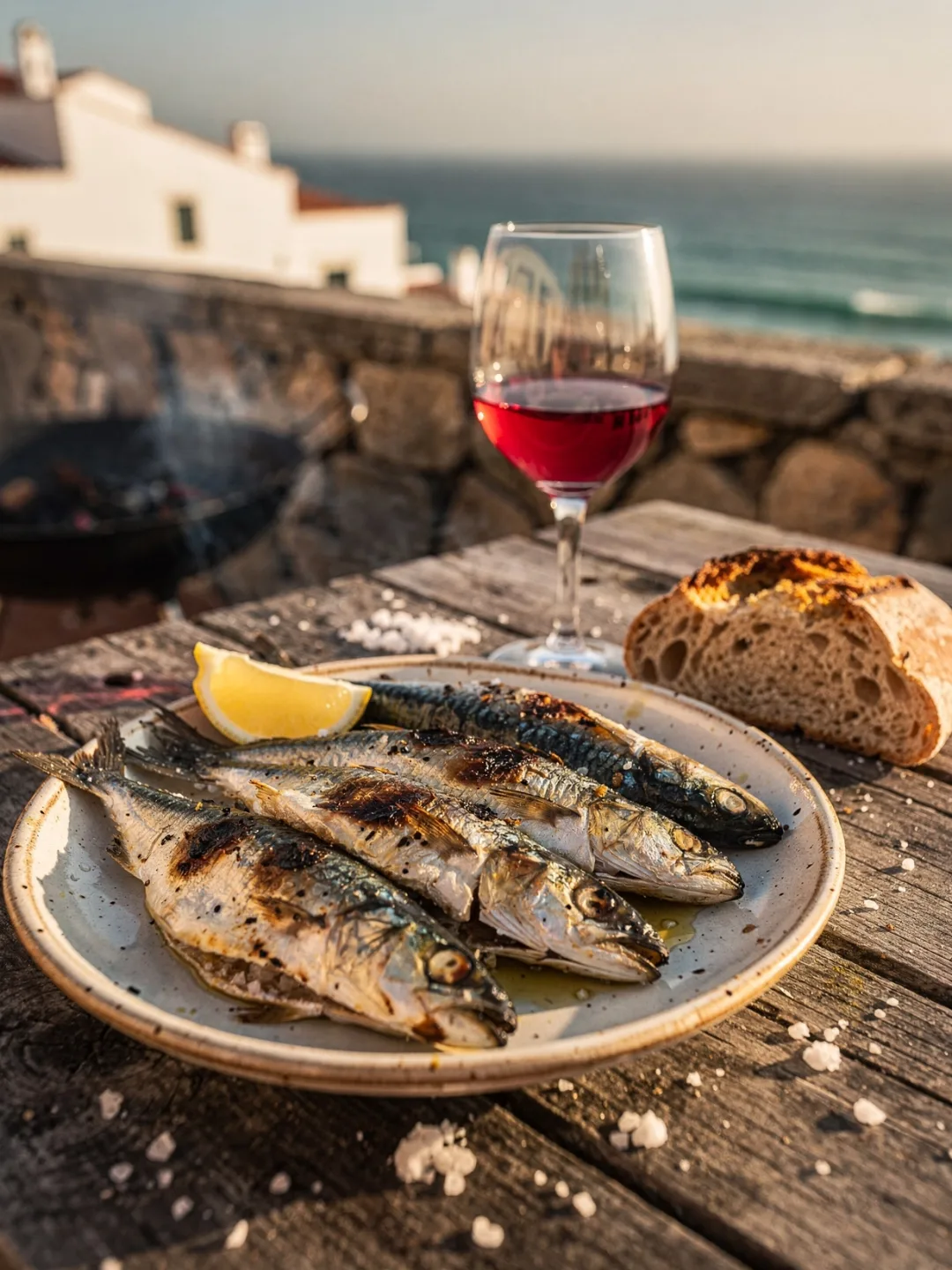
Grilled sardines, found on grills up and down this coast throughout late summer, pair paradoxically with the most rugged wine in the lineup: Ramisco. There's really no other way. Its acidity cuts through the fish's richness, its tannin binds the oily aftertaste, and its restrained fruit never competes with the smoke from the grill. A soft, fruit-forward red would simply be lost alongside sardines.
Amêijoas à Bulhão Pato, clams steamed with garlic, coriander, and white wine, call instead for Arinto from Bucelas. The two meet as equals. Its acidity mirrors the sauce's own brightness rather than fighting it, and its citrusy core lifts the coriander without overwhelming it. Serve the same clams with a rich, oak-driven white, and all the dish's delicacy disappears.
For dessert, Sintra, barely ten kilometers from Colares, offers two sweets built entirely around egg and almond: the small queijada with its crisp crust, and the travesseiro, a puff pastry filled with almond cream. Sweetness meets sweetness here. Both demand a wine at least as sweet as they are, or it will taste thin and sour by comparison. Carcavelos, with its notes of almond and caramel, seems custom-made for them.
Anyone who has tried these three pairings understands why Lisbon's historic wines were never dreamed up in a lab. They grew up alongside this very fish, these very clams, and this very pastry, kitchen and cellar sharing the same narrow strip of coast.