Ruby, Lemon, Amber
Tasting
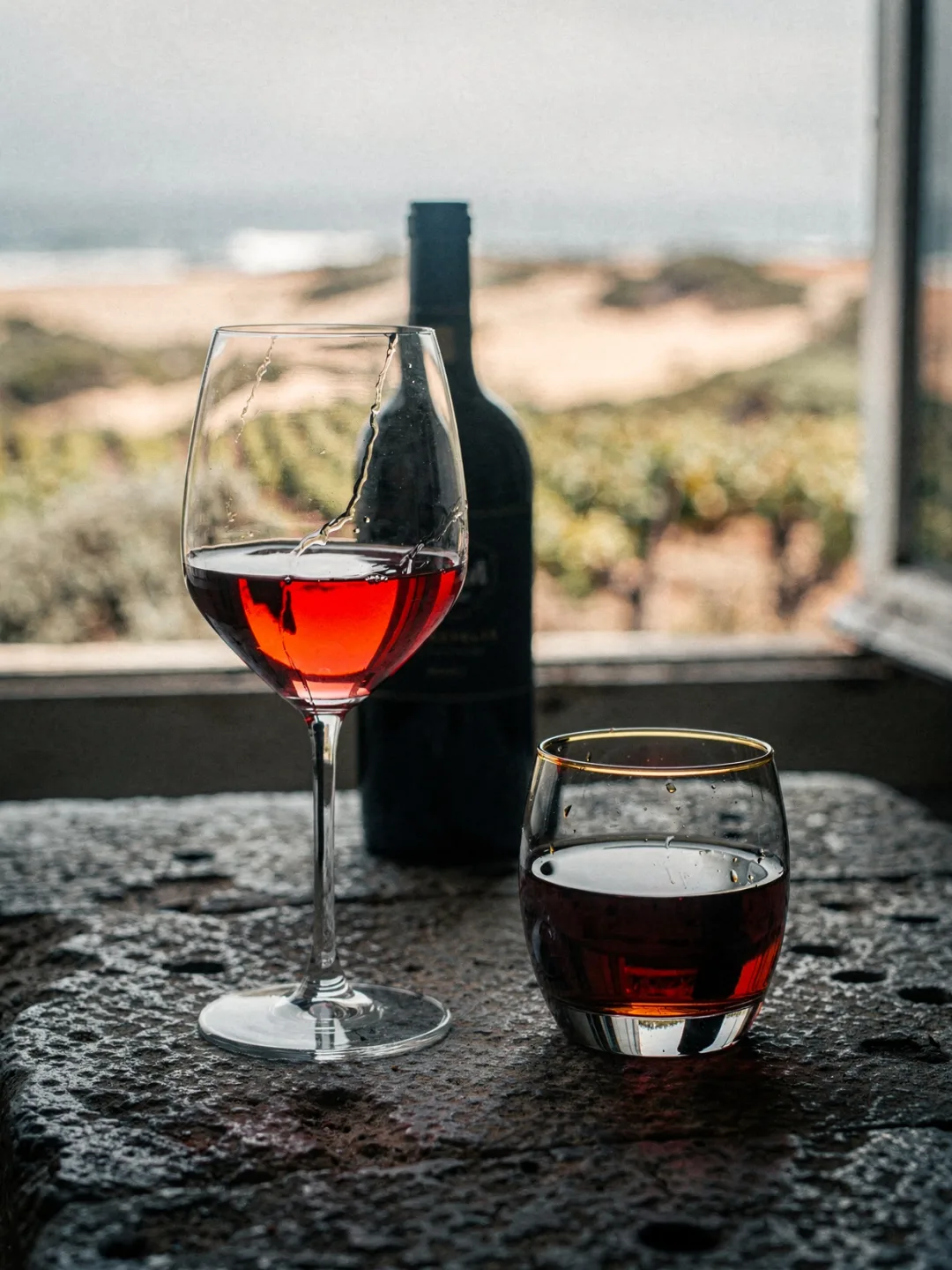
Hold three glasses from this region up to the light, and you'll see instantly how differently a single coastline can taste. Color already reveals a great deal. Ramisco from Colares stays pale, almost translucent ruby-red with brownish highlights. Arinto from Bucelas shines pale lemon-yellow. Carcavelos, by contrast, gleams amber to topaz, almost like honey in the glass.
On the nose, young Ramisco shows mostly fruit and acidity, with a peculiar note of cedar resin and dried fruit. After years in barrel and bottle, the picture shifts entirely: mushroom, dry leaves, a hint of leather emerge as the fruit recedes. On the palate the tannin remains strict, almost furry, combined with an acidity you'd hardly expect at only eleven percent alcohol by volume.
Arinto, by contrast, smells of lemon and green apple, with a mineral undertone reminiscent of wet pebbles. Its acidity sits along the sides of the tongue and gets the saliva flowing instantly. On good days you can even pick out something salty, an echo of Bucelas' proximity to the sea. What's surprising: a well-aged Arinto from Bucelas still shows fruit and structure after ten or even twenty years, despite seeming so lean and sharp in its youth.
Sweetness doesn't dominate everything here. Carcavelos smells of roasted almonds, caramel, and dried fruit, sometimes honey, sometimes cloves. Despite its sweetness, enough acidity remains in the background to keep the wine from feeling cloying, a balance that earns it its reputation as an elegant sweet wine. On the palate, the flavor lingers for a long time, often half a minute or more.
Three wines, one single coastline, barely thirty kilometers between them. Anyone who tastes Colares, Bucelas, and Carcavelos in succession learns more about Lisbon than from any history book.