Ramisco & Arinto
Grape Varieties
Drive through the vineyards between Alenquer and Torres Vedras and you'll mostly see one single grape: Castelão. It supplies the everyday wine here, robust and generous in yield, with dark fruit and firm tannin, growing across nearly the entire region. On its own, though, it doesn't explain Lisbon. Three tiny zones at the edges of the region grow grape varieties found almost nowhere else.
Tinta Miúda accompanies Castelão in the same middle belt, in Alenquer, Arruda, and Torres Vedras, but demands more warmth and a long summer. Its berries are small and dark blue, the skin thick enough for deep color and plenty of tannin. It produces wines with high acidity and a velvety texture that can age for years in oak before they're even ready to drink. Patience is its nature.
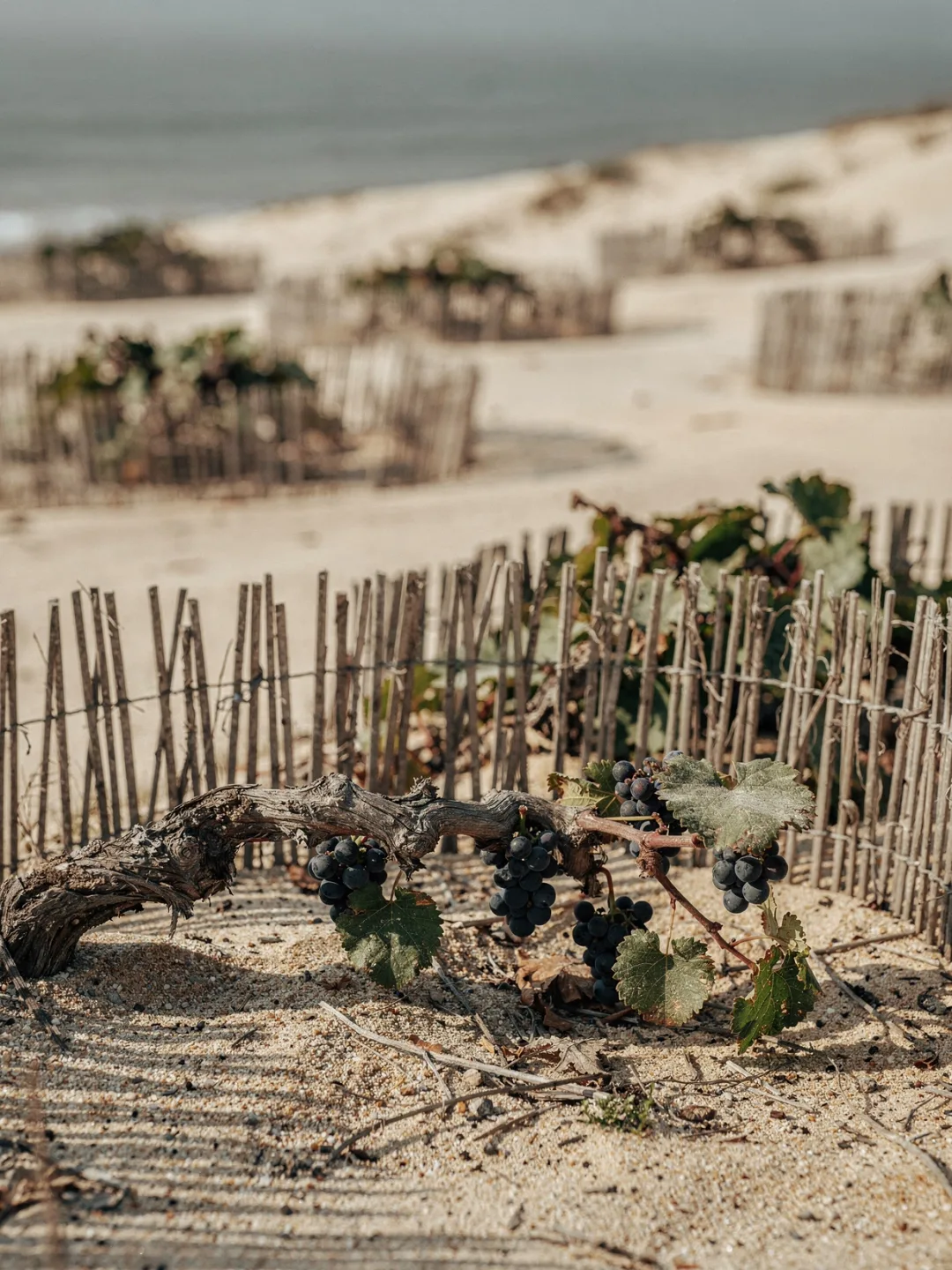
Colares, on the coast, is a different story altogether, where a single variety called Ramisco determines almost everything: a red Colares must contain at least eighty percent of it. Ramisco ripens late, yields little alcohol, only around eleven percent by volume, yet brings extreme acidity and tannin. Even so, the color in the glass remains surprisingly pale, almost translucent, a contradiction that surprises anyone tasting the grape for the first time. Today only about twenty hectares still grow it, ungrafted in the sand. This wine needs nothing more.
White wine has its heroes too. On the same coast, Malvasia de Colares provides the white, thick-skinned, semi-aromatic, salty on the finish, with a minimum of eighty percent required in white Colares. Further east, in Bucelas, Arinto takes on the same role, with a minimum requirement of seventy-five percent. It brings high acidity, aromas of lemon and green apple, and an ability to age that white grapes are rarely credited with.
Carcavelos remains the strangest case. Its regulations allow up to nine different varieties in a single wine: among the reds, chiefly Castelão and the little-known Preto Martinho; among the whites, Galego Dourado, Ratinho, and again Arinto. This diversity was once everyday practice along the whole coast. Today it survives almost only in this one sweet wine.