Stopped with Brandy
Production
Moscatel de Setúbal isn't a wine that simply ferments straight through. After harvest, the must from Moscatel Graúdo begins fermenting like any white wine, until, midway through fermentation, Aguardente vínica is added — a high-proof grape spirit at 52 to 86 percent alcohol by volume. The yeasts die off, some of the grape sugar survives, and that's exactly where the sweetness comes from.
What happens next sets Setúbal apart from almost every other sweet wine in the world. The skins stay in the already-fortified wine for several months. Often this stretches from harvest well into winter, five to six months in total. For Port, that would be unthinkable — there, juice and skin are separated almost immediately. Here, the alcohol is meant to draw the aromatic compounds out of the skin that would otherwise never reach the wine.
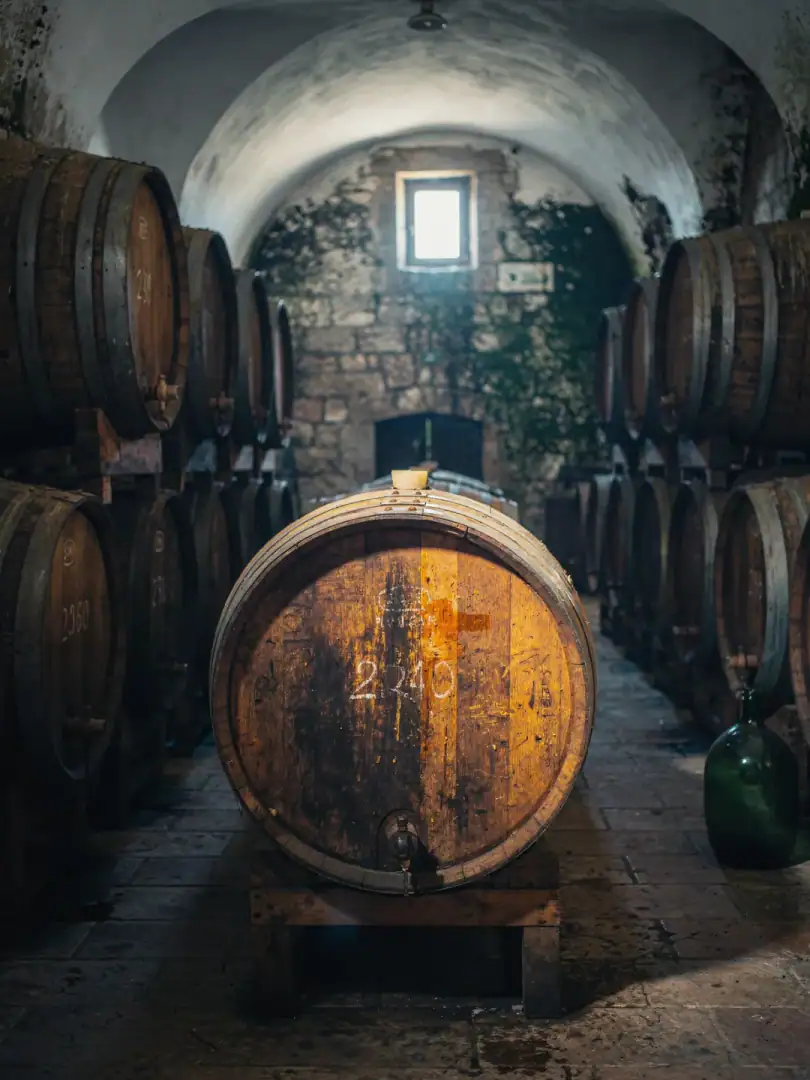
Only after that does pressing happen. The wine then ages for at least a year in used wooden barrels, often considerably longer, before it can even go on sale, because nobody here wants new oak — it would bury the grape's floral fragrance under vanilla and toasty notes that no one is looking for in this wine.
In the end, an age statement lands on the label: five, ten, twenty, sometimes thirty or forty years. Often the term Superior is added for the longer-aged tiers. A five-year Moscatel tastes of fresh orange blossom. After twenty years in barrel, barely any of that remains, replaced instead by caramel, roasted nuts, and dried fruit.
Castelão from Palmela, by contrast, follows an ordinary red-wine path: ferment the must, press, age. This usually happens in large used barrels or concrete, without fortification and without any mandated minimum aging. Two production paths, the same region, less than a hundred kilometers apart. One halts nature mid-course; the other simply lets it run its course.