Following the Moscatel
Tasting
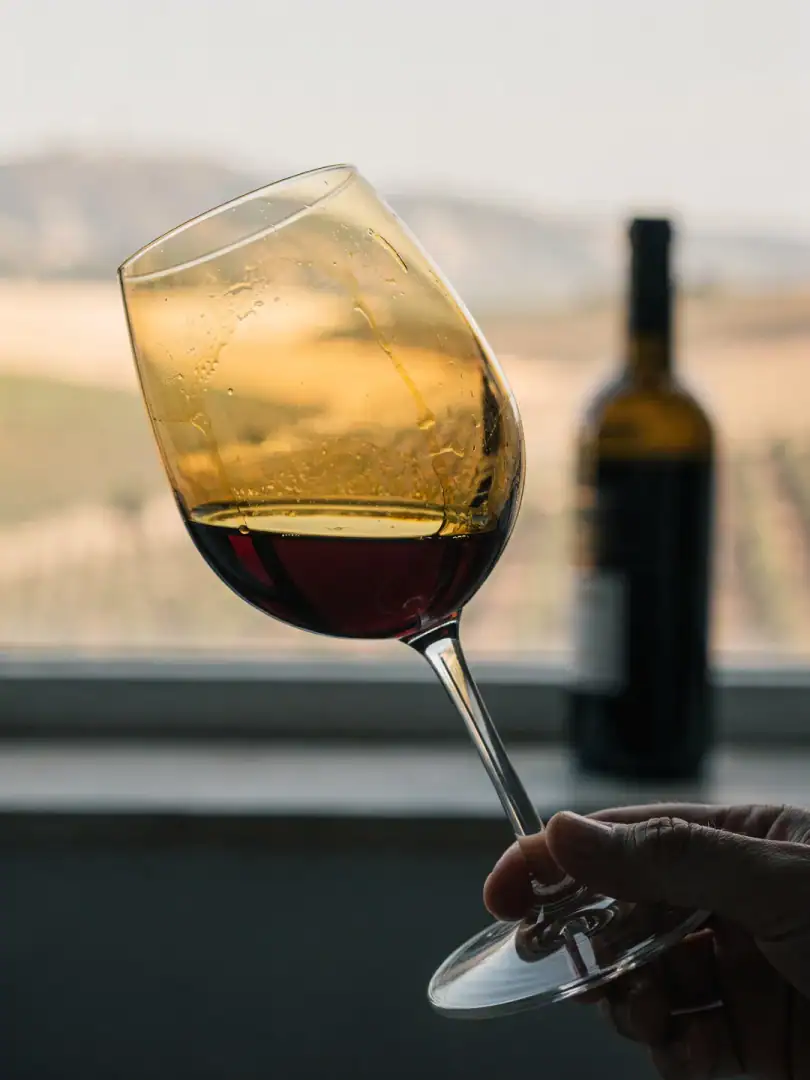
Hold a glass of Moscatel de Setúbal against a bright surface. A young, five-year wine glows golden-yellow with a hint of green at the rim. A twenty-year-old, by contrast, shows deep amber, almost mahogany, with no trace of green left. Color alone reveals how many years in barrel lie behind the wine.
Smell first, without swirling. In young vintages, orange blossom hits the nose immediately, along with a touch of raisin and a hint of honey. These are the classic aromas of Moscatel Graúdo, which hardly any other grape variety expresses so distinctively. Now swirl, and wait a moment.
With an old Moscatel, the picture changes completely. Caramel, roasted nuts, dried fig, and a hint of tobacco take the place of orange blossom, and experts call this slow, oxidative character rancio — the same word used for very old Sherry, produced by decades of controlled contact with air in the barrel.
On the palate, pay attention to the balance between sweetness and acidity. A good Moscatel never tastes merely sweet. It's carried by an acidity that doesn't mask the sugar but holds it together — without it, the wine turns sticky and tiring after just the second sip. It's exactly this acidity that keeps some bottles fresh for forty years and beyond.
For comparison, it's worth setting a glass of Castelão from Palmela alongside. Where Moscatel stays golden and sweet, Castelão shows deep cherry-red color, firm tannin, and ripe, dark fruit — from the same peninsula, the same climate, but sharing nothing except their origin.