Campo versus Charneca
Tasting
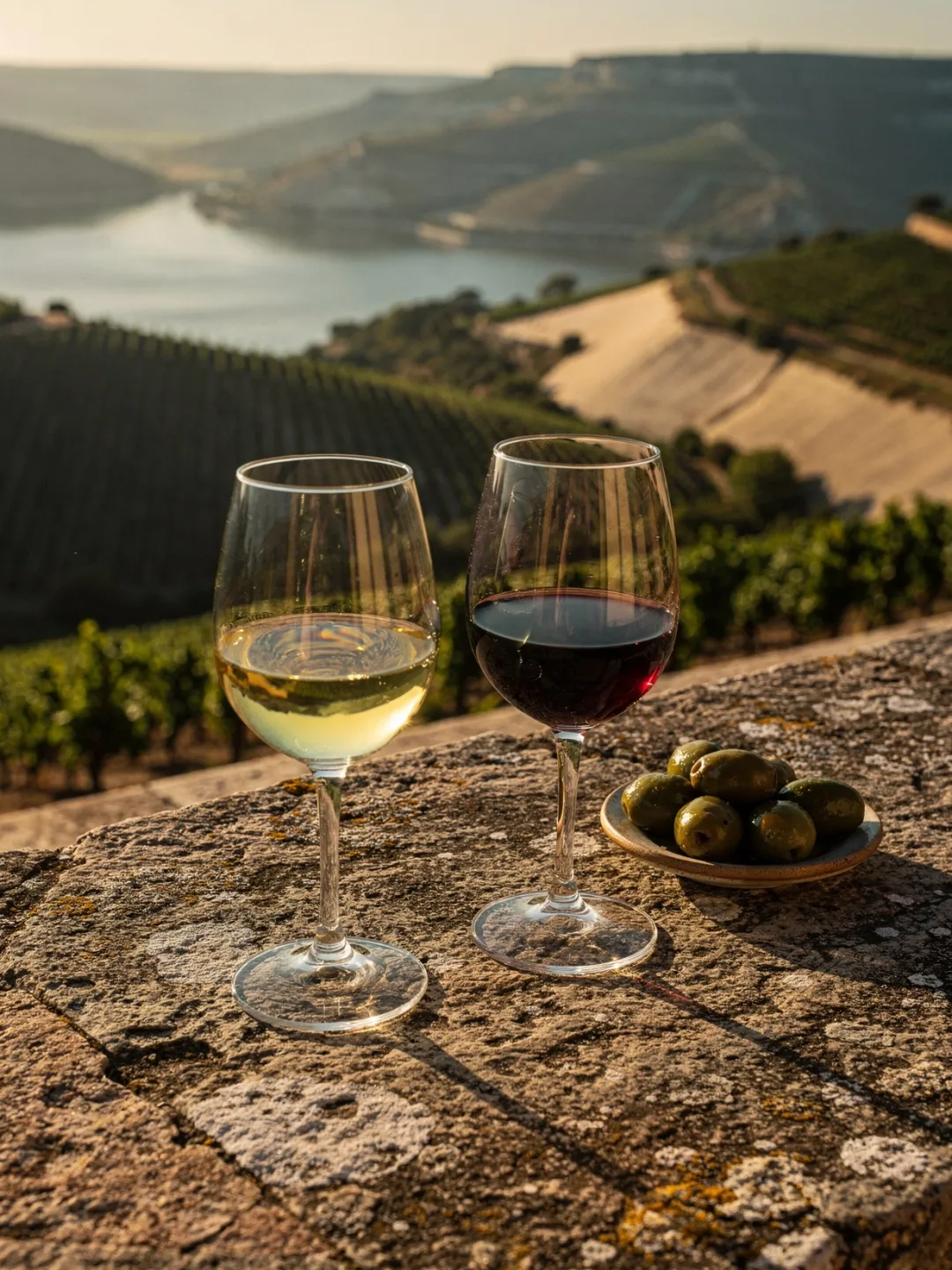
Tasting is best begun with two glasses side by side, a Fernão Pires from the Campo and a Castelão from the Charneca. No other comparison shows the region so clearly. Even the color reveals the difference. The white wine appears pale yellow to almost greenish, the red wine deep violet to almost black at the core.
On the nose, the Fernão Pires shows ripe pear, often with a hint of citrus peel and a light floral note. In the past, this aroma was often turned into an off-dry, slightly sweet bulk wine sold cheaply in export markets. Today, most producers ferment dry and cool, preserving exactly these aromas instead of letting them disappear behind residual sugar.
The Castelão, by contrast, smells of dark cherries and plum, and when it comes from the Charneca, often also of dried herbs and a hint of leather. On the palate there, noticeable tannin grips, coating the tongue and gums with a furry texture that only softens after years. A Campo Castelão, meanwhile, is already approachable young, with softer tannin and more fruit up front.
Anyone wanting to taste these wines properly should avoid serving either too cold. A Fernão Pires served too cold tastes of nothing but acidity, a Castelão served too cold of nothing but tannin. Only at the right temperature does what the respective soil has given the wine truly open up, and it's exactly this moment that turns a Tejo tasting into a small geography lesson in the glass.
Finally, a third sip is worthwhile. Some larger producers bottle a blend from both zones, combining the freshness of the river with the power of the Charneca. It's exactly this combination that explains why simple Tejo table wine often delivers more than its low price would suggest.