Granite & Saibro
Soils
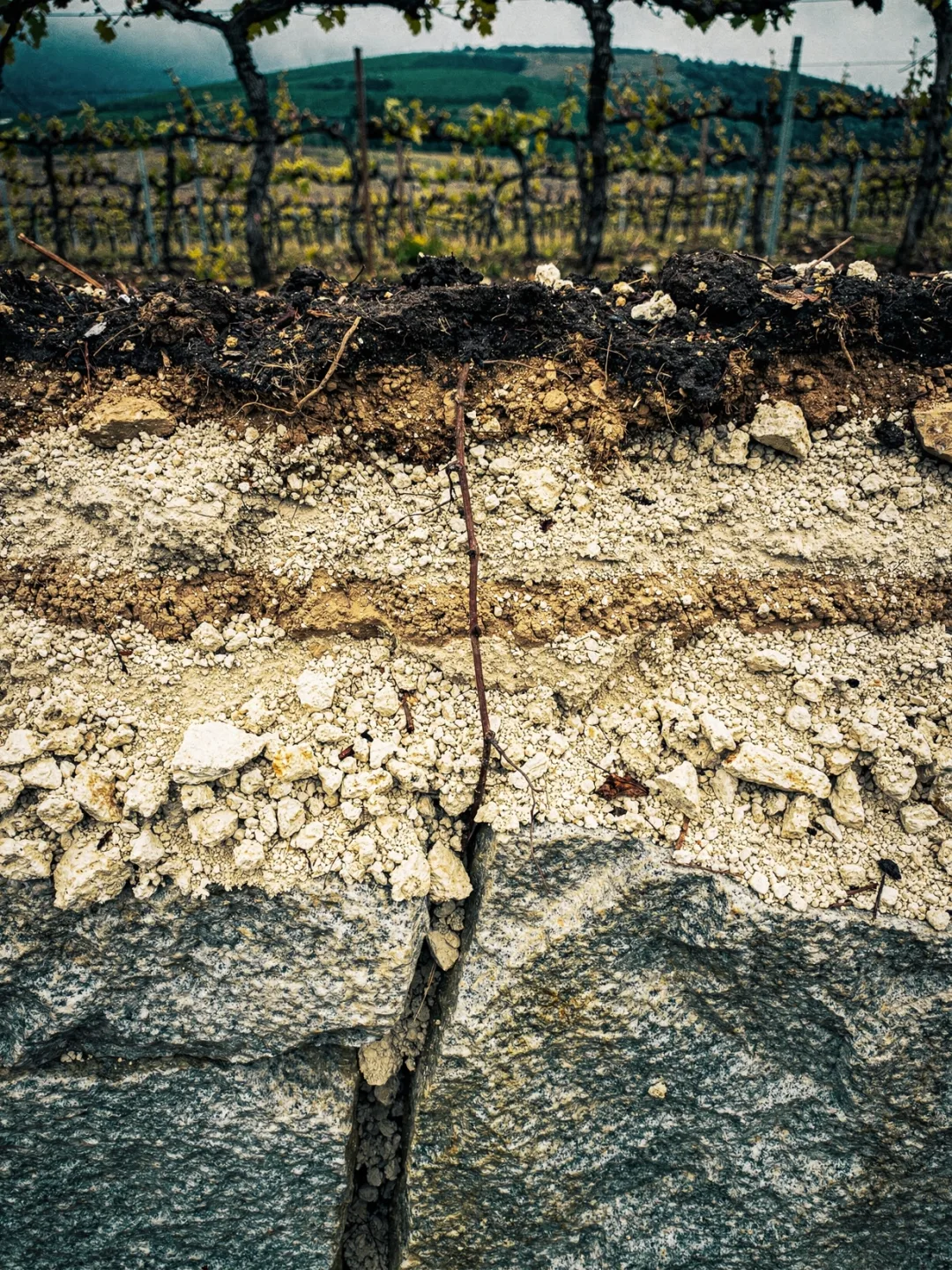
Dig a hole in a vineyard in the Vale do Lima. After a handspan of dark topsoil, the spade hits grainy, pale sand. Between your fingers it crumbles into fine grit. This is Saibro, weathered granite, and it lies beneath almost every vineyard in the region.
The granite itself is rock over six hundred million years old, pushed up from deep within the earth, and it has been slowly weathering ever since: water and frost break it down into a sandy, pale mass, poor in nutrients but highly permeable - the exact opposite of the heavy clay familiar from many other wine regions.
For the vine, this is a hard school. Barely any nutrients, barely any water storage, but plenty of space between the loose grains. The root drives deep, often several meters, searching for moisture. The heavy winter rains have pushed it deep into the sand. In this region's wet climate, this very permeability is a blessing: waterlogging would suffocate the roots.
The Saibro layer isn't the same thickness everywhere. On the damp coast, rain has broken down the granite more deeply over thousands of years. There the layer often reaches two meters or more in depth. In the drier interior around Monção and Melgaço, solid bedrock stays closer to the surface. Vines there have a harder time reaching water once summer turns truly hot.
One myth persists stubbornly: that granite gives wine a taste of stone. What the root actually absorbs are dissolved mineral salts - in amounts no one can taste. The soil works through a detour: through the water it holds or drains away, and through the depth to which it forces the root. In a soil as sparse and permeable as this one, that's exactly where the whole difference lies. A thin wine or a concentrated one - it's decided down here.
A thin, dark layer of rotted leaves and grass. In the vineyards of the Lima Valley, rarely more than a handspan deep.
The root: This is where the fine roots sit, catching the first rain — in this wet climate, this layer almost never truly dries out.