The Damp North
Climate
No wine region in Portugal gets as much rain as this one. Atlantic weather fronts hit the coast unchecked. They pile up against the first hills inland, where drizzle quickly turns into days of steady rain. Further south, in the dry Alentejo, an entire year often sees less rain than falls here in a single month.
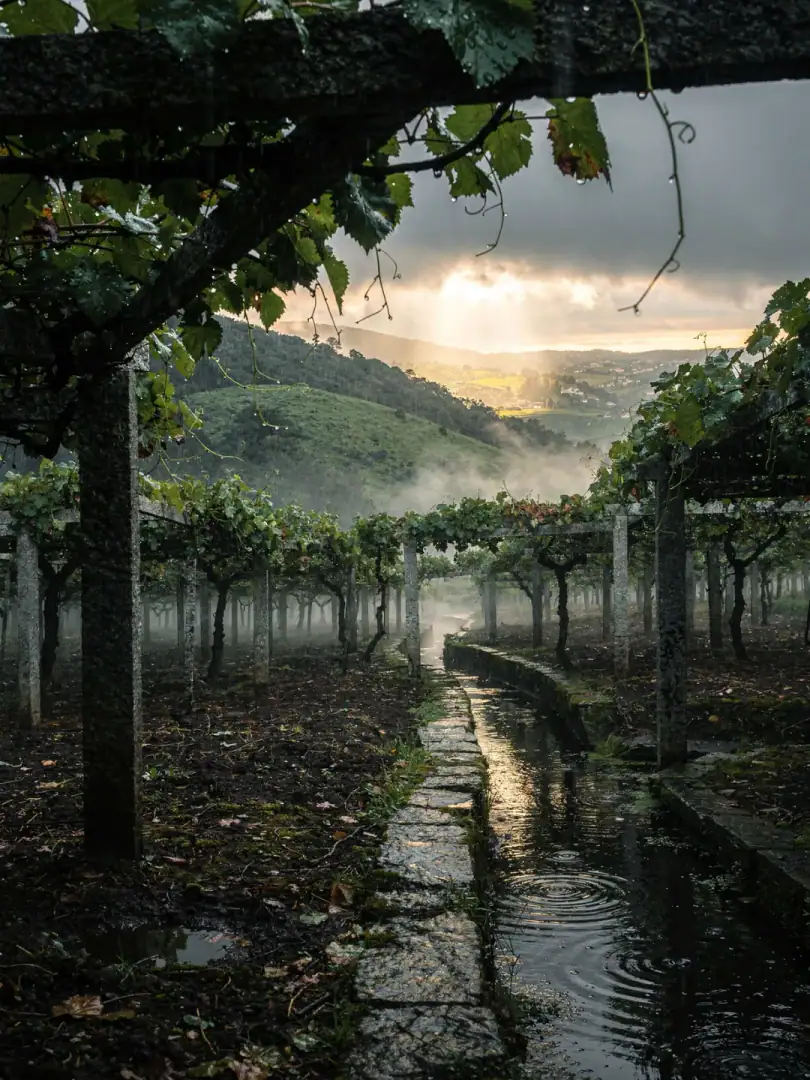
This moisture is why the vines here traditionally grow high: on pergolas of granite posts and wire, called Cruzeta, the grapes hang two meters above the ground, far from the damp, fungus-prone air right at soil level. The space underneath stayed free for corn, cabbage, and beans - a compromise from a time when every field had to yield several harvests.
Further inland, the picture changes. In the valley around Monção and Melgaço, hills shield the area from damp Atlantic weather. Summers there become drier and warmer, though nights stay cool. It's exactly this shift between warm days and cold nights that lets Alvarinho build up so much sugar. As a result it reaches higher alcohol levels than any other variety in the region, without losing its acidity.
On the coast, in the Lima, Cávado, and Ave subregions, it stays cool and damp well into late summer. Loureiro and Azal ripen more slowly here. They build up less sugar and retain more acidity. That's why wines from here taste leaner and sharper than an Alvarinho from the warmer north.
The sea brings protection along with the rain. Frost is virtually unknown across almost the whole region, because the humid air rarely lets the temperature drop below zero. The price for that is constant pressure from fungal diseases like downy mildew. To counter it, growers here still have to work the vineyard more often than almost anywhere else in Portugal.