Rojões and Sardinha
Wine & Food
The cuisine of Minho is hearty and often rich in fat. The wine served with it is lean and sharp. The two go together because both grew from the same wet, poor soil: a sparse vine, a sparse field, and a cuisine that makes the most out of little.
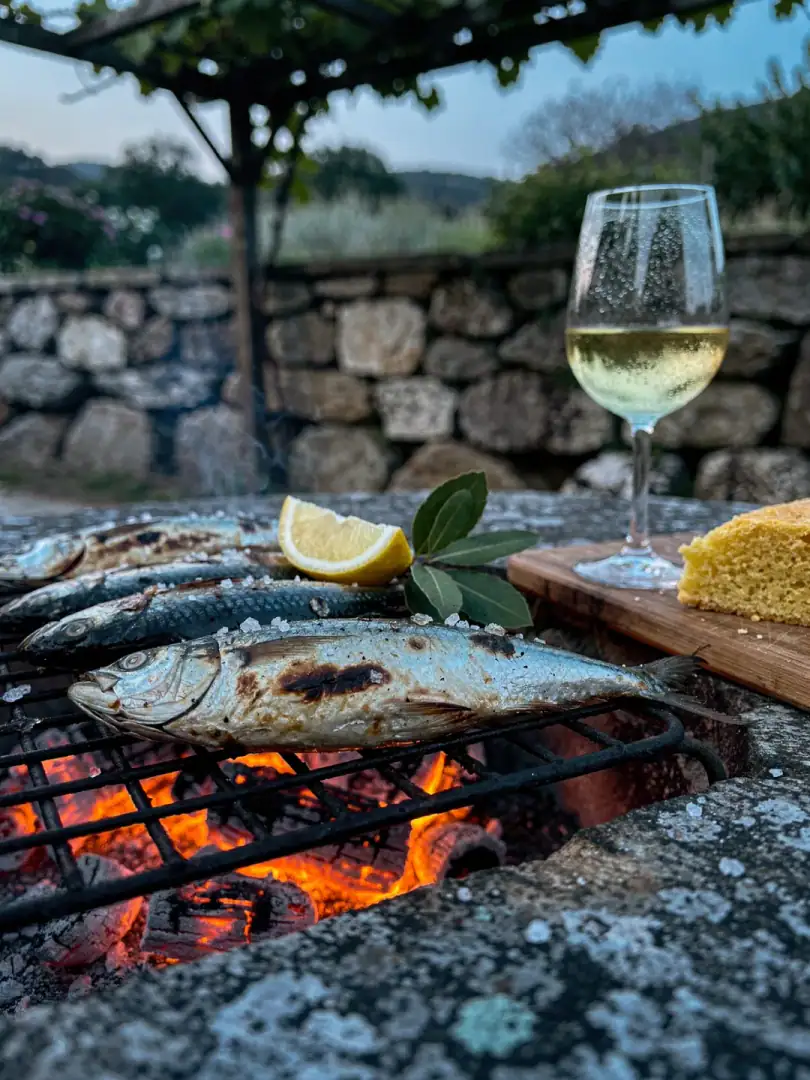
By the sea, grilled sardines sizzle on the grate — sardinha assada in Portuguese. The natural pairing is a simple blend of Loureiro and Arinto, served chilled with a noticeable salty edge. The acidity cuts through the fat of the grilled fish much as a squeeze of lemon would, except here the whole wine takes on that job.
Caldo Verde comes from precisely this region: a soup of finely shredded kale, mashed potato, and a slice of spicy chouriço sausage. It calls for nothing complicated. A young, lightly sparkling Vinho Verde does the trick, served cold, with just enough acidity to balance the sausage's spice.
Things get heavier with Rojões à moda do Minho: chunks of pork fried in lard, served with blood rice and fried potatoes, as it's prepared around Ponte de Lima. Locals don't drink white wine with this rich, salty dish — they drink red Vinhão instead. Its rustic acidity and rough tannin cut through the richness in the mouth, where a light Alvarinho would simply get lost.
With Bacalhau, the salt cod found in nearly every kitchen in the country, the right choice shifts depending on preparation. Fried, or braised with plenty of olive oil and onions, it calls for a fuller-bodied Alvarinho from Monção and Melgaço. A simply boiled Bacalhau with cabbage, on the other hand, pairs well with a lighter blend. In the end, the same principle holds across the whole region: low alcohol and high acidity suit a cuisine that rarely leans on sweetness, favoring salt and fat instead.