On an Alvarinho
Tasting
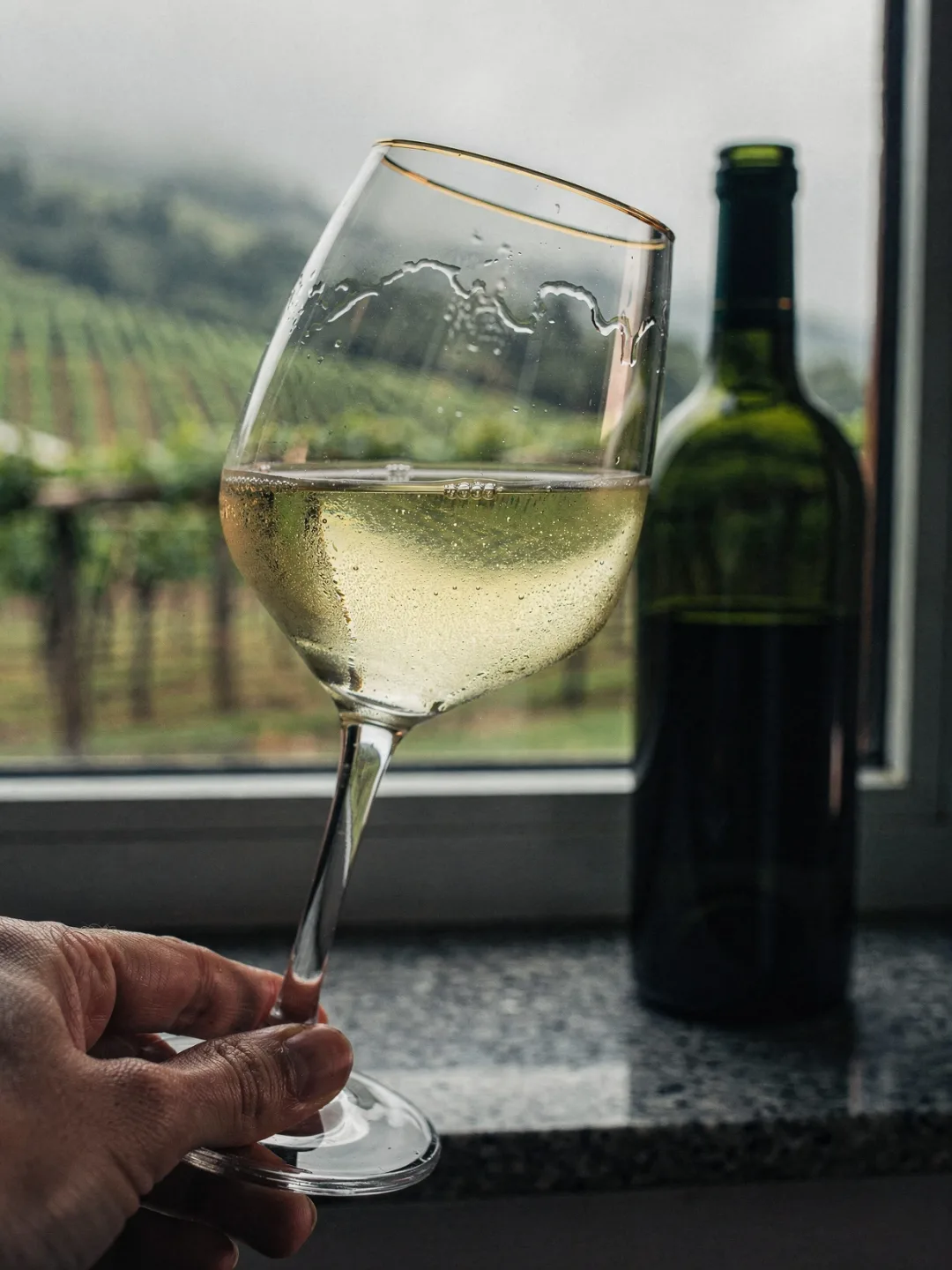
Take an Alvarinho from Monção and Melgaço and hold the glass up to something bright: the color is pale yellow with a greenish shimmer, almost like unripe apple juice. In the simple blends made from Loureiro and Arinto, it's even paler, almost water-clear. For a wine meant to be drunk within months, this paleness is no flaw.
Look closely before you smell: tiny bubbles, the Agulha, cling to the glass wall and rise irregularly, much more hesitantly than in a true sparkling wine. Far less carbon dioxide is present than in an actual sparkling wine - enough for a light tingle on the tongue, not for foam in the glass.
Smell first with the glass still, then after swirling. Citrus comes first, often lime or grapefruit. In Loureiro there's also a clear note of orange blossom, which gave the variety its name, and after swirling, a ripe Alvarinho follows with a note of peach, sometimes almost apricot. Beneath that lies a saline hint that many attribute to the nearby Atlantic.
In the mouth, pay attention to two things separately. The acidity pulls along the sides of the tongue, making the mouth water. The alcohol rarely exceeds eleven percent, keeping the wine light rather than heavy. Together, these two qualities make this one of Europe's most refreshing white wines. High acidity alone feels sharp, but without the weight of much alcohol behind it, it simply feels invigorating.
The finish is short, rarely more than ten seconds - and that's by design. This wine wants you to reach for a new glass quickly, not linger on the last one. Anyone who then tries a red Vinhão notices the difference immediately: inky dark color, biting acidity, a tannin that leaves the tongue dry. That's a wine for Rojões and bean stew, not for a quiet sip in between.