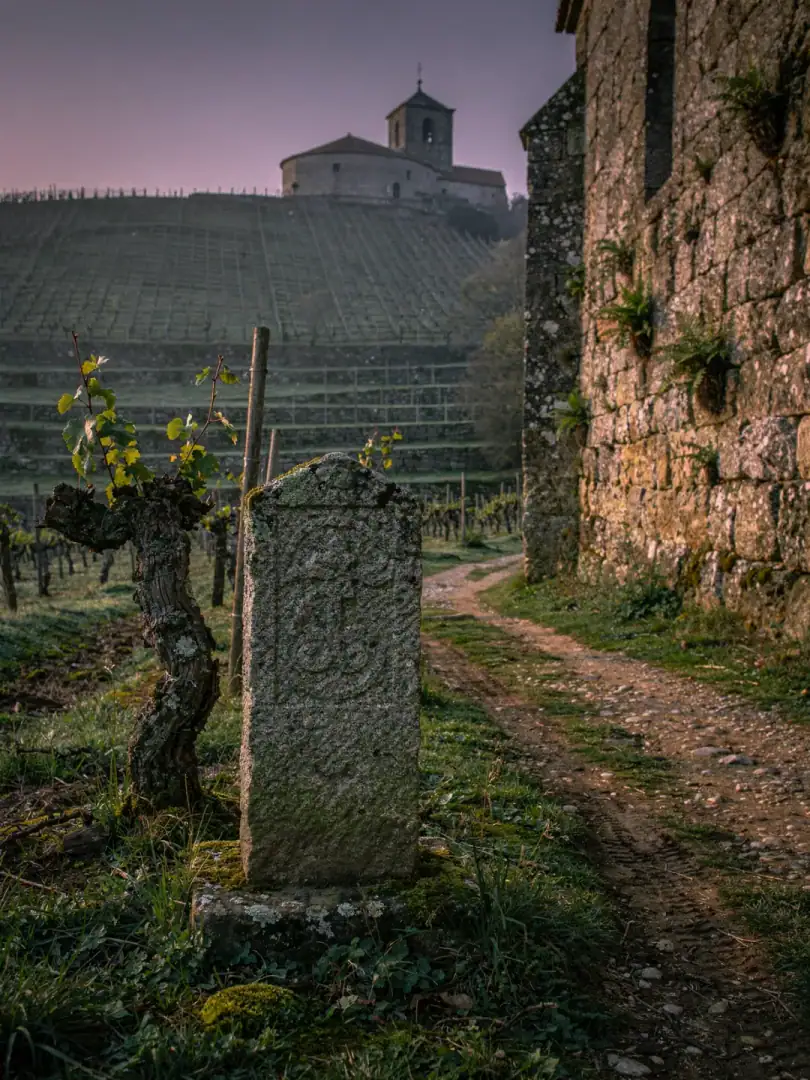
Minho, 1908, Alvarinho
Region & History
Along the Minho River, which today separates Portugal from Spain, vines grew before the name Portugal even existed. Roman authors such as Pliny the Elder already mentioned wine from this damp corner in the northwest of the peninsula. The trail thickens only in the Middle Ages, when monasteries and landowners trained vines among cornfields and chestnut trees; a dedicated vineyard, however, was rare.
In September 1908 the Portuguese state drew a boundary around this territory, creating one of Portugal's oldest officially demarcated wine regions. Nine subregions were added in one stroke, from Monção and Melgaço in the north to Baião in the south. Each had its own rainfall, its own soil, its own grape varieties. The name Vinho Verde, green wine, has nothing to do with color. It means young: the wine is meant to be drunk within a few months, not aged.
Well into the twentieth century, what flowed from these vines was mostly a sharp country wine for the family table. Smallholders farmed tiny plots alongside corn and cabbage. The grape was a byproduct of an agriculture that lived on grain. It wasn't until Portugal joined the EU in 1986 that things changed. New cellar techniques arrived, export markets opened up, and the rustic table wine slowly turned into a brand.
A good example of this shift comes, fittingly, from the region's most expensive grape variety. For decades only the wineries of Monção and Melgaço were allowed to call their wine Alvarinho. Both lie directly on the Minho River. The remaining thirty-five municipalities planted the same grape but could only sell it under the plain label Vinho Regional Minho. Only with the 2020 vintage did this rule fall. Since then the whole region may print Alvarinho on the label, and Monção and Melgaço received their own quality seal in return.
Today more than half the bottles go for export, mainly to the US and Germany; what has survived is the idea from 1908 - a wine that wants to be drunk young and openly admits it, rather than pretending to be something else.