Alvarinho, Loureiro, Vinhão
Grape Varieties
Nine subregions, a handful of core varieties - and yet a Vinho Verde from Monção never tastes like one from Amarante. That's down to the grapes themselves: almost every subregion has its own signature variety, and the region as a whole permits well over twenty of them. Alvarinho, Loureiro, Vinhão: know these three, and you've already understood half the region in your glass.
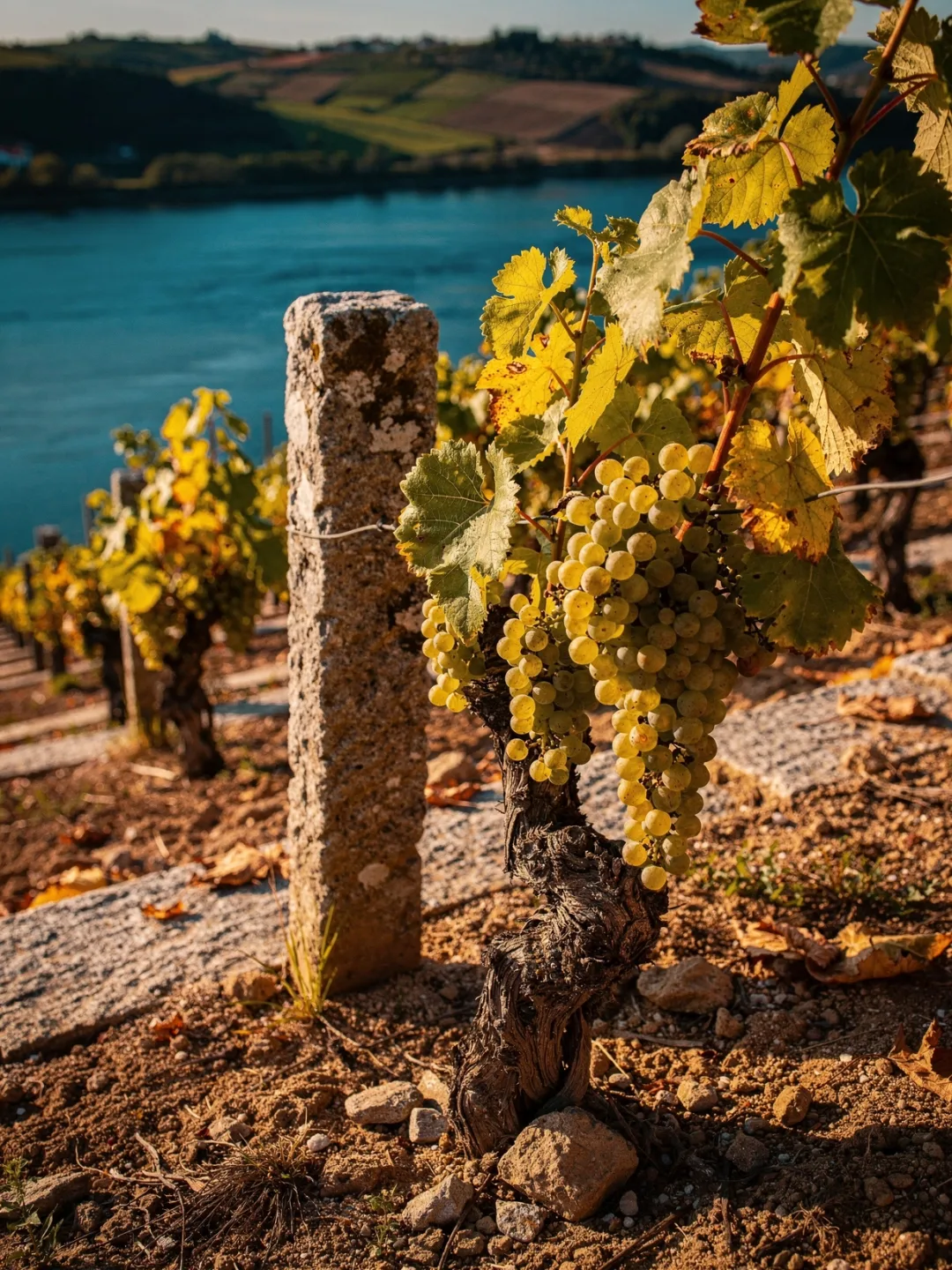
Alvarinho grows almost exclusively in the far north, in the valley around Monção and Melgaço, where the Minho River makes the climate somewhat drier and warmer than on the coast. The berry has a thick skin and ripens late. In return it can reach eleven, sometimes fourteen percent alcohol - more than any other variety in the region. In the glass it smells of peach and orange peel, along with a saline edge that recalls the nearby Atlantic; across the border in Spain, the very same grape is called Albariño, and only the river separates the two names.
Loureiro, by contrast, is a plant of the Lima Valley. It's named after the laurel tree, because its grapes already smell of laurel and orange blossom while still on the vine. It grows lushly and yields heavily; without strict pruning, its aroma dilutes in the volume. Together with Trajadura and Arinto it forms the classic blend of the western subregions: floral, citrusy, with noticeably less alcohol than a pure Alvarinho.
Further east, around Baião and Amarante, the Douro River is already close, and there Avesso dominates. The variety tolerates more sun and produces fuller, less sharp wines than those closer to the sea. Azal, in turn, is thin-skinned and bitingly acidic. It used to be the standard almost everywhere. To this day it supplies the acidic backbone of many simple blends.
Among the red varieties, Vinhão reigns almost unchallenged; its berries color both skin and flesh alike. That's why every drop made from it stays inky dark, almost opaque. Espadeiro and Borraçal soften it in some blends. On its own, Vinhão shows rough acidity and coarse tannin - built for the cuisine of the north, not for delicate sipping.