Cool, Fast, Young
Production
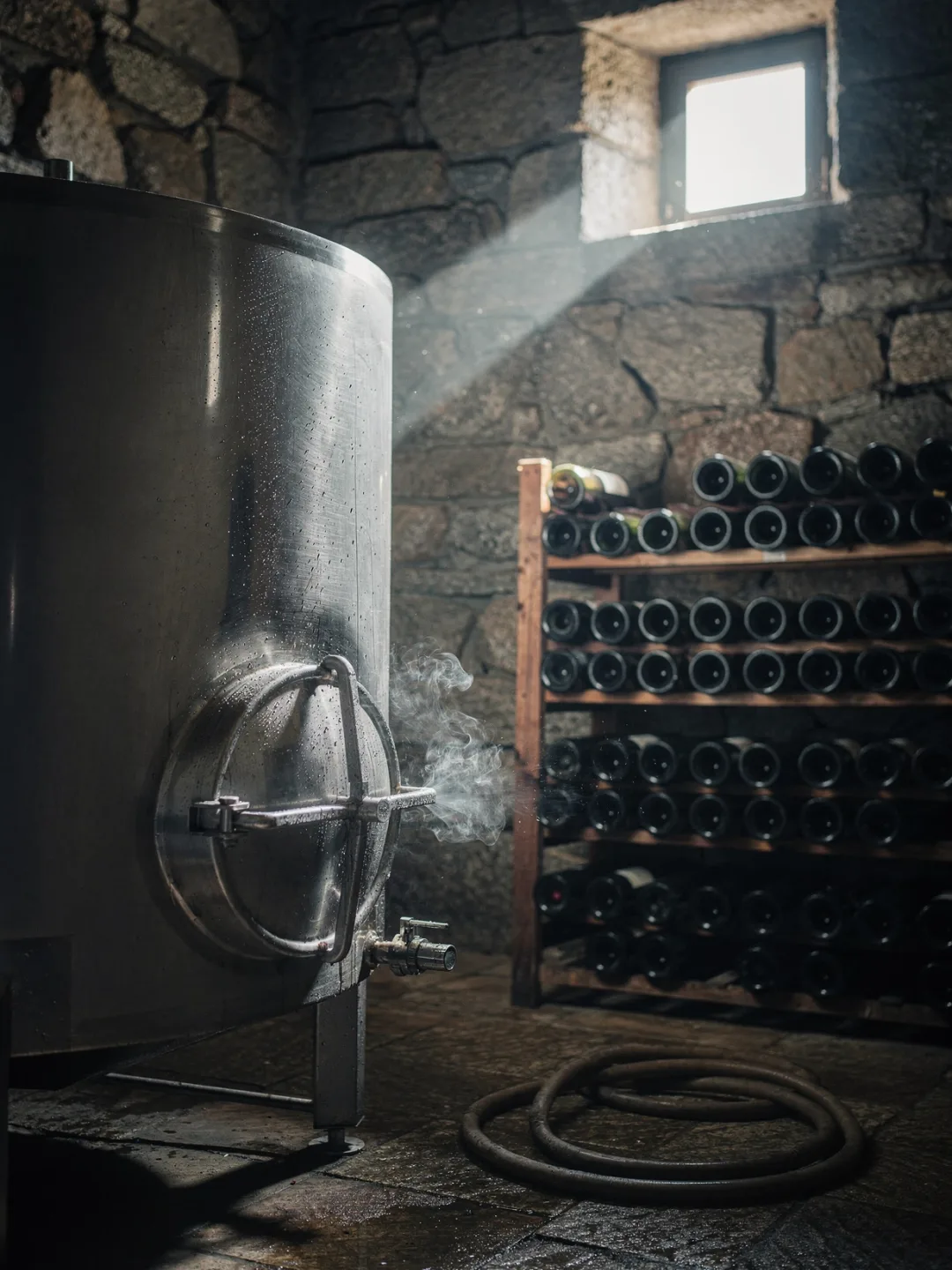
Harvest here begins earlier than almost anywhere else in Portugal, often as early as late August, because in this damp climate the grapes lose acidity quickly if left hanging too long. Pressing is gentle and swift, usually on the same day as picking, so the skins release as few bitter compounds as possible. Fermentation then proceeds cool, often below fifteen degrees Celsius, in stainless steel tanks, since heat would simply cook off the delicate citrus and floral aromas.
The light fizz many people associate with this wine is called Agulha here, meaning needle - after the fine prickle on the tongue. It used to arise naturally. Part of the malolactic fermentation, in which sharp malic acid turns into softer lactic acid, would continue in the cold winter cellar, inside the already bottled wine, trapping carbon dioxide in the process. Today most wineries instead add carbon dioxide deliberately just before bottling, so every bottle gets the same amount of fizz; only a handful of small producers still let nature do the work.
Alvarinho from Monção and Melgaço often gets different treatment. Some producers leave it on the fine lees for weeks, stirring them regularly. This gives the wine more body and a slightly creamy edge. These wines age considerably longer in the cellar than the simple, quickly bottled blends made from Loureiro and Trajadura. Some of them now even reach the market with a touch of oak.
With red Vinhão, time on the skins matters above all. Its color sits deep within a thick, dark berry skin. Several days of maceration draw out the almost black color and the coarse tannin structure. That's exactly what makes this wine so distinctive. Oak barrels remain the exception here: Vinhão is meant to stay raw and direct, not polished smooth.
In the end, the name Vinho Verde is also a rule. The wines usually go on sale just three to six months after harvest. They're not meant for aging: one vintage should be finished before the next is fermenting in the tank. Only a few producers now also make a sparkling version using classic bottle fermentation, usually from Loureiro or Arinto. The goal stays the same: stay fresh, don't get heavy.