Gold, honey, acidity
Tasting
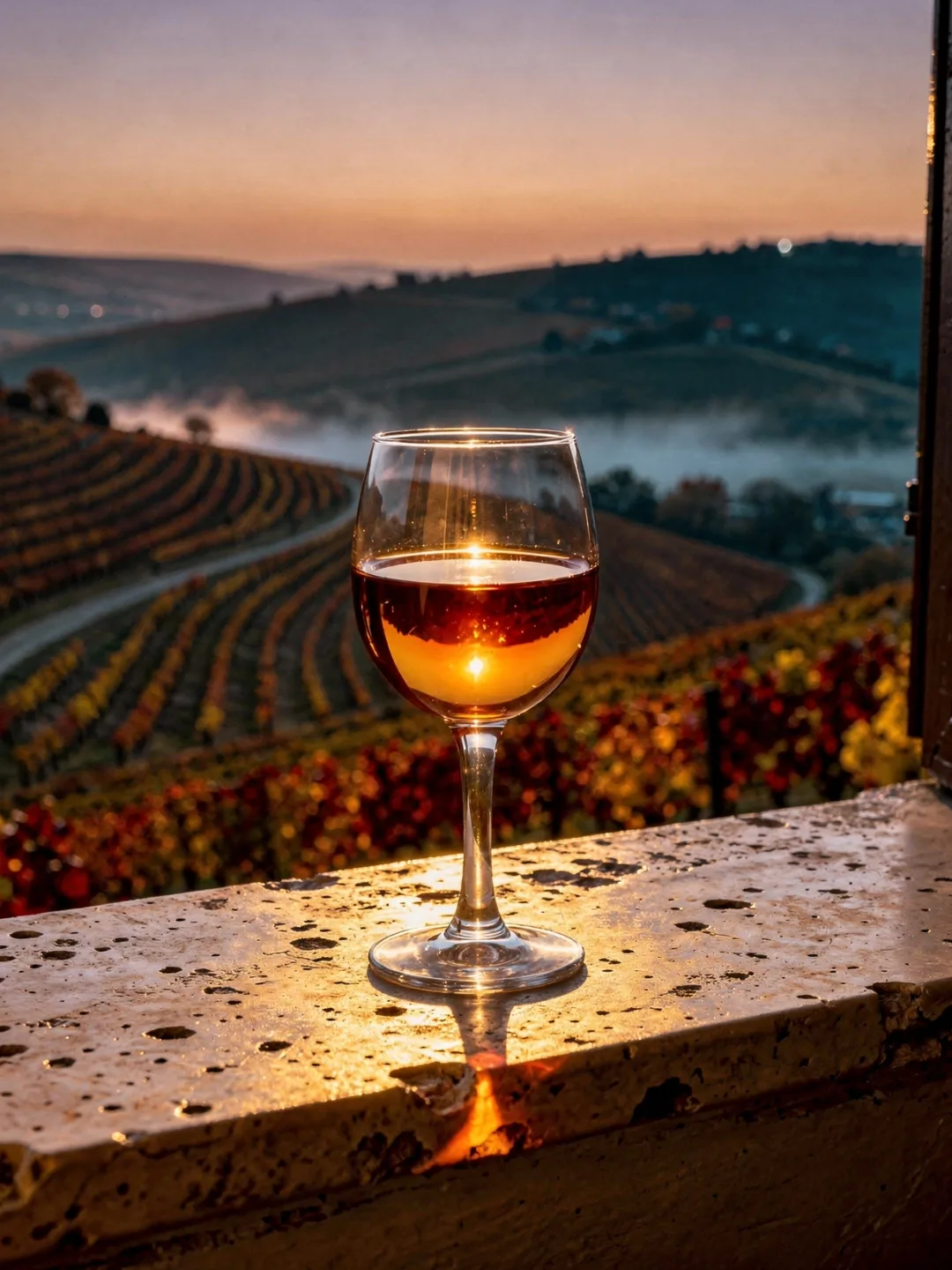
In the glass, classic Cotnari shifts in color with age. Young, it's golden yellow. After a few years, it darkens toward amber, with a hint of orange at the rim. Knowing this color scale lets you roughly guess how long a bottle has been aging, even without checking the label.
On the nose, honey comes first. Then follow dried apricot and a trace of candied citrus peel. Underneath lie walnut, almond, and sometimes a hint of acacia blossom—a bouquet that recalls Trockenbeerenauslese from the Rhine, and for the same reason: concentrated, noble-rot berries.
When Grasă de Cotnari is vinified dry, which happens less often, the aromas shift entirely. Apple, ripe apricot, and peach take center stage, without the sweetness that otherwise defines the wine. This shows just how much of that famous honeyed note actually comes from noble rot rather than from the grape variety itself.
On the palate, acidity determines whether the wine feels balanced or cloying. A sweet Cotnari with well over one hundred grams of residual sugar sounds like a lot. Yet it rarely tastes sticky, because the acidity from Fetească Albă and Frâncușă pushes back, much like a German Riesling, where sweetness without acidity quickly turns flabby. Taste it in small sips, and pay attention to whether sweetness or freshness lingers at the end.
Properly cellared, such a wine can age for decades. Some bottles from DOC-CIB vintages only truly come into their own after ten or fifteen years. What tastes purely sweet when young transforms over time into nut, dried fruit, and an almost saline undertone—the reward for a harvest that puts patience above all else.