Red Clay, Limestone
Soils
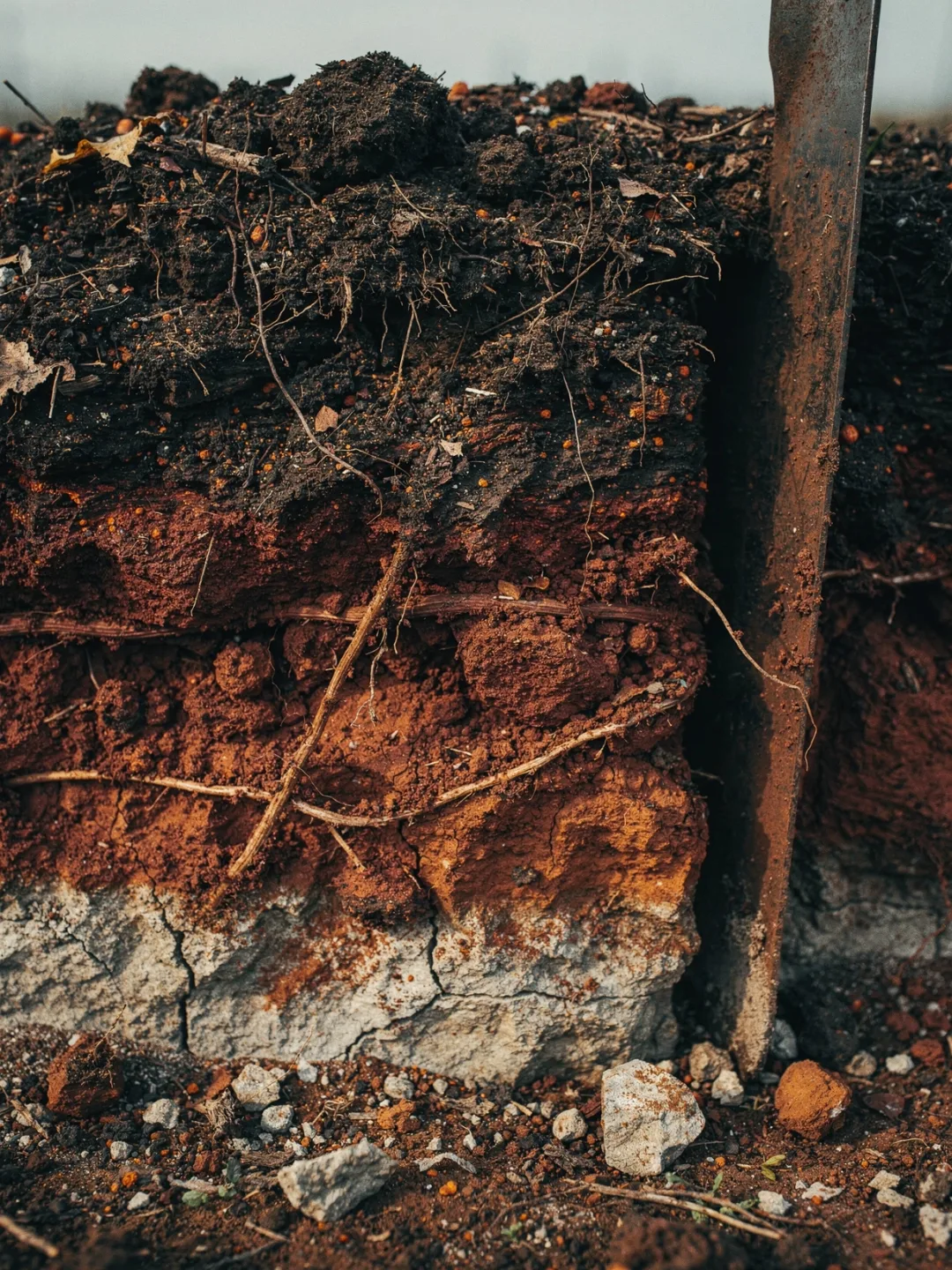
Dig a hole in Valea Călugărească. After just a few spadefuls, the earth turns reddish. People call it the land of red wines. It doesn't take long before the spade hits soil colored almost like fired brick, and it's precisely this color that gave the region its nickname — not because of the wine itself, but because of the soil deep beneath it.
This red clay formed from weathered marl. Iron oxide gives it its color. After rain, it stays damp for a long time. Together with fine, iron-rich sand, it compacted over millennia into a heavy, loamy layer that cracks open in dry summers yet still stores warmth during the day, which it releases back to the roots at night.
Vine roots don't have it easy here. Yields stay small as a result. Small berries carry more skin than juice. They need more strength to work their way through the heavy clay than through loose sandy soil, and this very effort compresses the berries, while color and tannin sit concentrated in the skin, which is why wines from these sites often come across darker and denser.
Further east, the picture changes. There, Sarmatian limestone and loess take over. These soils contain almost no iron. Around Pietroasele in Buzău, the paler, lime-rich soils with their high calcium content favor aromatic white wines like Tămâioasă Românească, while the red, iron-rich soils in the west remain reserved for the powerful red wines made from Fetească Neagră.
A misconception persists here too. Soil doesn't taste directly in the wine. The detour is the whole point. It's often claimed that roots absorb minerals from the rock and pass them along, but in reality clay only works indirectly — through water it stores or releases, through warmth it holds, and through the depth to which it forces the roots to reach.
A thin, dark layer of decomposed leaves and grass, often only a hand's width deep in cultivated vineyards.
The root: This is where the fine roots sit, absorbing the first rain after a dry spell.