Tannin Meets Aroma
Glassware
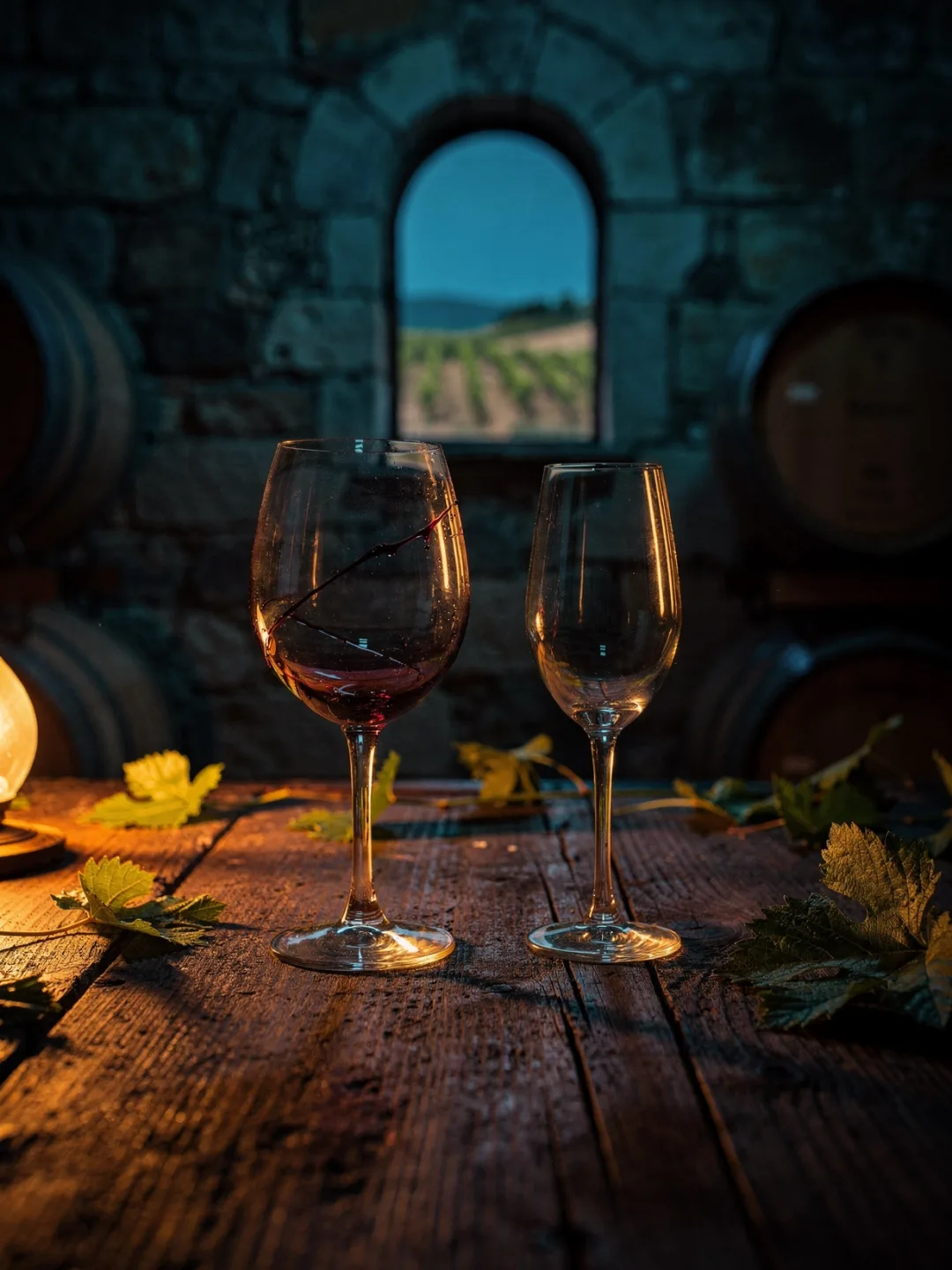
A glass for Fetească Neagră needs room. The grape brings firm, generous tannins. A narrow glass squeezes this grip together. That dry grip on the palate, familiar from strong, long-steeped tea, is only softened by a large, rounded bowl shape, the kind also typical for Bordeaux red wines, since it gives the wine surface area for oxygen to work on before it reaches the lips.
This surface area lets the aroma escape. Black cherry, plum, and violet come forward. A glass that's too small feels harsh. In too small a glass, these aromas stay trapped behind the wall of tannin, whereas in a wide glass they emerge as alcohol evaporates faster from the large surface, revealing the fruit and spice beneath.
The case is entirely different with Tămâioasă Românească. Its aroma escapes from a wide glass. A slender tulip shape holds it in place. This grape from Pietroasele carries its scent of roses, orange blossom, and a hint of frankincense practically ahead of it, and a narrow opening funnels the volatile aromatic compounds straight to the nose, rather than letting them simply drift away.
Temperature plays a role here too. Tămâioasă Românească tastes best served cool. Red wines, by contrast, need cellar temperature. In the nobly sweet versions, the sweetness mustn't come across as cloying, while Fetească Neagră and Burgund Mare need cellar temperature so the tannins don't harden further, since anyone drinking both wines from the same glass gives up part of what the grapes of Dealu Mare can actually deliver.