Concrete Gives Way to Barrique
Winemaking
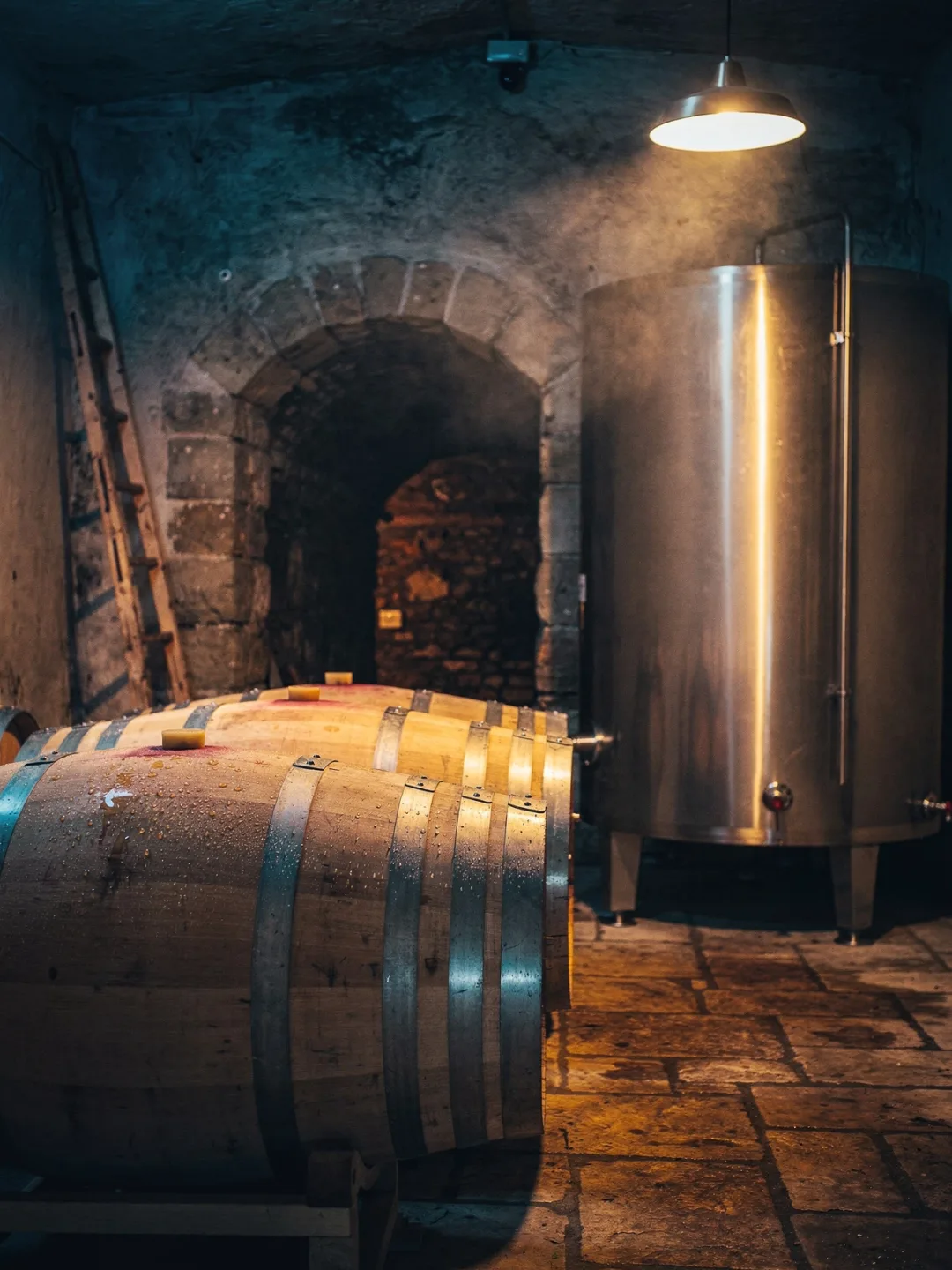
Until 1989, enormous concrete tanks dominated. One tank could hold the grapes of an entire district. Volume mattered more than care back then. With the private estates of the nineties came smaller, refrigerated stainless steel tanks and later French barrique barrels — tools that for the first time allowed a single vineyard to be vinified on its own, rather than blending grapes from an entire district.
For Fetească Neagră, skin contact matters most. The juice sits for two to three weeks. Aging in barrel begins afterward. After pressing, the rising cap of skins is punched down daily so that color and tannin fully transfer into the wine before aging begins, often one to two years in French oak, which adds vanilla and toasty notes to a grape already powerful in its own right.
With Tămâioasă Românească, everything runs in reverse. The juice ferments cool in stainless steel. No oak barrel comes into play here. For the nobly sweet versions at the DOC-CIB level, workers hand-pick only those berries the botrytis cinerea mold has already shriveled and concentrated in sugar, a process that in Pietroasele can stretch across several passes through the vineyard.
DOC-CMD stands for full ripeness. DOC-CT means deliberately delayed harvest. The vintage decides which path fits. Full ripeness on one side, later picking with more sugar on the other, and which of these paths a cellar master in Dealu Mare chooses depends on whether they're after a powerful red for early drinking or a white wine that only shows its full potential ten years down the line.