Geschnetzeltes & Bündnerfleisch
Wine & Food
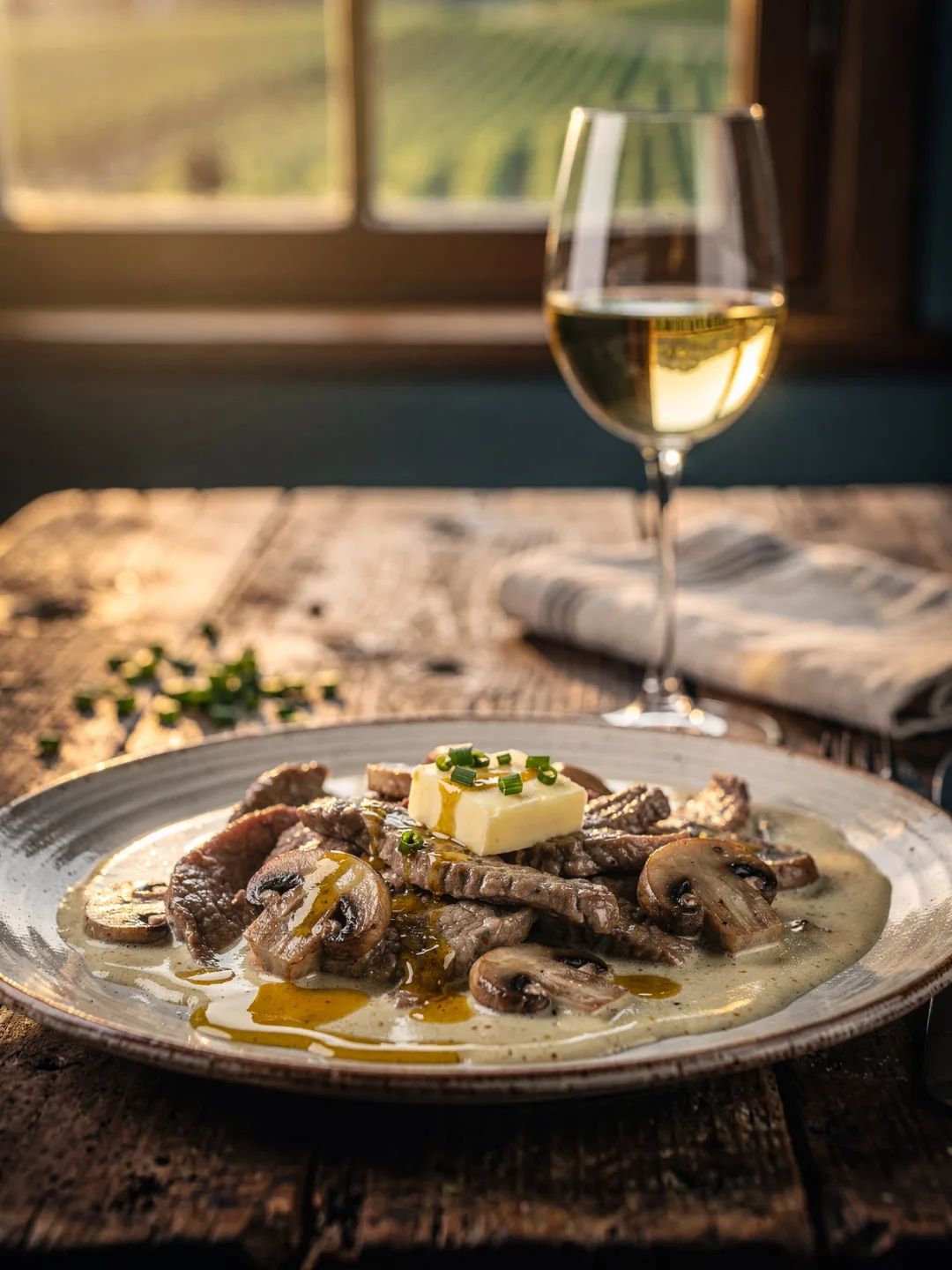
Many consider this dish from German-speaking Switzerland ancient. In truth, it's barely eighty years old: Zürcher Geschnetzeltes first appears in print in a 1947 cookbook — fine strips of veal in a sauce of white wine and cream. That very same white wine belongs in the glass alongside it. A dry Räuschling from Lake Zurich pairs best, its acidity cutting through the cream without overpowering the delicate meat.
In Graubünden, salty and air-dried specialties dominate instead. Bündnerfleisch is cured in salt for weeks, then air-dried in the mountain air for months, until it can be sliced almost paper-thin and translucent. A young, uncomplicated Pinot Noir suits this concentrated flavor best. It works better than a heavy barrique-aged wine, because its fruit embraces the saltiness rather than fighting against it.
Capuns take things a step further: Spätzle dough filled with Bündnerfleisch or Salsiz, wrapped in chard leaves, poached in milk, and often baked with mountain cheese on top. The cheese calls for more power in the glass. Here, an aged Pinot Noir from the Bündner Herrschaft can bring some tannin to the table without issue. The milk fat softens things anyway, more than the wine alone would suggest.
Around Lake Constance, Felchen dominate the menu, a fish from the trout family, usually pan-fried in butter with almonds. A heavy Pinot Noir would be a mistake here, overwhelming the delicate fish. A light white wine suits it better, Müller-Thurgau from Thurgau or Räuschling, both light enough not to overpower the fish.
Finally, there's Completer, the most idiosyncratic wine on the table. Its powerful acidity and high alcohol content pair better with pan-fried fish or aged alpine cheese than with any meat dish. If you like, you can simply drink it on its own for quiet reflection after dinner — just as the canons in Chur once did after evening prayers, one glass, nothing more.