Between Cherry & Quince
Tasting
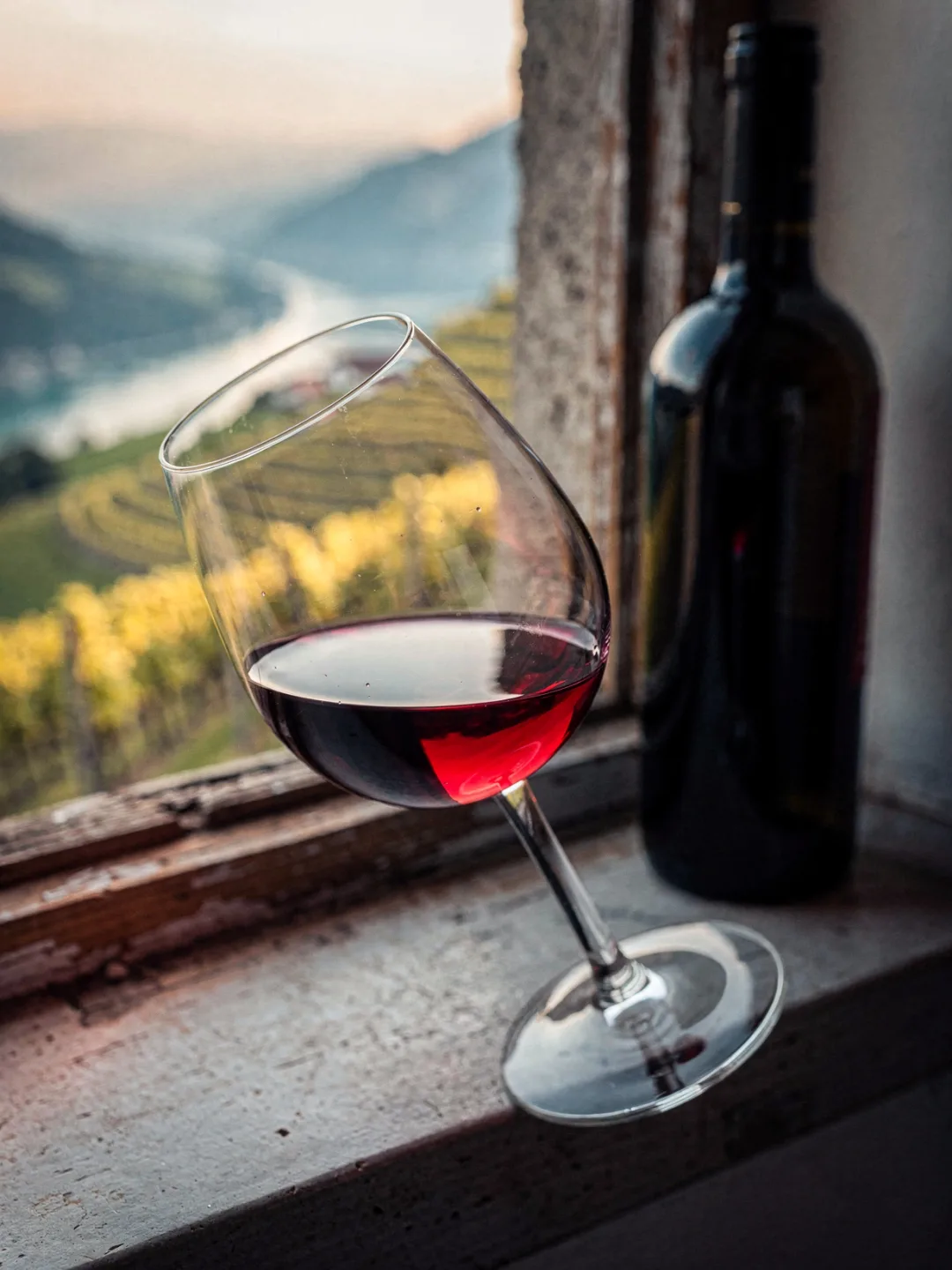
Anyone tasting a Blauburgunder from the Bündner Herrschaft for the first time notices right away how pale the color is for a red wine. The rim shows a faint violet tinge in young vintages, shifting toward brick red with age. That's no sign of weakness — it's simply the nature of the grape, whether it grows in Burgundy or along the Rhine near Fläsch.
Smell it twice: once in the still glass, once after swirling. In the still glass, red fruit comes first — cherry and raspberry — since these light aromatic compounds evaporate fastest. After swirling, what takes longer emerges. In an aged Blauburgunder from the Klettgau, a hint of mushroom or damp leaves often appears; in a young one, more likely herbs from the forest edge.
In the mouth, pay separate attention to acidity and tannin. You feel the acidity along the sides of your tongue. It keeps the wine lively despite its restrained color, and in this northerly location it's often more pronounced than in Pinot Noirs from further south. Tannin, by contrast, is a sensation, not a flavor — a fine coating on the gums that in young wines from the Bündner Herrschaft stays pleasantly velvety rather than gripping.
For comparison, it's worth trying a Räuschling from the same vintage, from Lake Zurich rather than the Rhine. It's pale yellow, almost transparent. It smells of lemon and wet pebbles and has no tannin at all, but plenty of acidity — a completely different wine from the same landscape.
And then, for those who get the chance: Completer. Rich in the glass, golden yellow to amber, with aromas of ripe apple, quince, and honey that gain notes of beeswax and dried fruit with age. On the palate, pronounced acidity carries its fourteen percent alcohol effortlessly. The finish lingers for twenty, thirty seconds, leaving you wondering how a vine from Malans can taste so far removed from any Mediterranean cliché.