Tasting Blind, Without the Label
Tasting
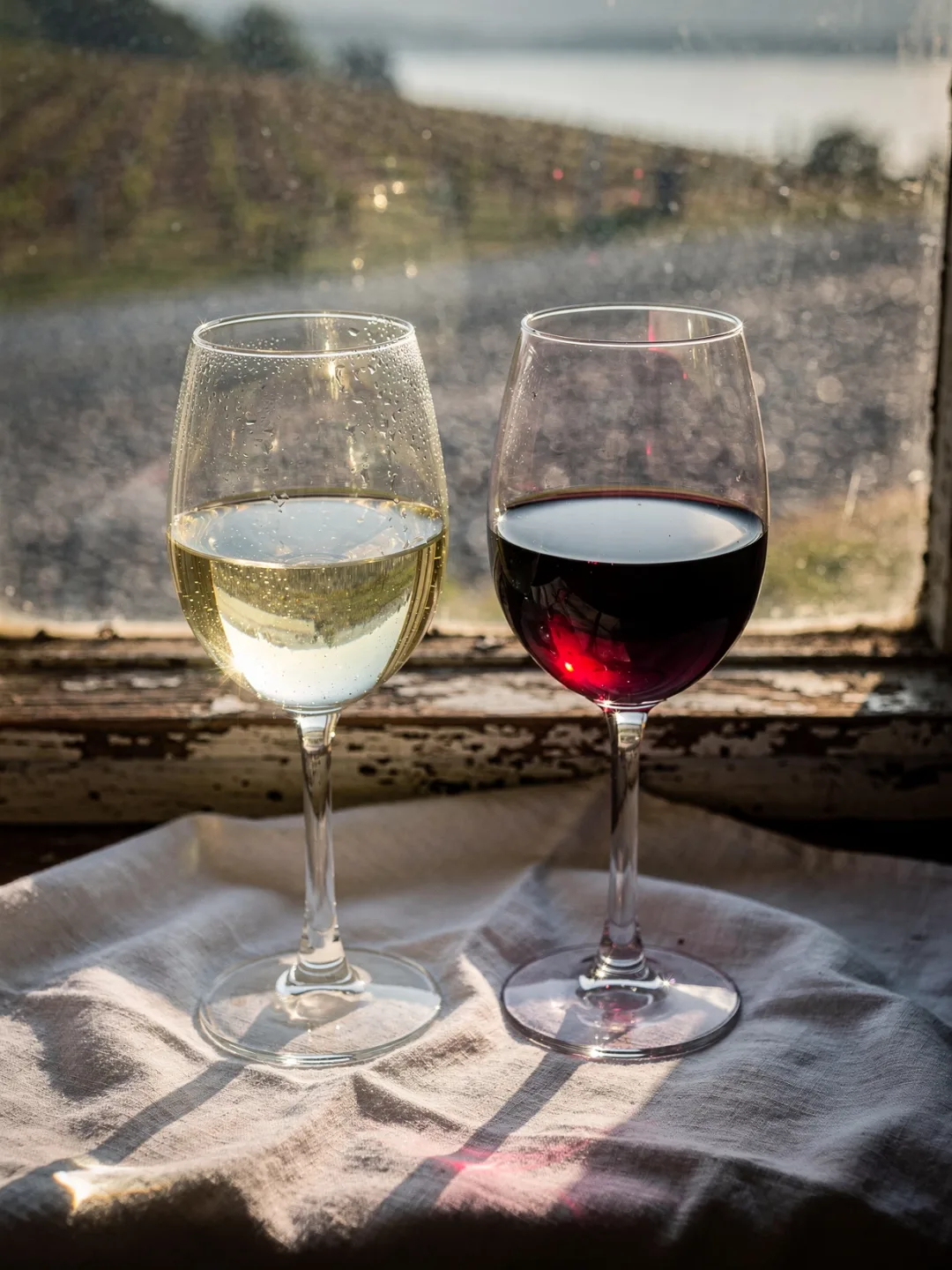
Set two glasses side by side, a Chasselas and a Gamaret, and the color alone already tells the story. The Chasselas is pale yellow, almost clear, with a hint of green at the rim. Sometimes tiny bubbles rise in it, a light, natural prickle that gave the old Genevan name Perlan its meaning. The Gamaret, by contrast, appears almost black, with violet highlights that only shift toward brick-red after years in bottle.
On the nose, the same contrast shows even more clearly. Chasselas smells restrained, of hay, green apple, and sometimes a touch of almond. Many consider this very restraint its greatest strength, since it masks almost nothing and lets every nuance of the soil shine through. Take a close sniff. Gamaret, by contrast, fills the glass with dark cherry, cassis, and a pinch of black pepper.
On the palate, pay attention to two separate things. With Chasselas, it's the acidity, prickling along the sides of the tongue and keeping the wine light and easy to drink, often accompanied by that same fine prickle found on the nose. With Gamaret, it's the tannin, a rough coating on the gums, made possible in the first place by its thick berry skin. Telling the two apart takes practice. This difference is best tasted at exactly the temperature suited to each variety — cool, at eight to ten degrees Celsius, for Chasselas, noticeably warmer, at sixteen degrees, for Gamaret.
The finish is where the difference between the two becomes clearest. A simple Chasselas often ends after just a few seconds, short and clean, with no pretension to anything more. A good Gamaret, by contrast, lingers, with fruit and tannin in balance, for a good ten to fifteen seconds. Neither length is better than the other. They simply show what each grape variety was made for.