On Two Merlots
Tasting
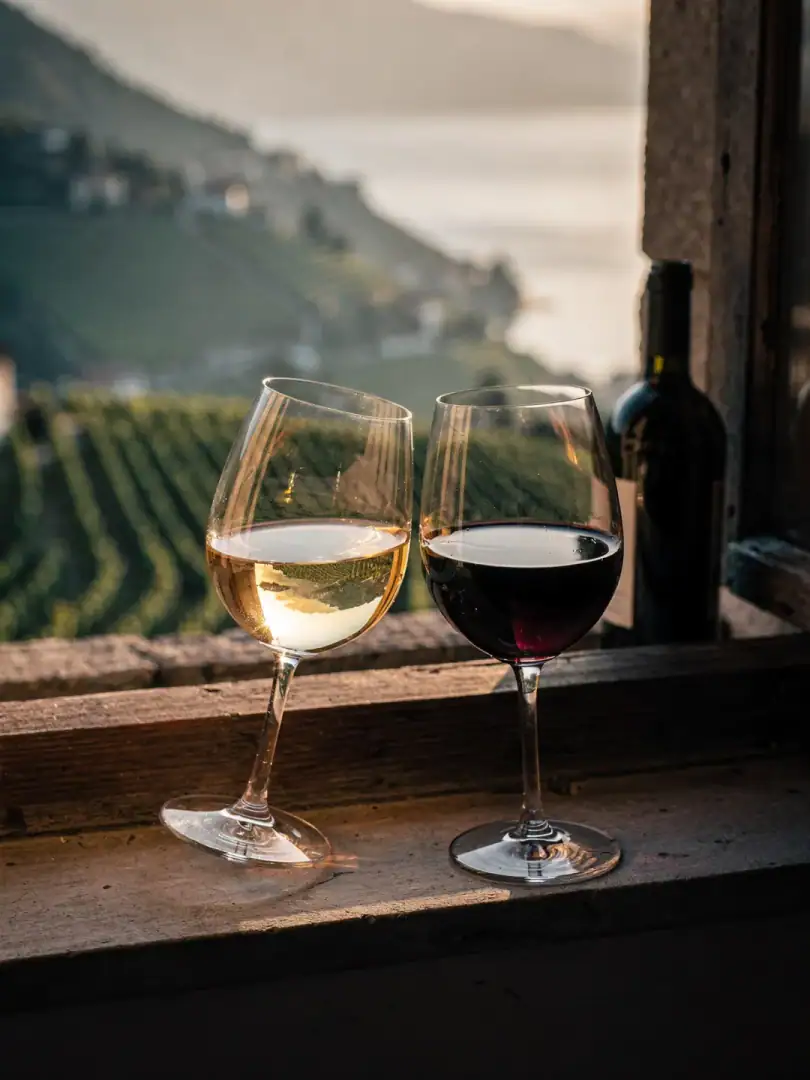
Set two glasses side by side, a Merlot bianco and a red Merlot from the same estate. Just looking at the two glasses reveals the whole of Ticino wine culture: one gleams straw yellow, almost water clear, the other glows ruby to garnet, and yet both come from the very same blue-black grape.
Smell the pale glass first. Merlot bianco smells of white pear, a touch of citrus peel, and sometimes freshly cut grass. In the mouth, tannin is barely perceptible, but there's a taut, almost salty acidity. Serve it too warm, above ten degrees Celsius, fifty degrees Fahrenheit, and you'll hardly taste any of that freshness left.
In the red glass, by contrast, dark plum comes first, followed by ripe cherry. With a Riserva there's also a hint of vanilla and toasted bread from the barrique. The tannin is there, but rarely harsh; you feel it as a soft, velvety coating on the gums rather than a rough brake, and that gentleness is what sets Ticino Merlot apart from its French counterpart, whose tannin often feels more austere. That comes down to the milder climate and generally shorter extraction times in the Ticino cellar.
The finish reveals the soil. A Merlot from the stony Sopraceneri ends crisp and rather short; one from the clay-and-limestone south lingers longer and warmer. Taste both glasses one after the other and you cover almost the entire range in a single afternoon. That's how much a single grape variety can deliver in one small canton.