Cheese, Perch, Malakoff
Wine & Food
Vaud's fondue is called moitié-moitié, half Gruyère and half Vacherin Fribourgeois, and tradition calls for nothing but Chasselas alongside it. The wine's acidity cuts through the melted fat, much like a squeeze of lemon on a rich fish—something everyone understands intuitively. Water, on the other hand, is avoided at the table: folk wisdom holds that the melted cheese would solidify into a lump in your stomach. Wine, by contrast, keeps it flowing.
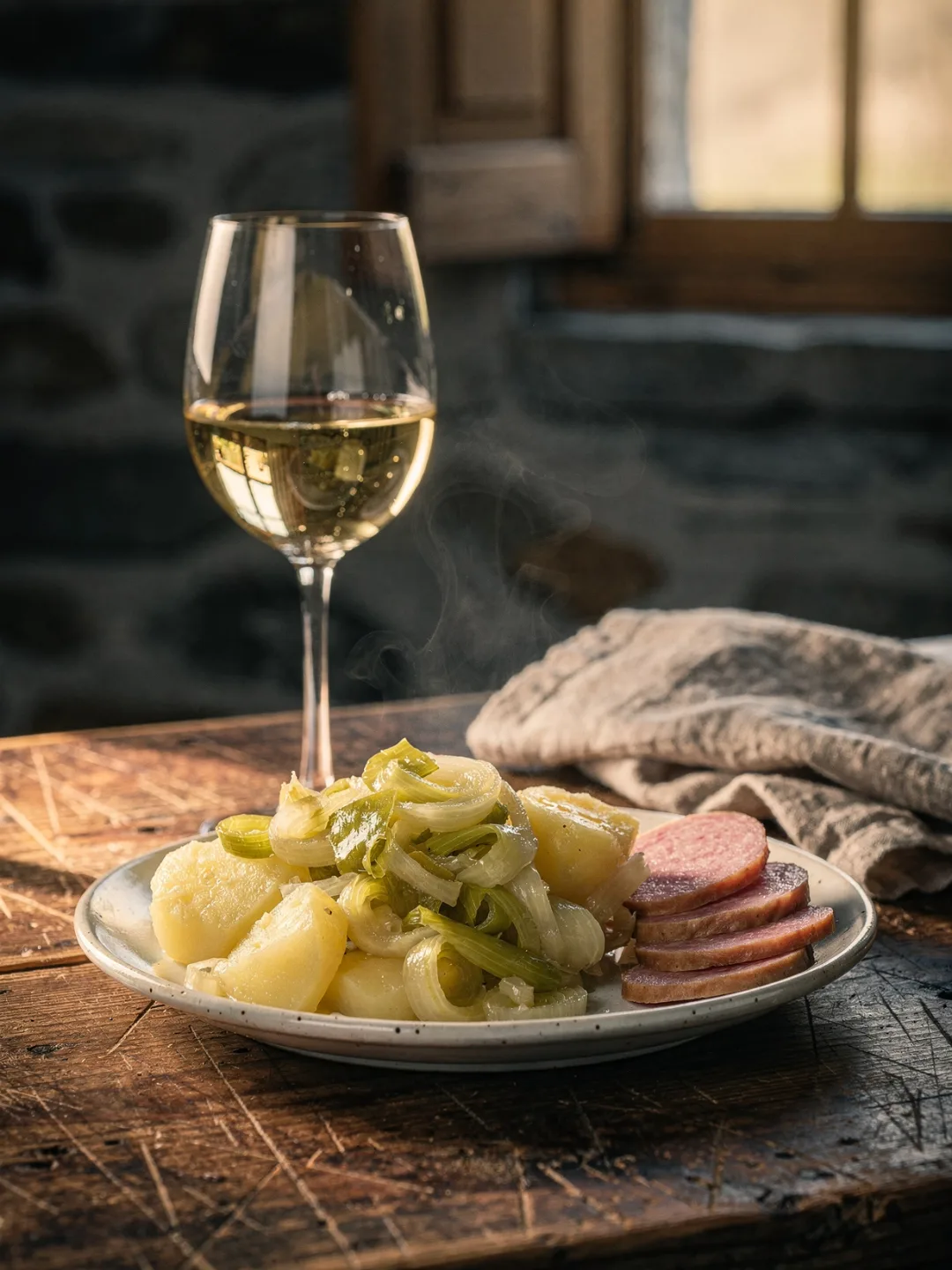
The canton's true national dish is Papet vaudois: leeks and potatoes, simmered soft with a little cream, served alongside spicy Saucisson vaudois. The white and green on the plate are no coincidence—they're the same colors as the cantonal flag. This hearty, lightly smoky dish calls for something more than a reserved Chasselas—a young, fruity Salvagnin made from Gamay and Pinot Noir suits it far better.
Along the shore, fish rules the menu. Filets de perche, golden-brown in butter and finished with a splash of the very Chasselas they're served with, appear on the card at practically every lakeside terrace between Lausanne and Montreux. The wine that just simmered in the fish lands minutes later in the glass beside it — a small echo that locals barely notice anymore.
One specialty with a surprising origin comes from four villages in La Côte: Vinzel, Luins, Bursins and Begnins. The Crimean War of 1854/55 gave rise to it. Swiss mercenaries had fought in the siege of the Malakoff fortress. Returning home, they brought back a deep-fried cheese stick, since named Malakoff. The aperitif that goes with it is, once again, Chasselas, served cool while the hot, cheesy pastry is still steaming.
If you want a rule of thumb, here's one: Chasselas is so understated that it can hardly go wrong. That holds true as long as fat, salt or mild sweetness are in play. Only when a dish gets loud itself — smoked, heavily spiced or deeply braised — does it call for one of the Vaud reds. Otherwise, they linger in the shadow of the great white.