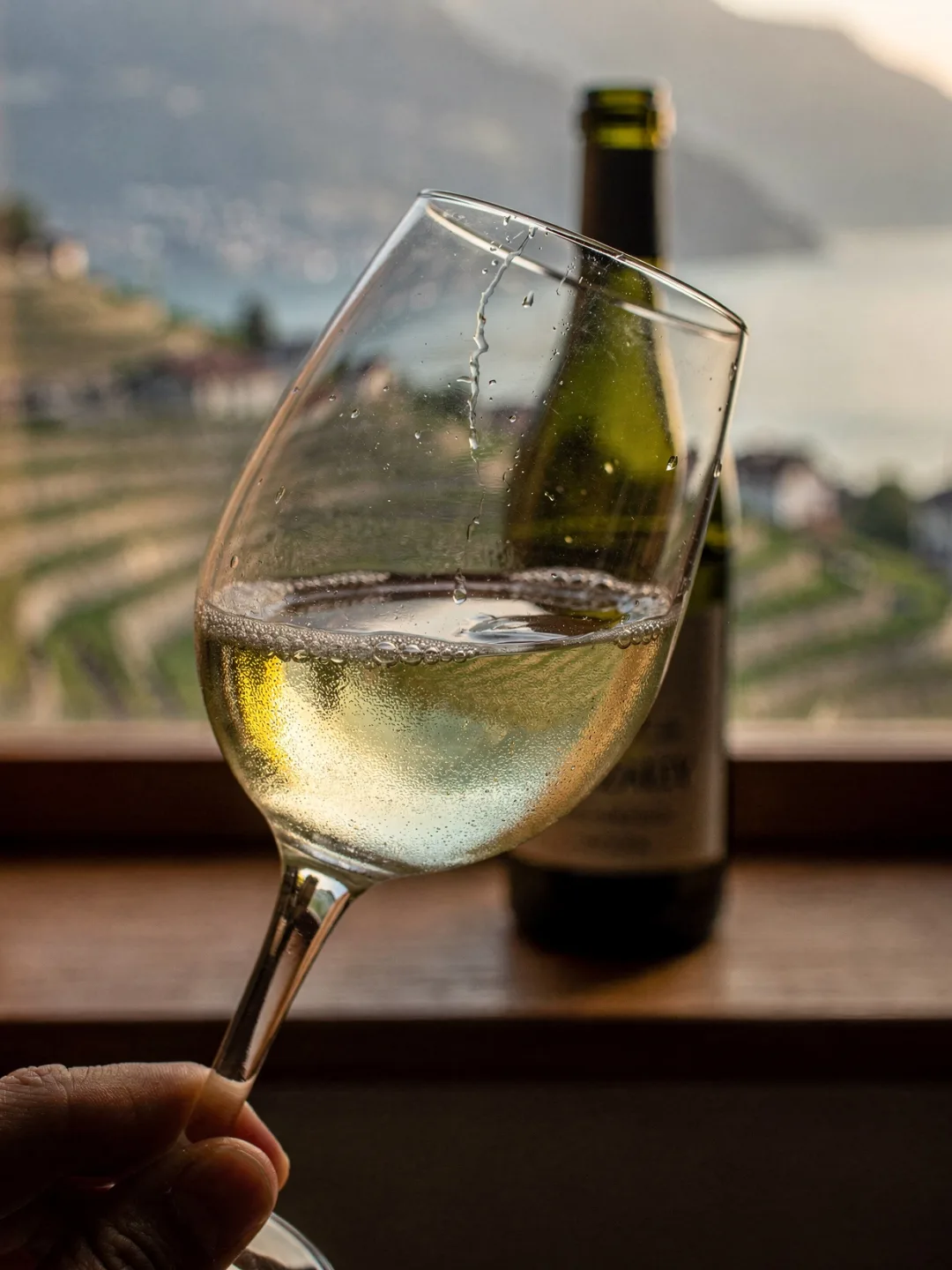
A Dorin in the Glass
Tasting
Pour a young Dorin into the glass and hold it up to the light. The color is pale, often with a hint of green, almost like diluted apple juice. Look closely and you'll spot tiny bubbles clinging to the rim of the glass, a result of aging on the fine lees. This is the famous perlant—not a flaw, but a deliberate touch.
The aroma demands patience. Chasselas never shouts, and only after swirling do mild notes of apple and pear emerge, sometimes a hint of acacia blossom. A young wine from La Côte usually stops there. A ten-year-old Dézaley, on the other hand, has long since traded its fruit notes for honey, nuts, and a smoky note known as firn—the same grape, an entirely different aroma.
On the palate, the light fizz catches your attention first, followed by a juicy acidity that keeps the wine from ever feeling dull despite its understated aromas. A salty, almost stony impression often lingers at the finish, which connoisseurs attribute to the soil. Wine from the Nagelfluh in Lavaux tastes tauter than one from the moraine in La Côte, even though the same process happened in the cellar both times.
With a Servagnin or Salvagnin, the order is reversed. The color is pale, almost translucent, as with any Pinot Noir. On the palate you immediately notice the faint tannin—a sensation rather than a taste, a fine coating on the gums rather than a rough wall. Red cherry and redcurrant carry the wine, not power or length.
This very typicity is exactly what the Terravin jury assesses when deciding on the Lauriers d'Or. It's not about whether a wine is powerful, but whether it tastes like what it's supposed to be. With Chasselas, this is one of the toughest exercises in all of Switzerland—quiet wines forgive no flaws, because there's nothing there to drown one out.