Aging, Barrel, Seal
Winemaking
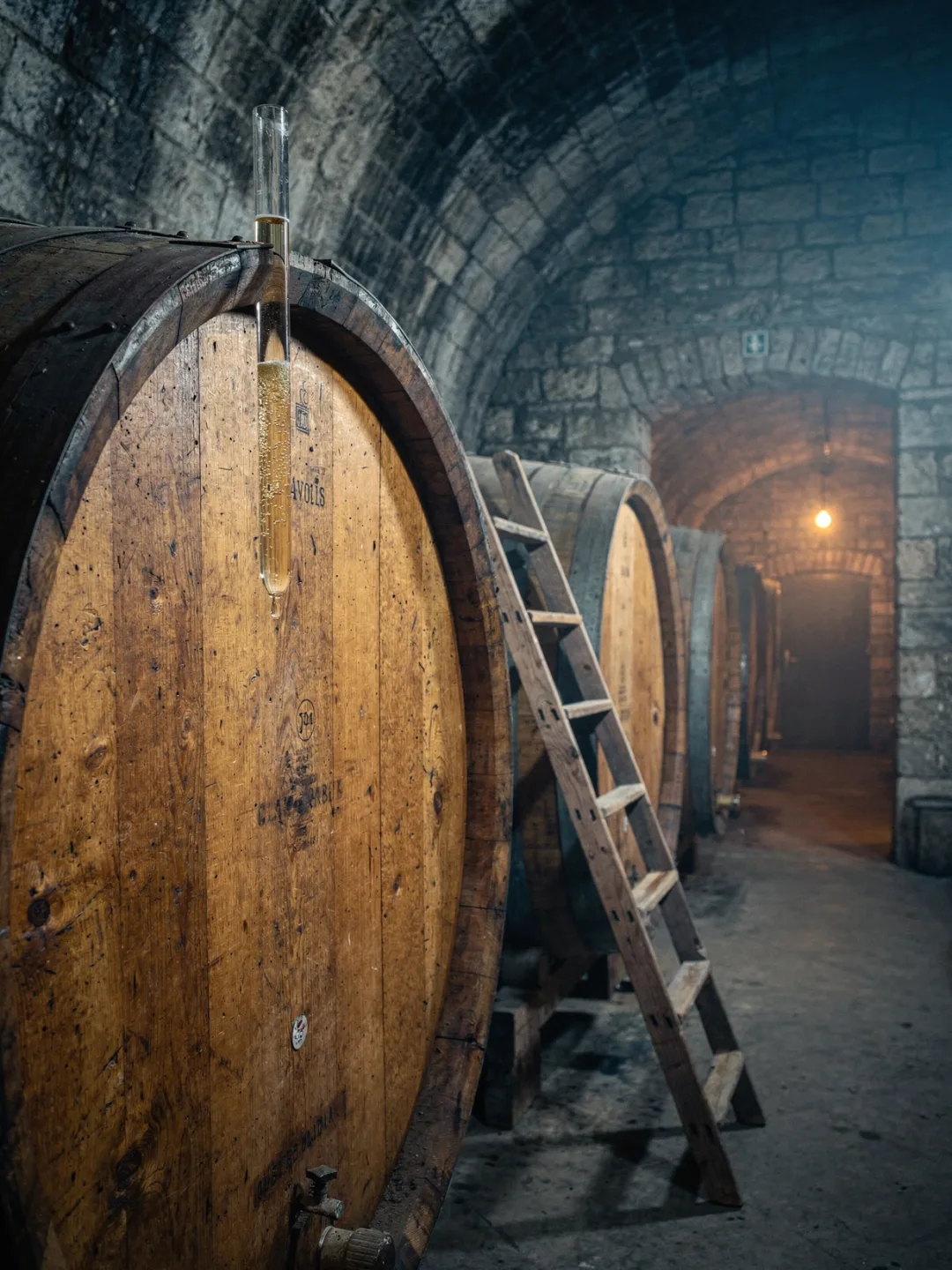
Most cellar work in Vaud doesn't revolve around red wine but around a single, pale must. Chasselas is deliberately vinified with restraint, usually in steel tanks or old, large wooden casks that impart barely any flavor of their own—almost no oak character, almost no toast. Over winter, the young wine rests on its fine lees, which gives it a light creaminess and preserves the subtle, natural fizz that many Vaud locals recognize instantly. Bottling follows in spring, often as early as March.
How ripe the grapes must be is set by law according to sugar content, measured in degrees Oechsle. This figure shows how much sugar is in the must and how much alcohol will later result from it. For Dézaley and Calamin, this threshold sits six to seven degrees higher than for ordinary Lavaux Chasselas—and a full ten degrees higher for red grapes. That may sound like a small margin. Otherwise, sugar is the only criterion. Anyone who falls short can still sell their wine—just not under the Grand Cru name, but as simple Lavaux.
For Servagnin, the regulations even prescribe barrel aging—a minimum of sixteen months in wood. This is unique in Vaud: no other red wine in the canton is legally bound to a minimum time in barrel. Otherwise, winemakers have a free hand. The reason lies in the grape itself—the old clone brings firm tannins that soften through the slow oxygen exchange of the wood, without the wine losing its bright, cherry-like fruit.
At the very end of the chain stands one more test that no law requires. In 1963, the Vaud winegrowers' association founded the Terravin award, in which a jury blind-tastes every wine submitted. No obligation, but an honor. Only those that pass may carry the golden capsule bearing the Lauriers d'Or Terravin on the bottle neck—a promise to the buyer that goes beyond the legal minimum of the AOC.