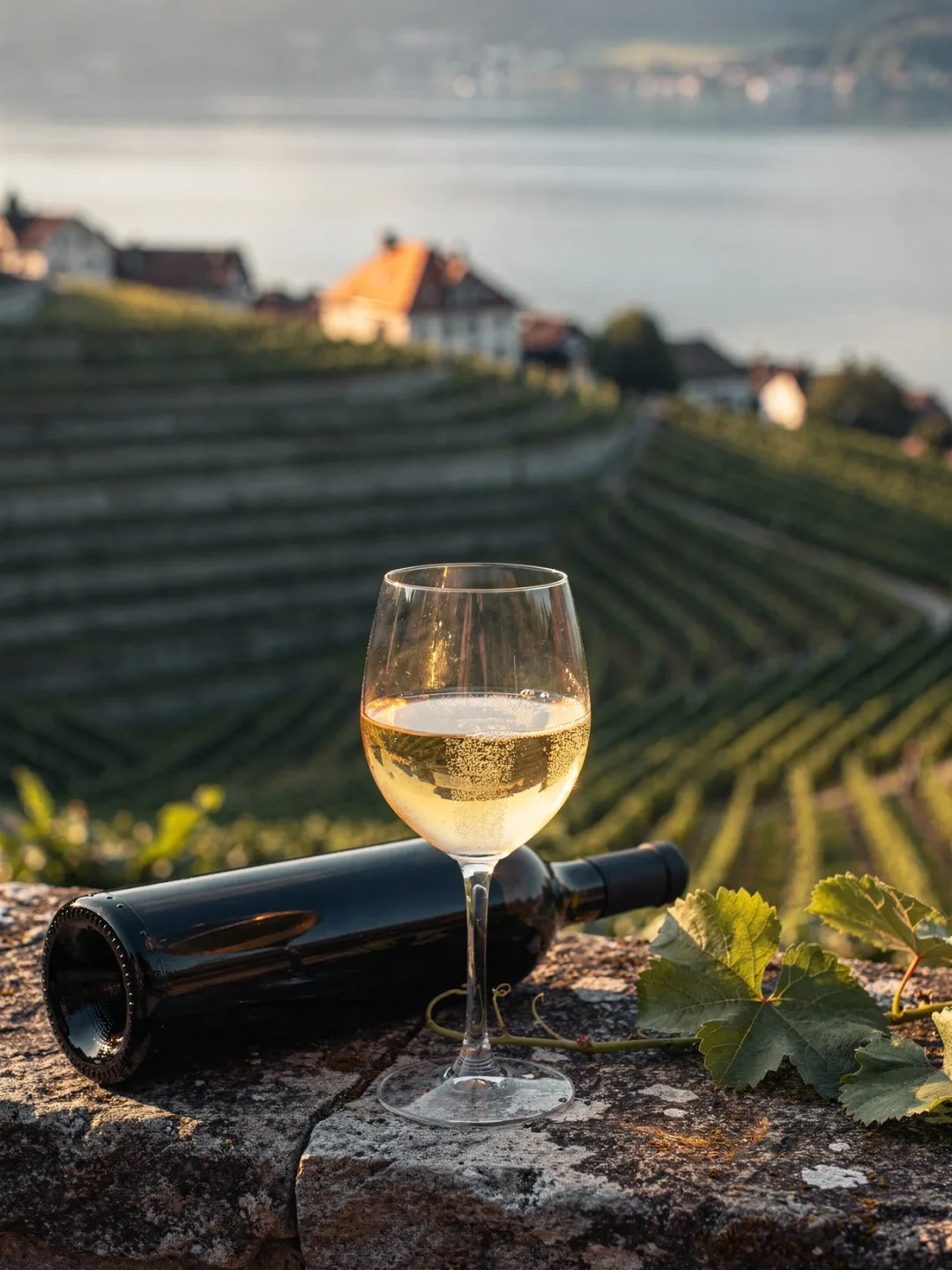
A Burgundy Glass for Dorin
Glassware
It's precisely with Vaud's most understated wine that the glass makes the biggest difference. Chasselas has a reserved, almost shy aroma. A narrow glass meant to concentrate scent has the opposite effect here: it crowds the few aromas so tightly together that they smother each other instead of unfolding. A wide Burgundy glass, the kind usually reserved for Pinot Noir, works better—its bowl finally gives the quiet aroma room to breathe.
Temperature matters at least as much as the glass. You'll notice it from the very first sip. Nine to twelve degrees Celsius is considered ideal, and since the wine warms up quickly in the glass, it's best poured about two degrees cooler than the temperature you want to drink it at. A young Dorin from La Côte can handle even a bit more chill. A mature Dézaley, which begins to smell of honey and nuts, only truly opens up at the upper end of that range, around twelve degrees.
Ten or fifteen years in the cellar transform a good Chasselas completely. You notice it first in the aroma. The bright apple fruit of youth turns to honey, freshness turns to flint, and it's precisely for this second aroma that an aged Dézaley or Calamin needs even more room in the glass than its younger counterpart. Serve it in a narrow glass, and you give away exactly the aromas you aged it for.
Nearly the same rule applies to Vaud's red wines, temperature included. Servagnin and Salvagnin, both made from Pinot Noir or a blend with Gamay, have little tannin and moderate color. They too benefit from an open Burgundy glass and a serving temperature of fourteen to sixteen degrees—noticeably cooler than you'd serve a robust Bordeaux. Pour only up to the widest point of the bowl, never higher.