Raclette and Cholera
Wine & Food
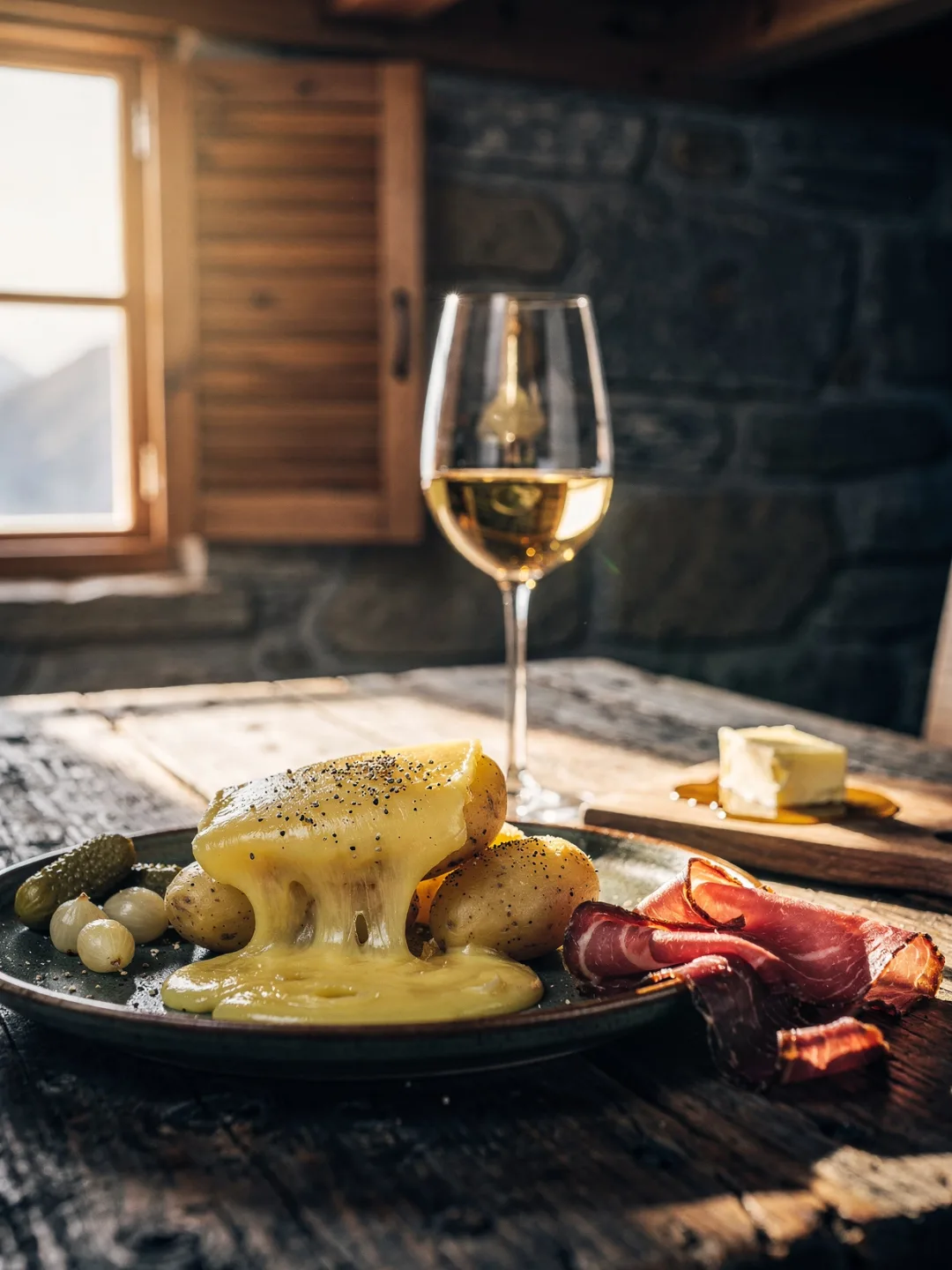
Raclette, dried meat, and a glass of Fendant belong together in the Valais as naturally as vineyard slopes and dry-stone walls. This is no marketing coincidence, but centuries-old practice. Valais cuisine grew up on the same rugged hillsides as the wine, built from whatever farmers had kept in their cellars through the year.
Raclette du Valais carries a protected designation of origin, AOP. It's made from raw milk, and silage feed for the cows is forbidden. The wheel matures for at least three months on boards of red spruce, being turned regularly and washed with brine. A chilled Fendant is the classic match for the melted cheese: its acidity cuts through the fat without overpowering the mild cheese.
Viande séchée du Valais is air-dried beef with a delicate white noble mold on the outside. Around forty butchers across the canton produce it, nearly six hundred tons a year, a fifth of all Swiss dried meat production. A delicate white wine won't do here. Better suited is a Dôle or a young Cornalin, with enough acidity to lift the fat of the paper-thin slices, but without heavy tannin weighing it down.
In Upper Valais, in the Goms valley, people have cooked Cholera for generations, despite its name a harmless pie made of potatoes, leeks, bacon, cheese, and apple. The name is said to come from a time of hardship, when everything left in the cellar had to be baked into something edible. This hearty-sweet dish again calls for a simple, young Fendant, served cool, which balances the apple's sweetness rather than fighting it.
If you want a rule to remember, it's this: fat and salt pair well with acidity, not with tannin. That's why Fendant remains the true all-rounder on the Valais table. Only with the rare sweet wines does everything flip. A glass of Vin des Glaciers or a nobly sweet Amigne demands a dessert at least as sweet, or the wine will suddenly taste sour and thin.