Mango, Acidity, Salt
Tasting
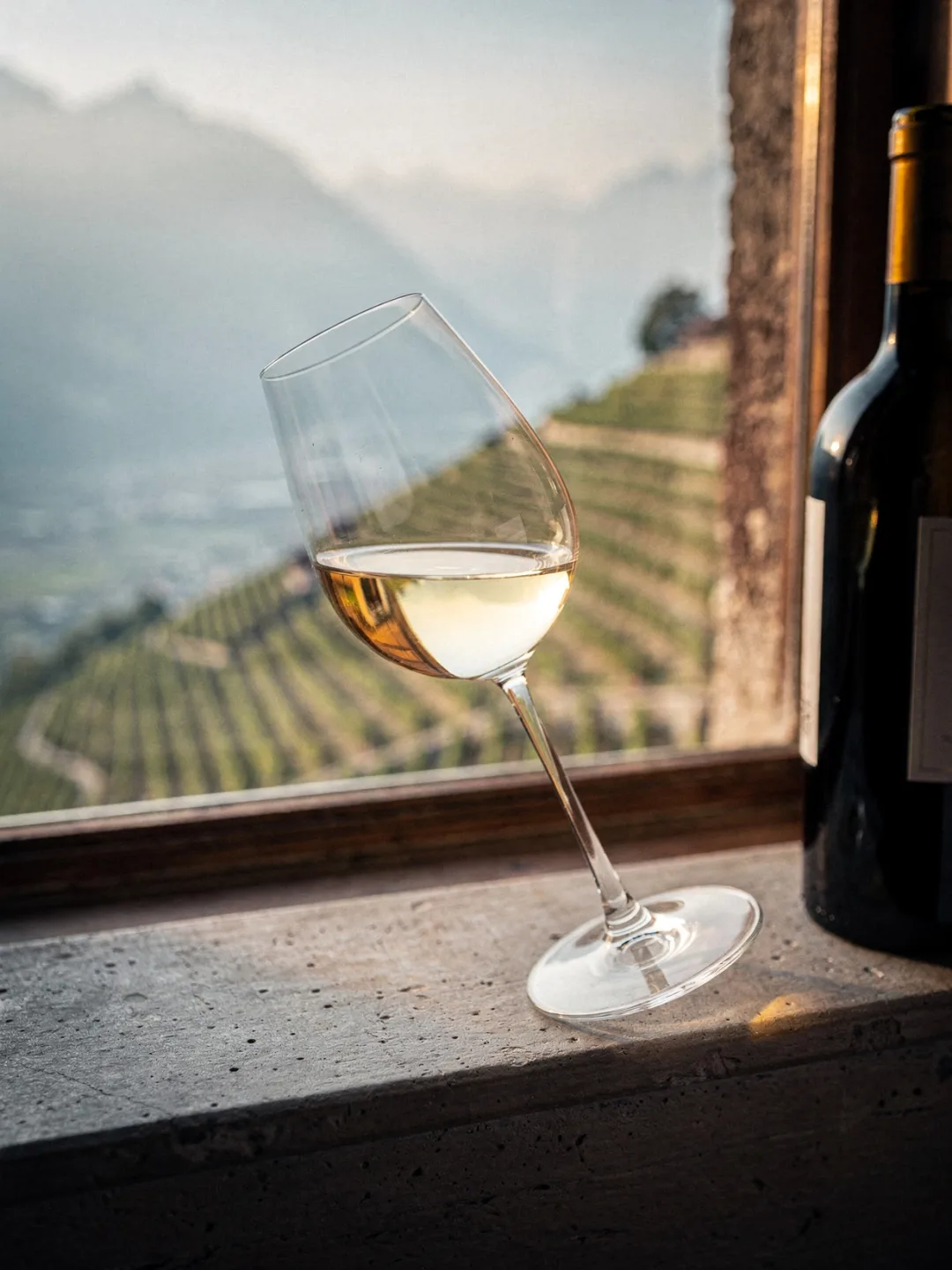
Take a glass of Petite Arvine and hold it up to the light. The color is pale straw-yellow, sometimes with a hint of green, never golden, the variety is too young in its aging and grown in too cool a climate for that. A golden hue would rather point to Ermitage or Malvoisie, the two riper white wines of Valais.
Smell first without swirling, then again after swirling, half the information lies between the two. In the still glass, mango comes first, sometimes grapefruit, along with a hint of rhubarb. After swirling, more opens up: a light herbal note, sometimes a touch of flint. Many people are reminded of wet limestone, though this has nothing to do with the soil itself.
On the palate, watch for two things that rarely occur together: firm acidity that makes your mouth water, and a salty undertone on the finish. Hardly any other white wine variety in the world shows this so clearly. Petite Arvine tastes almost like a wine with a view of the sea, even though the nearest sea lies hundreds of kilometers away, somewhere beyond the peaks that ring the entire valley.
Anyone who tries an Amigne from Vétroz alongside it will notice the difference immediately. It, too, can finish salty, but its core lies in linden blossom and orange peel, drier and quieter than the fruit of Petite Arvine.
At the end, count: how long does the flavor linger after you swallow? With a good Petite Arvine, it's ten to fifteen seconds; with a simple Fendant, often just three or four. This length can't be faked in the cellar, not with sugar, not with acid. It reveals what truly happened in the vineyard. That's what stays in the memory.