Apple or Apricot
Tasting
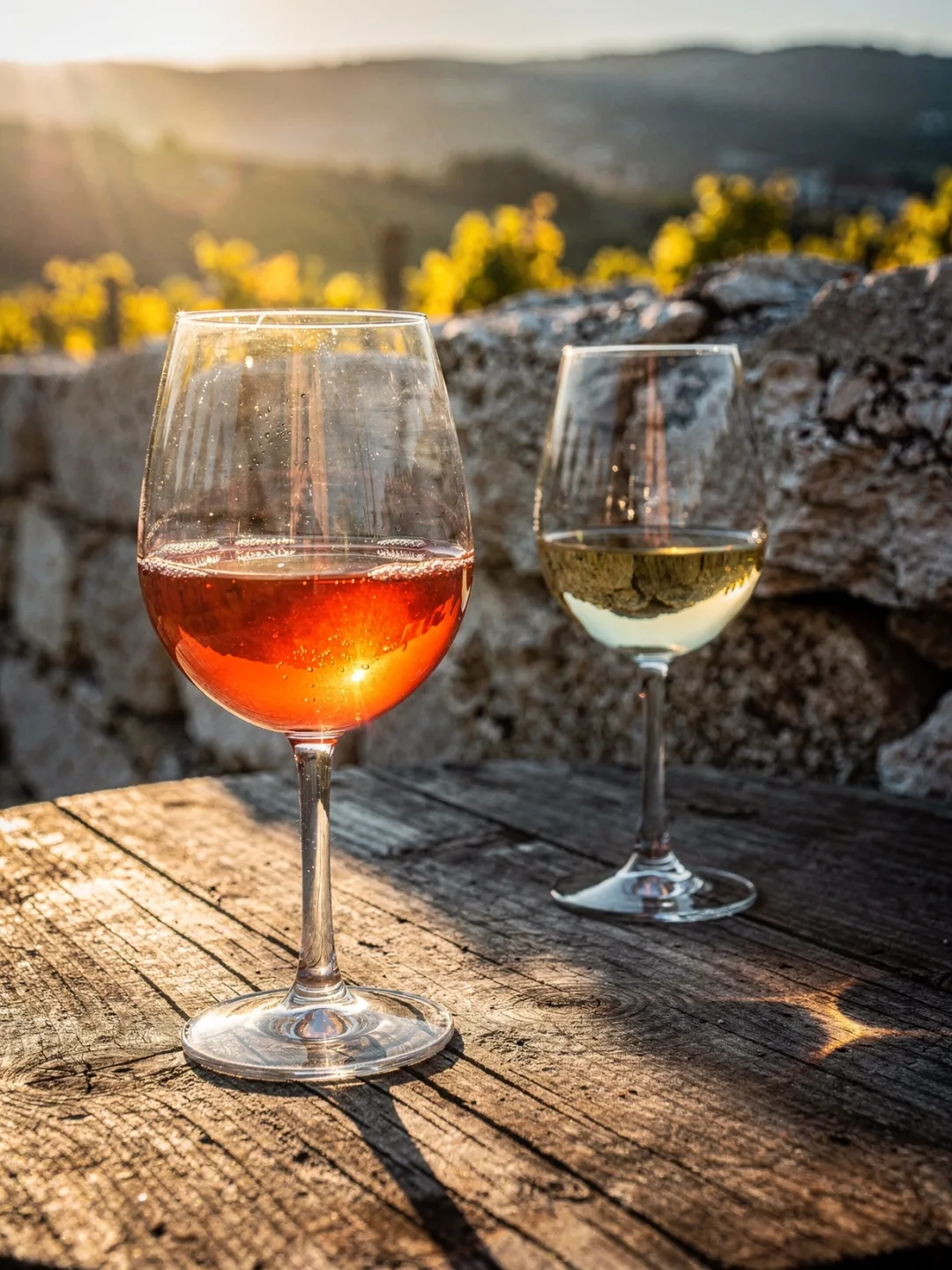
Set two glasses of Rebula side by side, one made in the classic style, one an orange wine, and the color alone tells half the story. One is pale yellow with a hint of green; the other, amber to copper, sometimes almost like a pale sherry. Both come from the same grape. Only time on the skins separates them.
Start by smelling the classic glass. Green apple comes first, then citrus peel, with a hint of meadow flowers in the background, fresh and unmistakably winey. With the orange wine, everything shifts: dried apricot, quince, honey, sometimes a whiff of incense from the long contact with skin and seed. Swirl it, and you'll also pick up nuts and a hint of orange peel.
In the mouth, it's the texture that surprises most. The classic Rebula feels smooth, with a lateral acidity that gets the saliva flowing. The orange wine, by contrast, has a noticeable, slightly drying grip on the tongue — tannin, of a kind normally only associated with red wine, even though not a single dark pigment was ever involved.
The bitter-almond note on the finish belongs to both versions and is the variety's most reliable tell, whether it's Rebula or Jakot in the glass. If it's missing entirely, either the grapes weren't ripe enough, or a different variety has found its way into the wine. In a Jakot, the renamed Sauvignonasse, there's also a faintly grassy note, almost like freshly cut hay, that sets it apart from the more floral Rebula.
In the end, it's worth comparing a Merlot from Brda with a Cabernet Sauvignon of the same age from the very same Opoka site. Both show the same mineral backbone, but the Merlot feels rounder and drinks well sooner, while the Cabernet comes across as more austere and built to age longer. The soil stays the same. The difference lies entirely in the grape.