Acacia Instead of Oak
Winemaking
On a large scale, Rebula is made in a controlled, cool style. At Klet Brda, the cooperative in Dobrovo supplied by around four hundred families, the juice runs off the skins immediately after gentle pressing. It ferments at 61–64°F (16–18°C) in stainless steel tanks. This is how the fresh, clean wines poured in nearly every wine bar in the region come to be. As early as 1962, the cooperative used this very Rebula to produce its first sparkling wine, Peneča Rebula.
Movia in Ceglo does nearly the opposite. For Lunar, the Rebula stays in contact with its skins and seeds for eight months. It ferments spontaneously with wild yeasts, with no added sulfur whatsoever, and is bottled by gravity at the full moon, without pumps and without filtration. Aleš Kristančič, the eighth generation of his family on the estate, follows the lunar calendar just as his ancestors did.
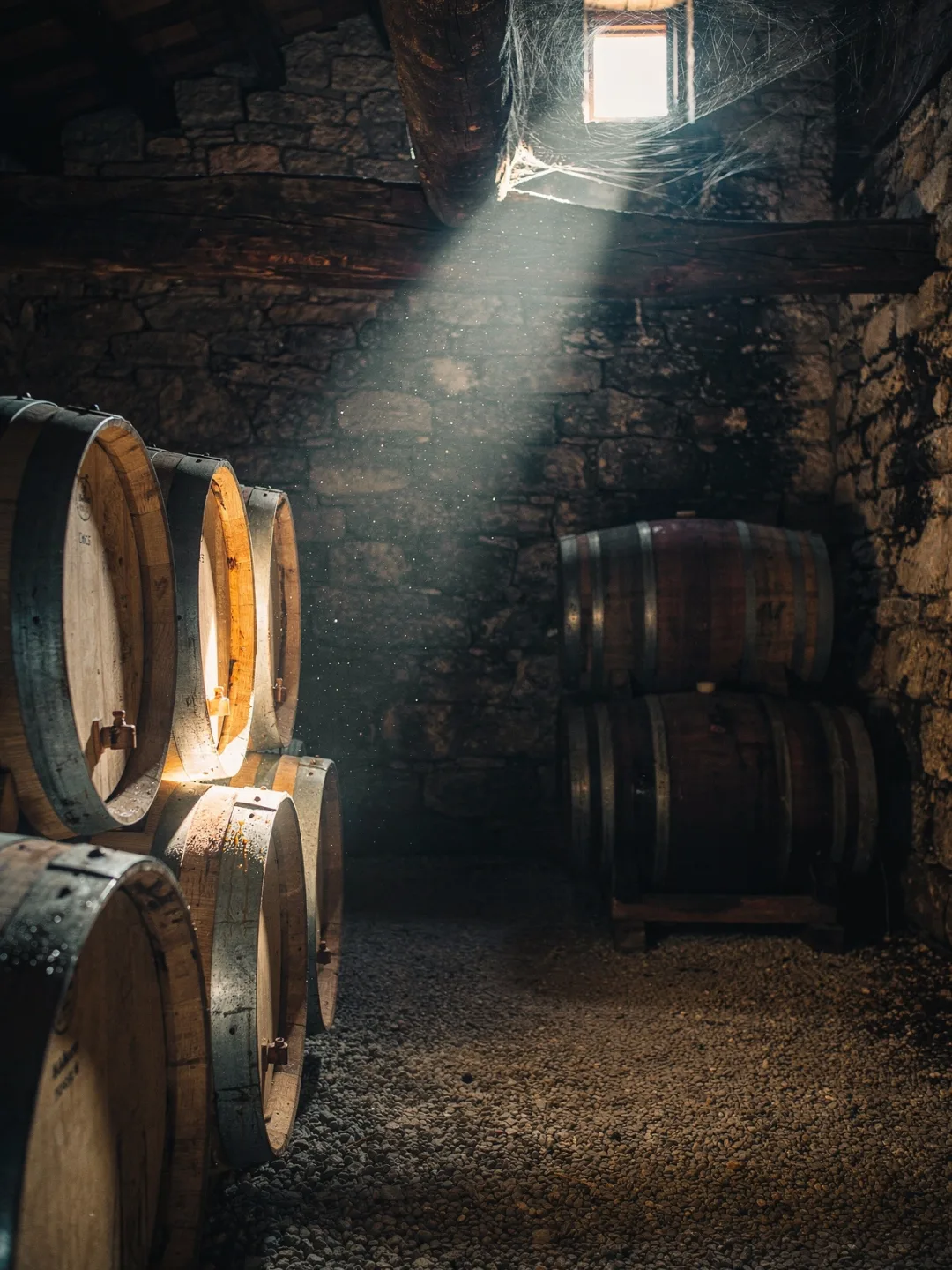
After that, the more ambitious wines often see wood, though rarely the usual kind. Instead of French or American oak, many wines in Brda age in large old casks made of acacia or mulberry, sometimes even cherry wood. These trees grow everywhere in the surrounding landscape too. Such woods impart almost no flavor of their own, unlike new oak with its vanilla and toasty notes. Instead, they simply let the wine breathe slowly through their pores.
With the red wines, the process runs more classically. Two to three weeks of skin contact for color and tannin, followed by one to two years in wooden barrels — these wines, when they meet the criteria, carry the ZGP quality seal, Slovenia's equivalent of EU protected designation of origin. Many of the unsulfured orange wines made from Rebula, by contrast, fail to pass the official tasting panel for this seal. They're sold only as simple table wine — which does nothing to dent their reputation among connoisseurs.