Pumpkin Seed Oil & Šipon
Wine & Food
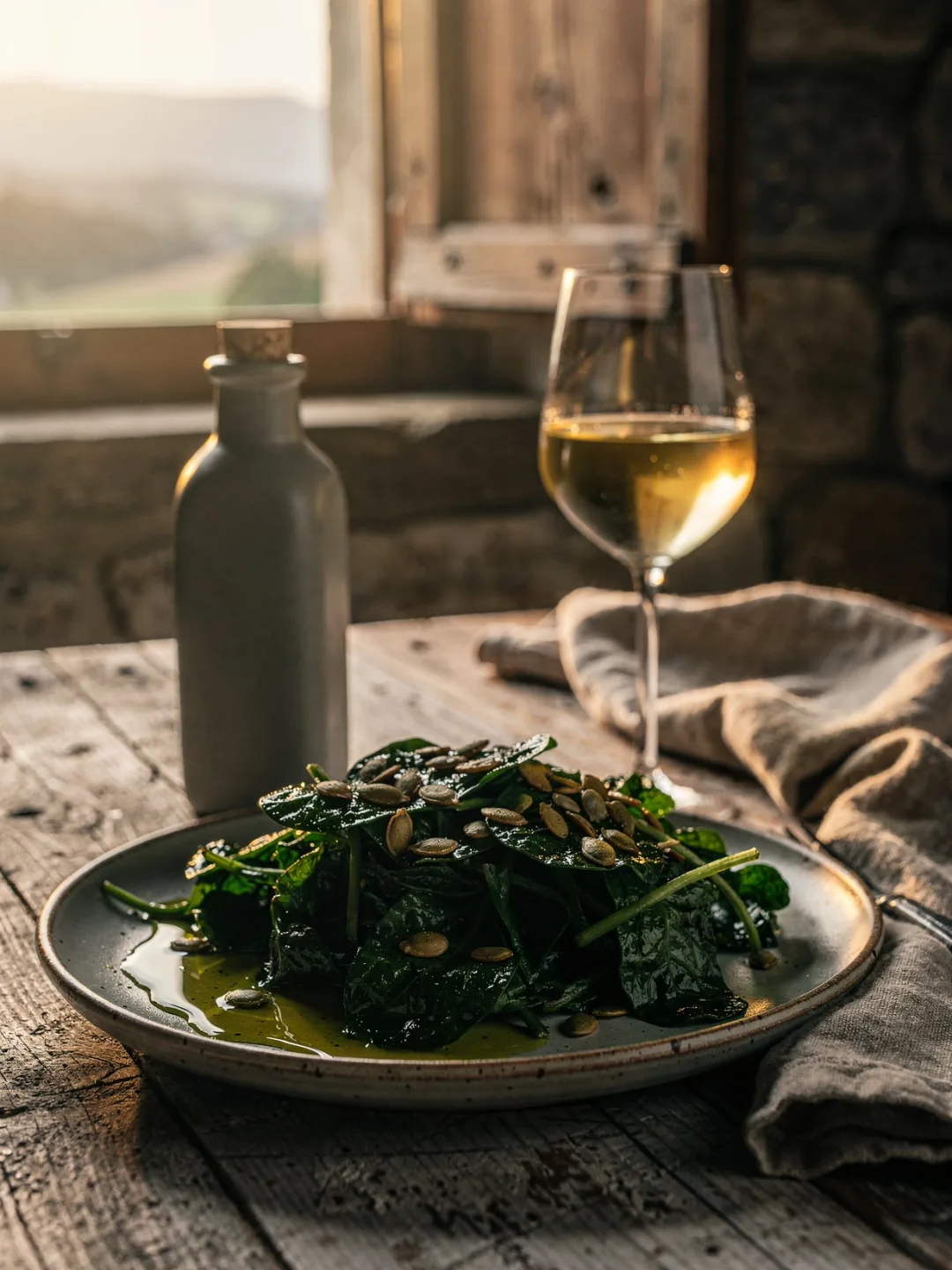
The cuisine of Štajerska Slovenija knows one thing above all. Whatever the family's own slope and farm can provide ends up on the table. At the top of the list is Bučno olje, a dark green pumpkin seed oil made from roasted seeds of the oil pumpkin variety, drizzled over salads and cold starters, and carrying its own protected designation of origin.
With a Bučna solata, a salad of pumpkin seed oil, vinegar and little else, a young, cool Sauvignon works best. Its acidity cuts through the heavy, nutty oil. The green bell pepper note in the wine almost mirrors the roasted character in the oil itself.
At Martinovanje in November, the must is officially declared wine. In the Haloze, roast pork traditionally follows, often served with cabbage. Modra Frankinja from the warm south-facing slopes suits it well, robust enough to stand up to the fat and the crispy crust without overwhelming the roast.
Trout comes from the fish ponds of the Haloze, fried or smoked. A crisp Laški or Renski rizling belongs alongside it. With smoked fish, salt works its usual magic: it rounds off the acidity and suddenly makes a young, still somewhat angular wine approachable. Nothing more is needed.
For dessert, Haloška gibanica comes to the table—a layered cake made with poppy seeds, nuts, apple, and curd cheese (topfen). It calls for a sweet Šipon, a Jagodni izbor perhaps. A dry wine always tastes thin and sour next to so much sweetness, never the other way around.
Zidanice, small stone huts scattered among the vineyards, still define the look of these hills today. They belong to winegrowing families in the Jeruzalemer Gorice, who in autumn pour their own homemade wine and serve smoked bacon and fresh bread to anyone who happens to pass by, even if they don't buy a single bottle.