On a Šipon
Tasting
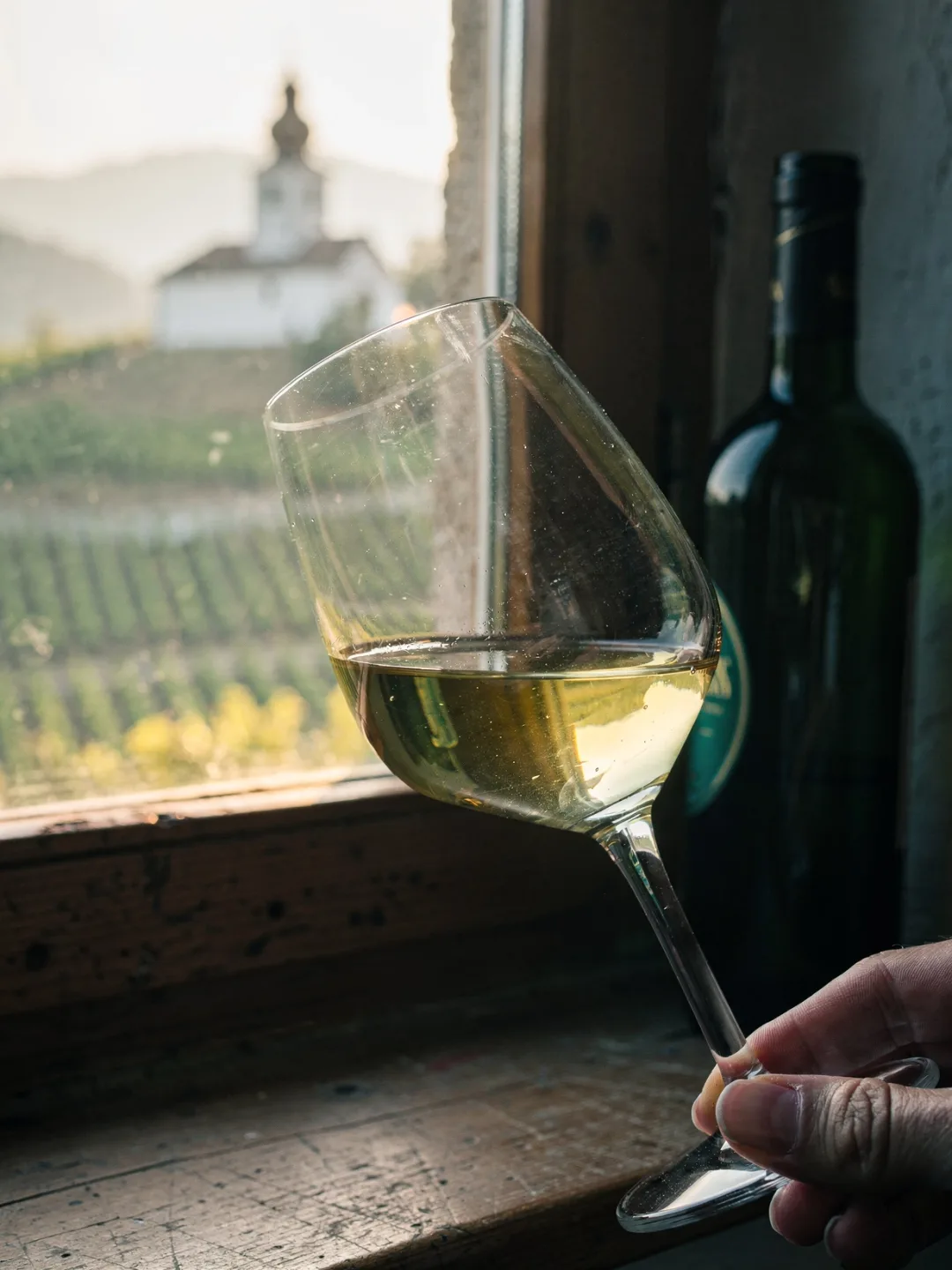
Take a glass of young Šipon and hold it up to the light. The color is pale yellow with a greenish shimmer, almost like an unripe gooseberry, quite different from the rich gold a mature Jagodni izbor takes on later.
Then smell it twice. In the still glass, quince and green apple rise first, since these light molecules evaporate first. After swirling, what follows is heavier and slower to release: a fine honey note, a hint of orange peel, and in older vintages even a touch of beeswax.
In the mouth, pay attention to two things separately. You'll feel the acidity along the sides of the tongue, strong and almost saline, an echo of the opoka the grapes grew on. Only afterward comes the fruit, restrained in a dry Šipon, but with noticeable residual sweetness in an Izbor.
Sauvignon from the same area, by contrast, is instantly recognizable. Instead of quince and honey, it brings elderflower, green bell pepper and a hint of tomato leaf, along with an acidity that feels sharper than in Šipon, making the wine feel more pointed, almost more nervy.
Finally, count. How long does the flavor last after you swallow? For a simple regional wine, it's just a few seconds. For a Šipon from an old vine in the Jeruzalem hills, it can stretch into a full half minute, as honey, stone and fruit slowly fade one after another.
Zlata radgonska penina smells different. Fine bubbles rise slowly along the rim of the glass, and the nose reveals brioche and toasted almond, a sign of the long lees aging this sparkling wine undergoes.