Tank, Barrel, Bottle Fermentation
Production
In the cellar, two traditions diverge here. Most white wines, Sauvignon and Laški rizling above all, ferment cool in stainless steel tanks, which preserve the delicate fruit and elderflower notes without overlaying them with foreign aromas.
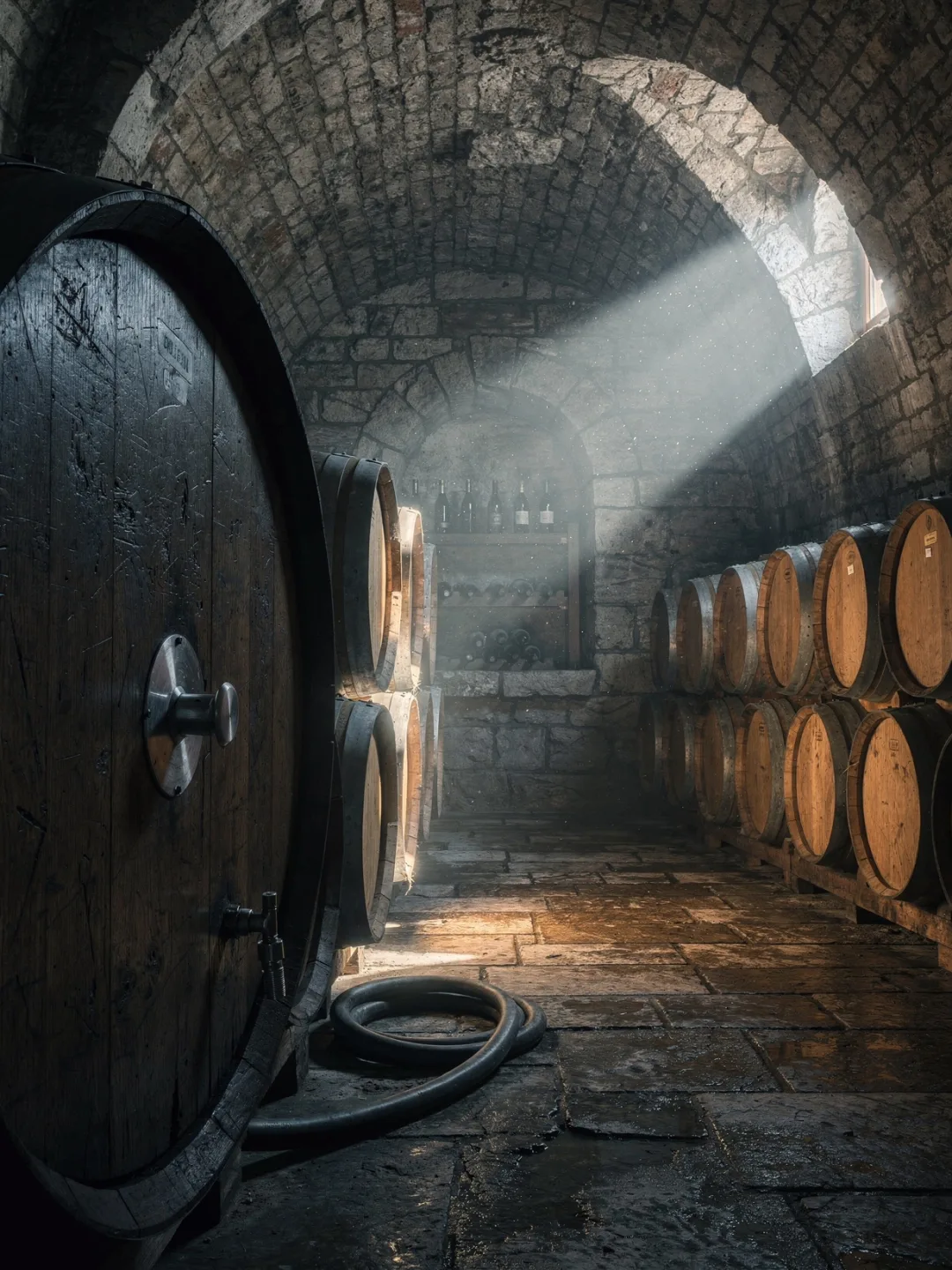
Šipon, on the other hand, sometimes gets more time. Some estates, including the Kupljen family winery in Jeruzalem, age it partly in large, old wooden casks. These barrels release almost no aroma of their own but let oxygen through slowly, rounding the wine out without giving it a hint of vanilla.
For the top sweet wines, a ladder of designations applies, one that recalls the German Prädikat system but carries its own names. Pozna trgatev stands for late harvest, Izbor for selected grapes, Jagodni izbor for individually picked berries. At the very top stands Ledeno vino, pressed from grapes frozen in winter. Each level must contain less water in the juice than the one before it, measured by natural sugar content.
Things work quite differently in Gornja Radgona. There, Zlata radgonska penina is aged by the classic method, meaning the second fermentation takes place directly in the sealed bottle, with its own yeast and sugar. It then rests on the lees for at least twenty-four months, some vintage bottlings considerably longer. Only afterward is the settled yeast sediment removed by hand from the neck of the bottle.
In the end, a grading system decides what name a wine may carry. Namizno vino sits at the bottom, then Deželno vino, above that Kakovostno vino. At the top stands Vrhunsko vino, which must be made without any sugar enrichment and needs at least 18.1 out of 20 points in the official tasting; Kakovostno vino needs only 16.1.