Violet & Slate
Tasting
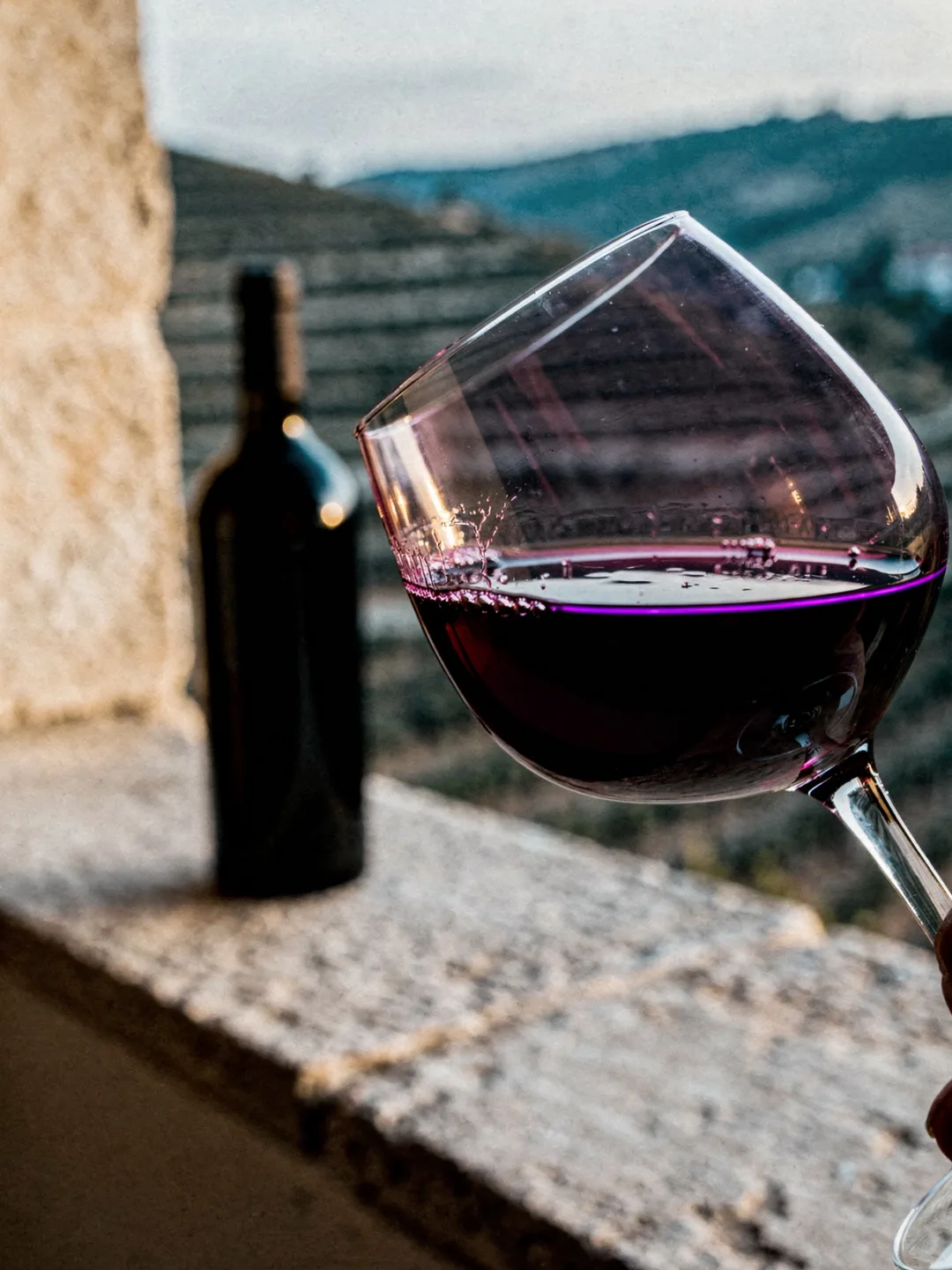
A Mencía reveals its origin in its color before you even smell it. Tilt the glass slightly over a white sheet of paper. Along the rim of a young wine, you'll see a shimmer that leans distinctly toward violet — a hue almost no other Spanish red variety shows quite this way. Toward the center, the color stays dense, but never as opaque as with a Cabernet.
Smell twice: once with the glass still, once after swirling. In the still glass, violet comes first, followed by red cherry and sometimes a ripe plum. After swirling, what emerges is harder to release: a balsamic note. In wines from the Corullón slate slopes, this is often joined by an almost salty minerality, one sommeliers like to attribute to the rock, even though roots don't actually transmit minerals in the literal sense.
In the mouth, it's worth noting two things separately. The acidity sits along the sides of the tongue and stays notably fresh in Mencía, even after a hot summer — a legacy of the cool nights in the mountain basin. The tannin lies as a fine, never coarse grain across the palate, carrying the wine rather than weighing it down.
Compare two bottles side by side if you can. An old Mencía from the slate terraces around Corullón feels denser, more serious, and needs time in the glass before it opens up. A young one from the flat Bierzo Bajo, by contrast, drinks easily, fruity and straightforward. Same grape name, but two wines that could hardly be more different.
In the end, count how long the flavor lingers after you swallow. With a simple Joven, that's a few seconds. With an aged wine from Corullón, it's often twenty or more. This length can't be faked in the cellar—it comes only from the slate and the age of the vines.