Flor or Air
Production
After harvest, Palomino must ferments completely dry, until no sugar is left. The young wine then sits at around eleven to twelve percent alcohol. Only then does the real decision begin. An experienced taster smells every single barrel and sorts the wine into two very different futures.
If a barrel shows fine, floral, delicate character, it's fortified only lightly — with pure wine alcohol — just enough for a paper-thin layer of yeast to survive on top of it: the Flor. Until August 2026, at least fifteen percent alcohol was required for this; since then, fourteen percent is enough. This yeast feeds on alcohol, glycerin and oxygen. It forms a white veil on the surface and protects the wine underneath from air. This is how Fino and Manzanilla are made.
If a barrel instead shows richness and breadth, it's fortified to at least seventeen percent. At this strength any yeast dies off, and the wine matures instead in open contact with air — oxidatively, as it's called. Over decades it darkens and turns nutty this way: Oloroso.
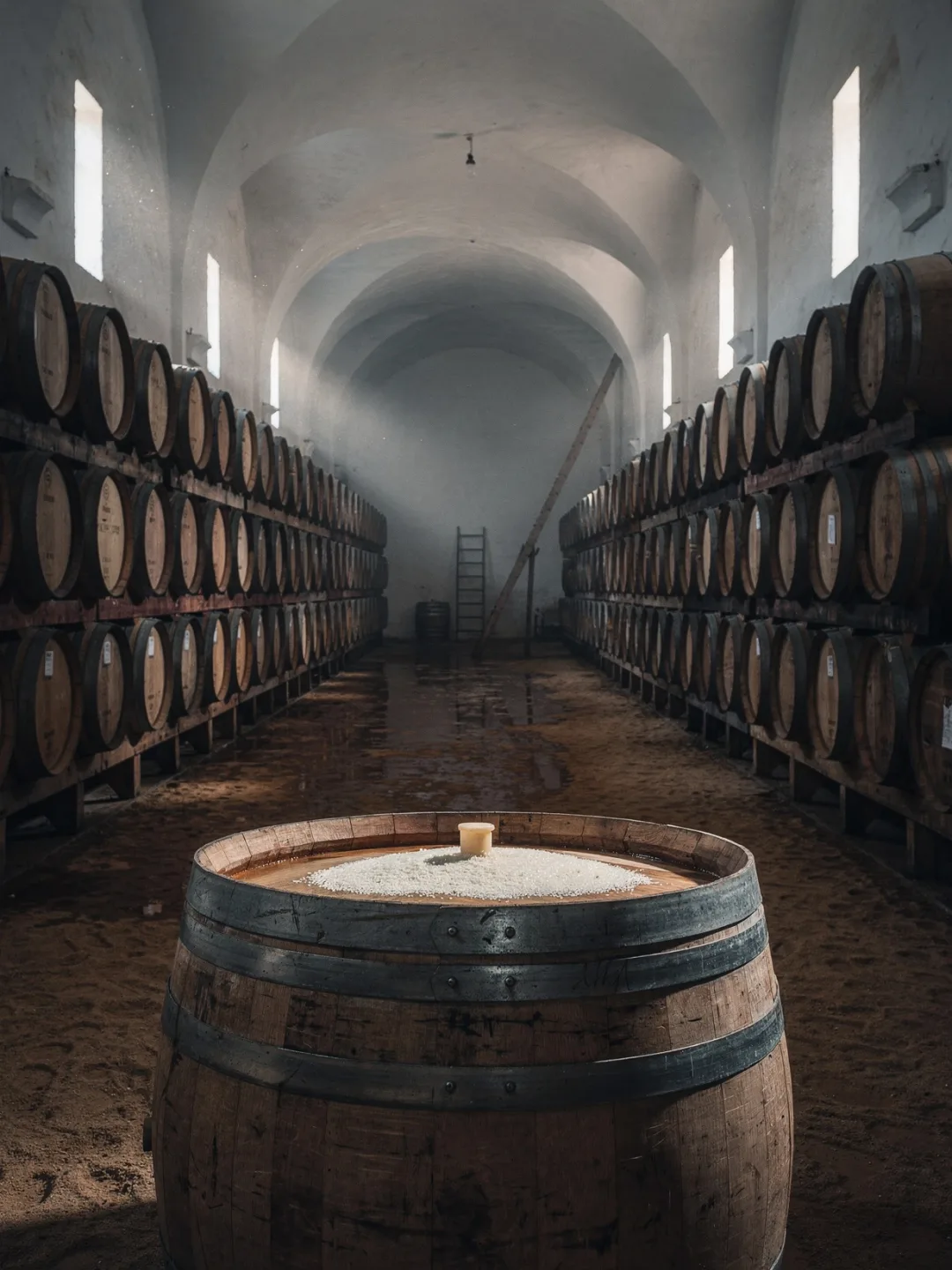
The cellars themselves are built around the Poniente and Levante. Ceilings are high, walls are thick, and only small windows near the top let in light, while a constantly dampened sand floor called Albero keeps humidity up. The floor plan lets the humid Poniente in and keeps the dry Levante out, otherwise the Flor in the barrels would dry out. Each Bota, made of old American oak, holds around six hundred liters and is only filled five-sixths full, so there's room for air above for the yeast.
No single vintage is ever bottled. In the Criaderas y Solera system, barrels are arranged in rows of staggered age, and from the oldest row, the Solera, at most a third is drawn off and bottled. It's immediately replaced from the next-youngest row, which in turn is topped up from the row after that. This means every bottle retains a tiny trace of every vintage since the system was founded. A wine must age this way for at least two years; certified higher tiers exist at twelve and fifteen years, VOS from twenty years and VORS from thirty years average age.