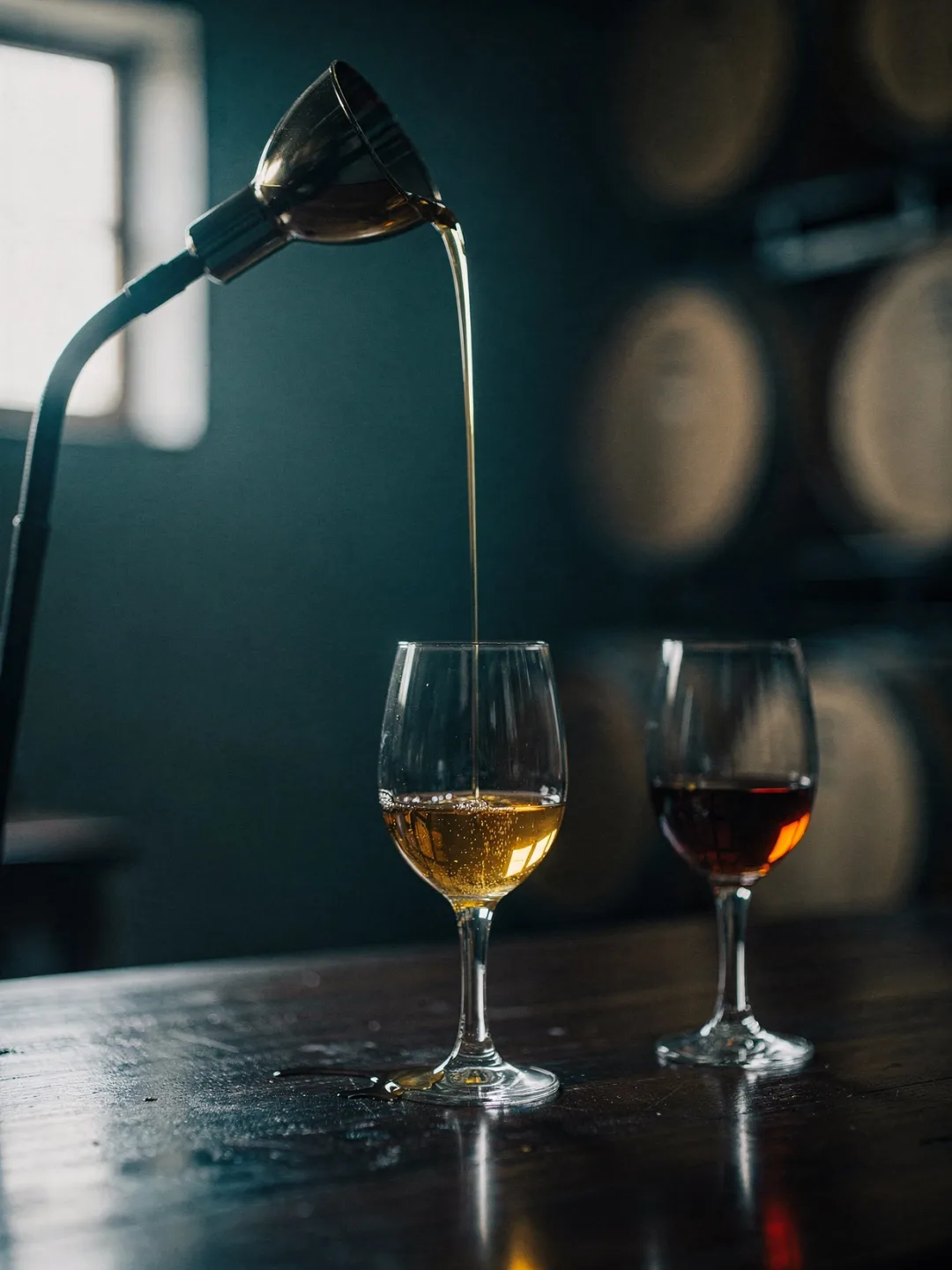
Venencia in the Glass
Tasting
A Venenciador dips a narrow silver cup on a long, flexible rod straight down through the Flor. He disturbs the yeast layer as little as possible, draws the wine from beneath the surface in the barrel, and then raises his arm above head height. He lets the wine fall into the glass in a thin, unbroken stream — a skill that takes years to make look effortless.
Hold a glass of Fino against something white: the color ranges from pale straw-yellow to a faint tinge of green. An Amontillado shifts toward amber, an old Oloroso toward deep mahogany, a Pedro Ximénez almost to black. What's remarkable is that this entire range comes from the very same pale grape. Only time and air paint the color.
On the nose, a Fino or Manzanilla shows almond first, then chamomile and fresh bread dough. In a Manzanilla from Sanlúcar de Barrameda, there's also a distinctly salty edge from the proximity to the sea. That's no linguistic coincidence — the chamomile plant is also called manzanilla in Spanish, but shares nothing with the wine besides the name.
An old Oloroso, by contrast, smells of walnut, dried fig and sometimes tobacco. This develops through decades of open contact with air in the wood. You can barely taste the wood itself, since the Botas are old and spent; unlike with a young Bordeaux, the barrel here contributes no vanilla notes of its own, only the slow admission of oxygen.
Rarest of all is a happy accident that only gets its name after the fact. A barrel starts out as Fino, but its Flor unexpectedly dies before the wine was meant to lose it. What remains continues to mature oxidatively. It combines the finesse of an Amontillado with the body of an Oloroso. Cellar masters call the result Palo Cortado. For centuries they recognized it by smell alone, long before any textbook had a word for it.