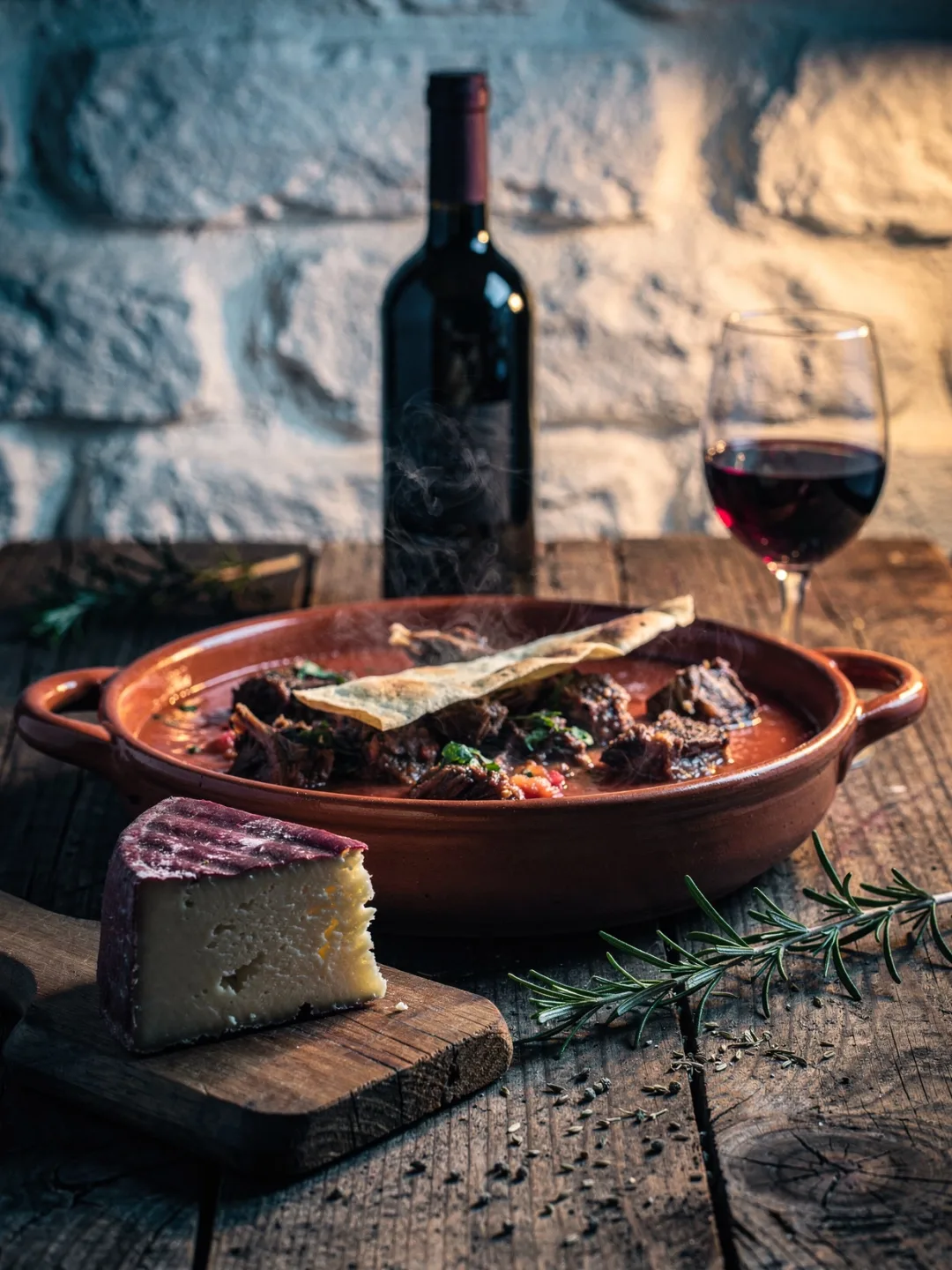
Gazpacho and cheese
Wine & Food
Jumilla's most famous dish needs hardly a plate. Gazpacho jumillano is a hot game stew made from rabbit, hare, or partridge, along with land snails, thyme, and rosemary. It's thickened not with potatoes or rice but with pieces of torta cenceña, a wafer-thin, unleavened flatbread. Traditionally eaten straight from the shared pan, the crisp bread pieces double as an edible plate.
No understated wine belongs with this dish. The game meat brings fat and a robust, slightly gamey flavor of its own. A Monastrell responds to exactly that with its ripe, firm tannins: they wrap around the fat instead of being overwhelmed by it. Thyme and rosemary in the pot also meet the same herbal notes, which resurface in the glass the moment the wine is swirled.
With cheese, the connection becomes even more direct. Queso de Murcia al vino, a goat cheese from the region, gets its dark red rind because it's bathed twice in red wine during aging. That wine comes from the area's Denominaciones, Jumilla included. The regulatory board for this cheese is even based in the town of Jumilla itself, just a few streets away from that of the winemakers.
This means the cheese already carries the wine within it before a single glass is even poured. Salt and fat in the dough soften a young, still-angular tannin, making it almost creamy. The wine, in turn, supports the mild acidity of the goat cheese, and the fact that two products from the same dry plateau find each other at the table is rarely as literal as it is here. Jumilla's cuisine is shepherd's cuisine. It emerged from scarcity and drought, not abundance, and a wine that has seen just as much sun and just as little water simply fits right in.