On a Monastrell
Tasting
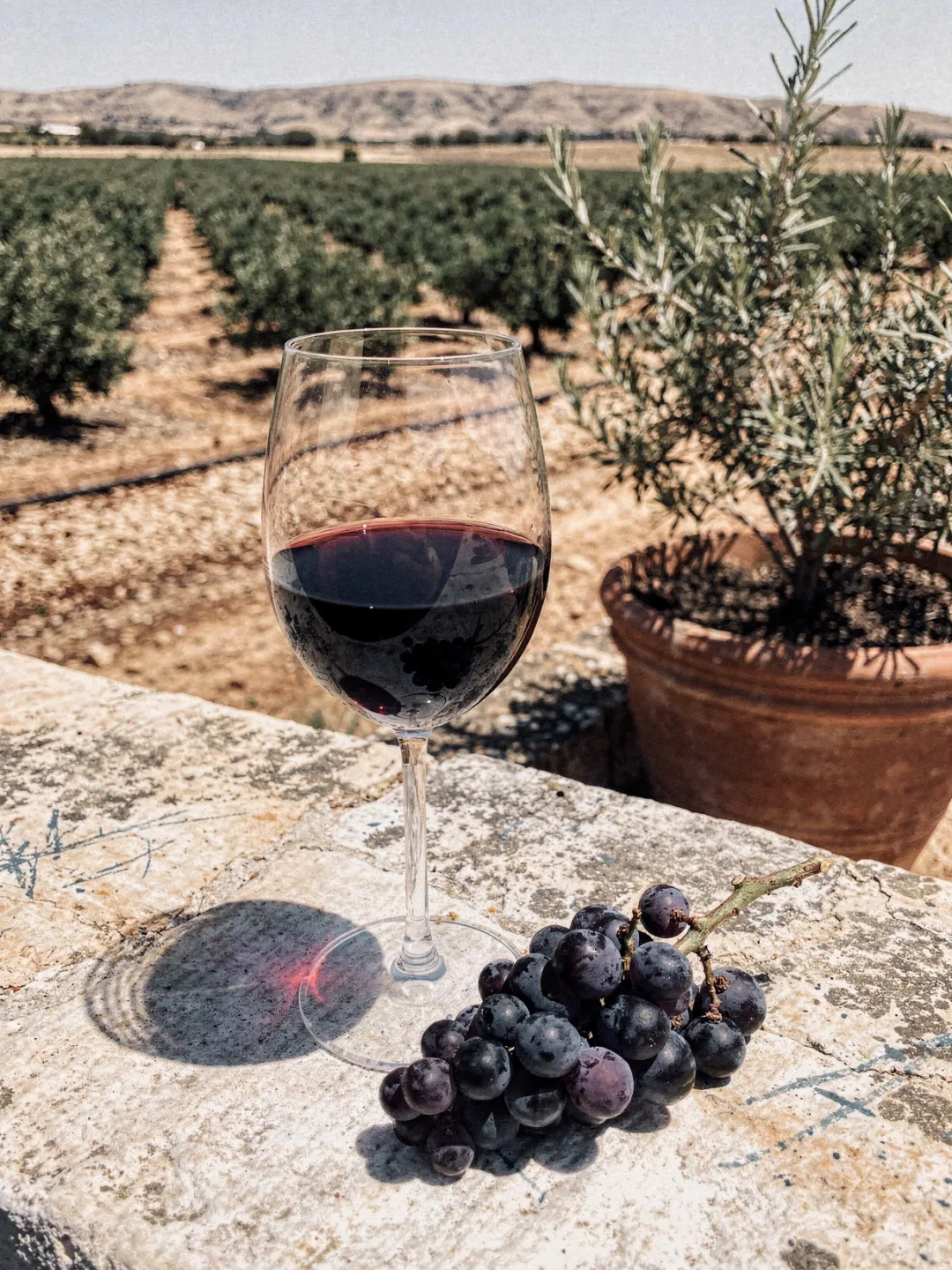
Take a glass of Jumilla Monastrell and hold it against something bright. A young wine often appears almost opaque, a deep blue-violet through which barely any light passes — the result of thick skins and a summer full of sun. Only after years does the color shift to brick red at the rim, while the core stays dark for a long time.
Sniff twice rather than just once. In a still glass, ripe, dark fruit comes first: plum, blackberry, sometimes blueberry, dense and warm like overripe fruit in the midday sun. Swirl the glass, and a second layer opens up beneath it — thyme and rosemary, a hint of leather, black pepper, and in older vintages even cocoa. Some winemakers speak of a wild, almost animal-like undertone that appears in Monastrell more often than in most other red varieties.
In the mouth, volume hits first. The wine fills the entire palate, fleshy and dense, before the tannins even take hold. They're ripe and rounded, not angular — an effect of the intense sun, which ripens tannins faster than in cooler vineyards. Acidity stays in the background, noticeable but never dominant, and the alcohol, often fourteen or fifteen percent, brings a distinct warmth to the throat.
Swallow and count. How long does the flavor linger after everything else has faded? In a good Jumilla, that's twenty seconds or more, dark fruit slowly giving way to spice. This length doesn't come from the cellar. It comes from small, concentrated berries that a dry summer on the Altiplano compressed for months, long before a single grape was ever picked.