Mojo meets Malvasía
Wine & Food
Canary cuisine is defined by simple ingredients that still manage to grow in poor soil: small potatoes, fish from the Atlantic, goat cheese, and spicy sauces made from red pepper and garlic. The wine served alongside has always had to make do with little while carrying a lot. That's still reflected today in how the islands' wines taste.
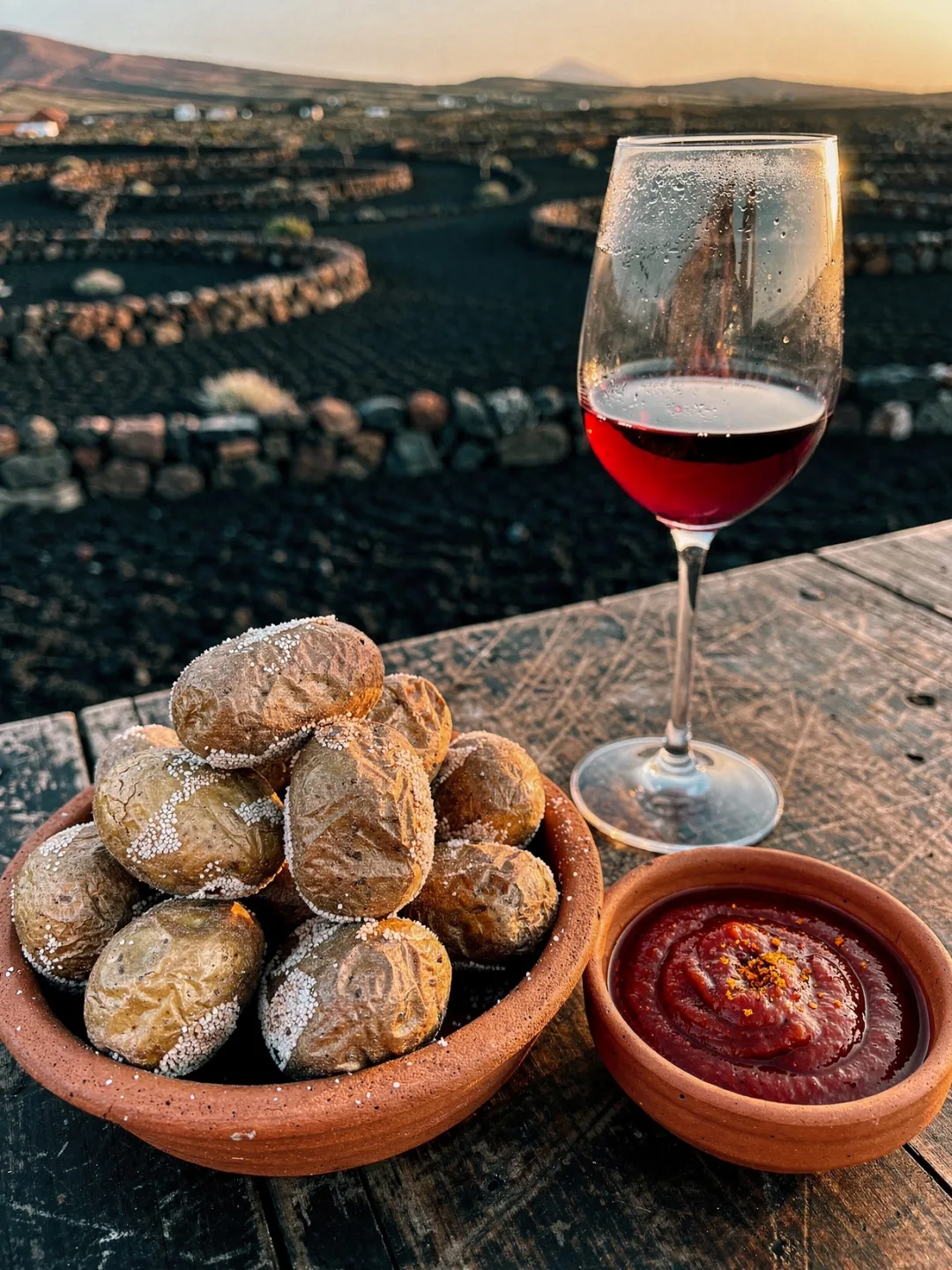
Papas arrugadas—small potatoes cooked in heavily salted water until they develop a wrinkled salt crust—are as much a part of the islands as the sea itself. They're served with mojo, a cold sauce made from oil, vinegar, garlic, and spices: green with coriander for milder dishes, or red and fiery with dried chili for bolder ones. The best match for the heat of mojo picón is a young, chilled Listán Negro. Its acidity douses the spice rather than amplifying it.
Grilled fish—often vieja or cherne caught in local waters—calls instead for a dry white made from Malvasía Volcánica or Listán Blanco. Its acidity cuts through the oil the fish is typically cooked in, while its subtle saline finish simply echoes what's already on the plate. No coincidence there.
With aged, often smoked goat cheese from the islands—Queso Palmero from La Palma, for instance—that same Listán Negro suddenly feels rounder, as the fat and salt soften its tannins. The picture changes considerably with rabbit in salmorejo canario, marinated in vinegar, garlic, paprika, and cumin before being seared, a dish that can happily take a wine bolder and spicier than what's typically found on the islands.
With dessert, the tables turn. A dry wine suddenly tastes thin and sharp next to something sweet. That's why gofio mousse or candied fruit call for a sweet Malvasía—luscious and rich, just as it was when English royal courts drank this very wine from the Canaries.