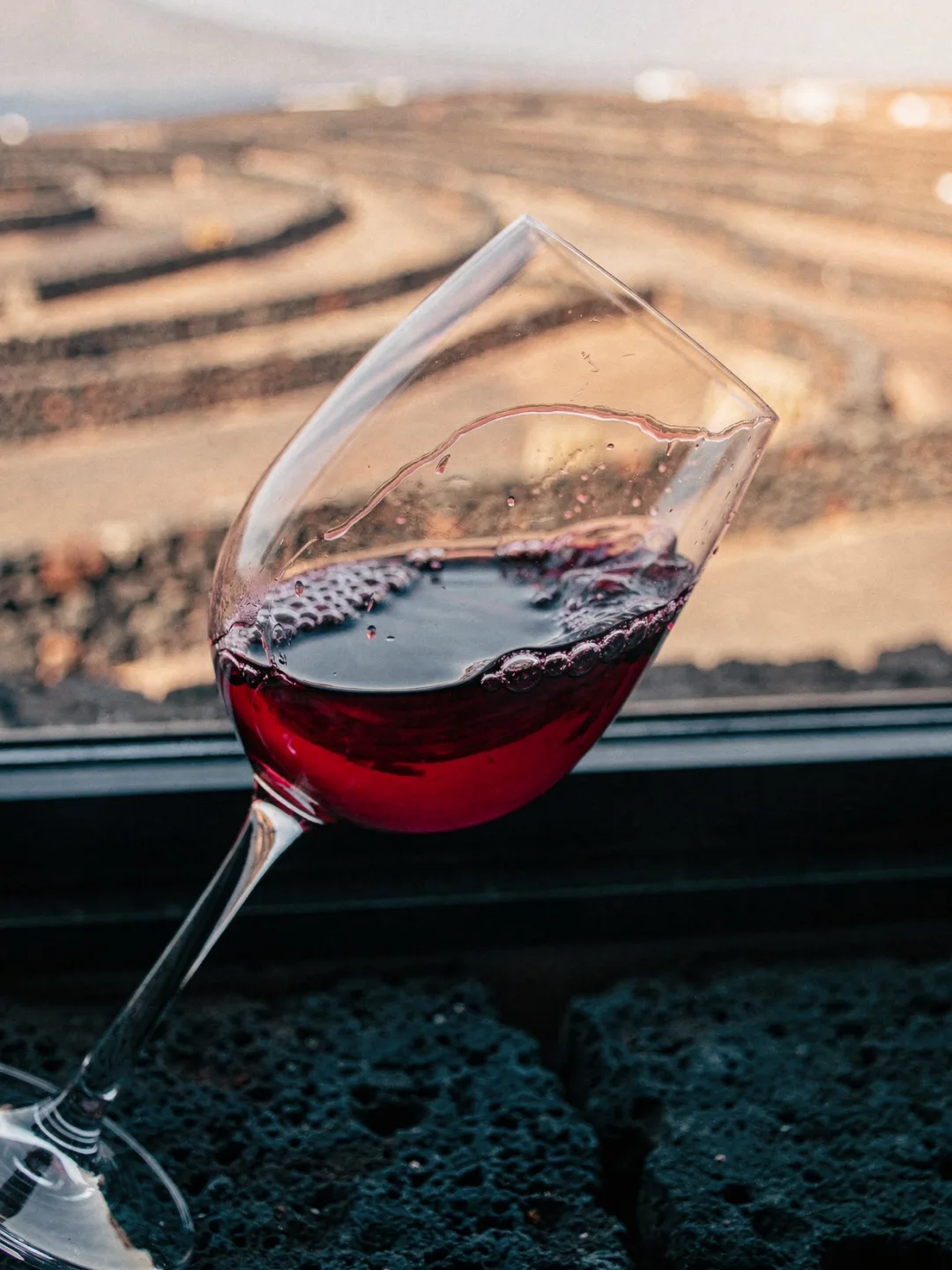
A Listán, up close
Tasting
Color is the first thing that reveals what's in the glass. Tilt it against something white: Listán Negro looks strikingly pale for a red wine, cherry-red to almost translucent, with a violet tinge at the rim when the wine is still young. That's not a flaw — Listán Negro simply builds very little pigment into its skin.
Smell first without swirling the glass, then again after swirling. In a still glass, red fruit usually rises first — sour cherry and wild strawberry — since the lighter aroma molecules evaporate first. After swirling comes what's heavier and takes longer: black pepper, dried herbs, and a hint of ash that seems to rise straight from the picón beneath the vine.
On the palate, acidity strikes first — high and direct, almost making your mouth water. Right behind it comes something connoisseurs call salty, a mineral edge many attribute to the proximity of the Atlantic and the volcanic soil. That explanation is unproven, but the impression itself is hard to argue away.
Tannin, the rough sensation on the gums after a sip, is deliberately restrained in this wine. Where a Cabernet Sauvignon can still feel edgy years later, a young Listán Negro is already approachable — almost delicate — on the very day it's bottled. Anyone who considers hard tannins a mark of quality needs to rethink that with this variety.
Finally, count the finish: how long does the flavor linger after you swallow? For a good Listán Negro, that's often ten to fifteen seconds despite its light body, carried by the very acidity that made it feel so alive at first. Length can't be built into a wine after the fact in the cellar — either the grape brings it, or the wine stays short and fleeting.