Limestone, Clay, Crust
Soils
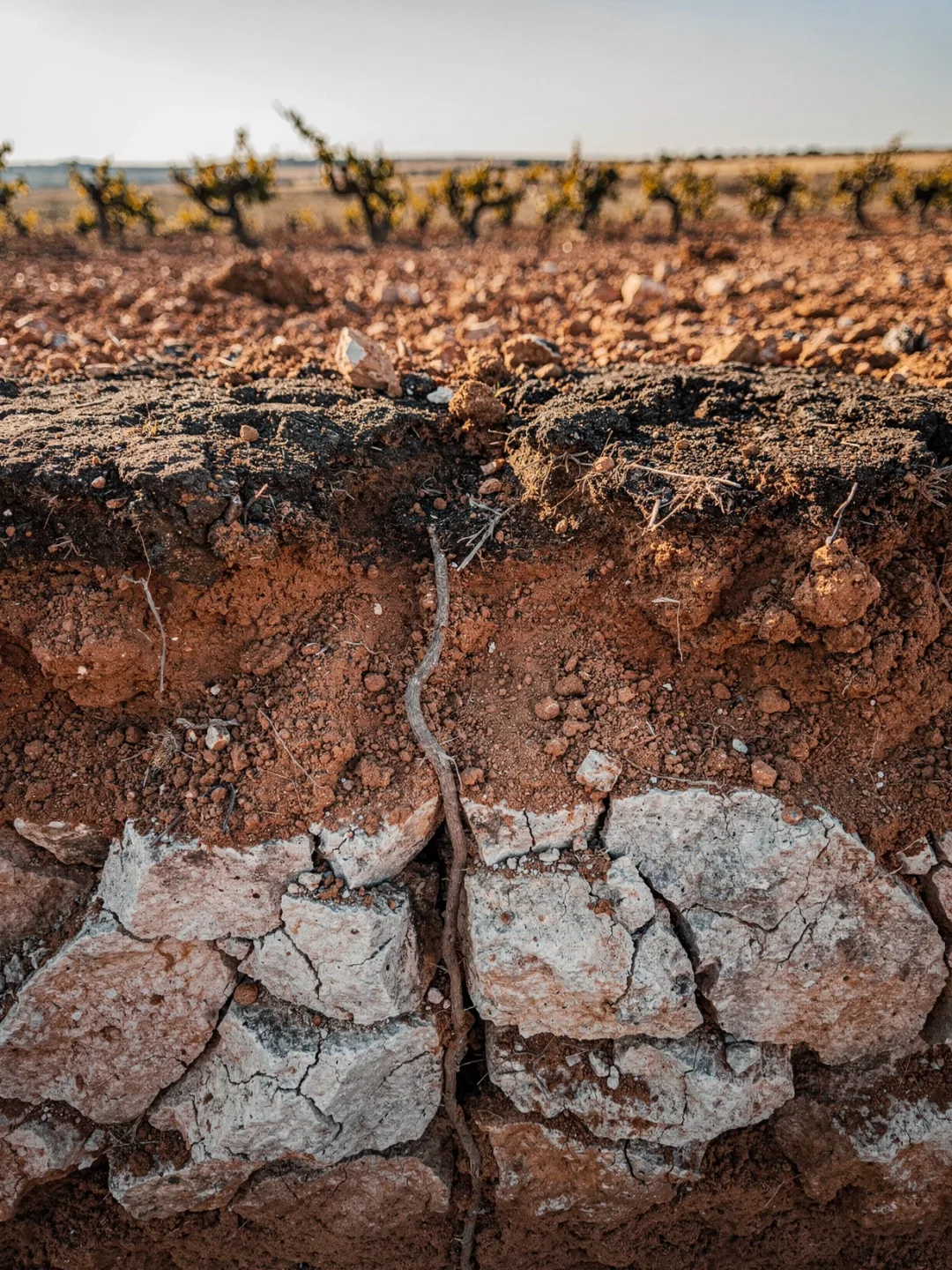
Dig a hole in a vineyard near Manzanares. The first three hand-widths are reddish-brown, sandy clay, poor in organic material as is typical for the whole region, but rich in limestone and chalk. No wonder rain barely leaves a puddle here: the water disappears almost as fast as it falls.
Below that, it gets hard. In many parcels a veritable limestone crust forms, the costra caliza, hard as screed and sometimes several centimeters thick. Growers have to break it up, otherwise no root can get through. This work is so routine that it's even specifically mentioned in the official regulations of the Denominación — a soil that resists its own vines.
Only beneath that, often not until a meter down, does the actual foundation follow: pale limestone, marl and sand from a sea that lay here millions of years ago in the Miocene. This layer stores the little water that seeps through. It's exactly there that the roots seek refuge in dry summers.
What comes of this is well known and officially documented. La Mancha's limestone-rich soils yield powerful, high-alcohol red wines with good aging potential, while the sandier, likewise calcareous parcels tend to produce dry, high-strength wines. Two soils, two styles — and sometimes they're separated by nothing more than a farm track.
The barren soil forces every vine into small yields, and a plant that carries little puts its energy into fewer, more concentrated berries. This concentration is exactly why La Mancha's thin, unremarkable earth still produces wines with substance. Sparse here is not the same as weak.
Reddish-brown, sandy clay, poor in organic material and rich in limestone and chalk. After rain, hardly a puddle remains here.
The root: The fine roots grab what the rare rain brings — and within a few days are back on their own again.