Cold, heat, drought
Climate
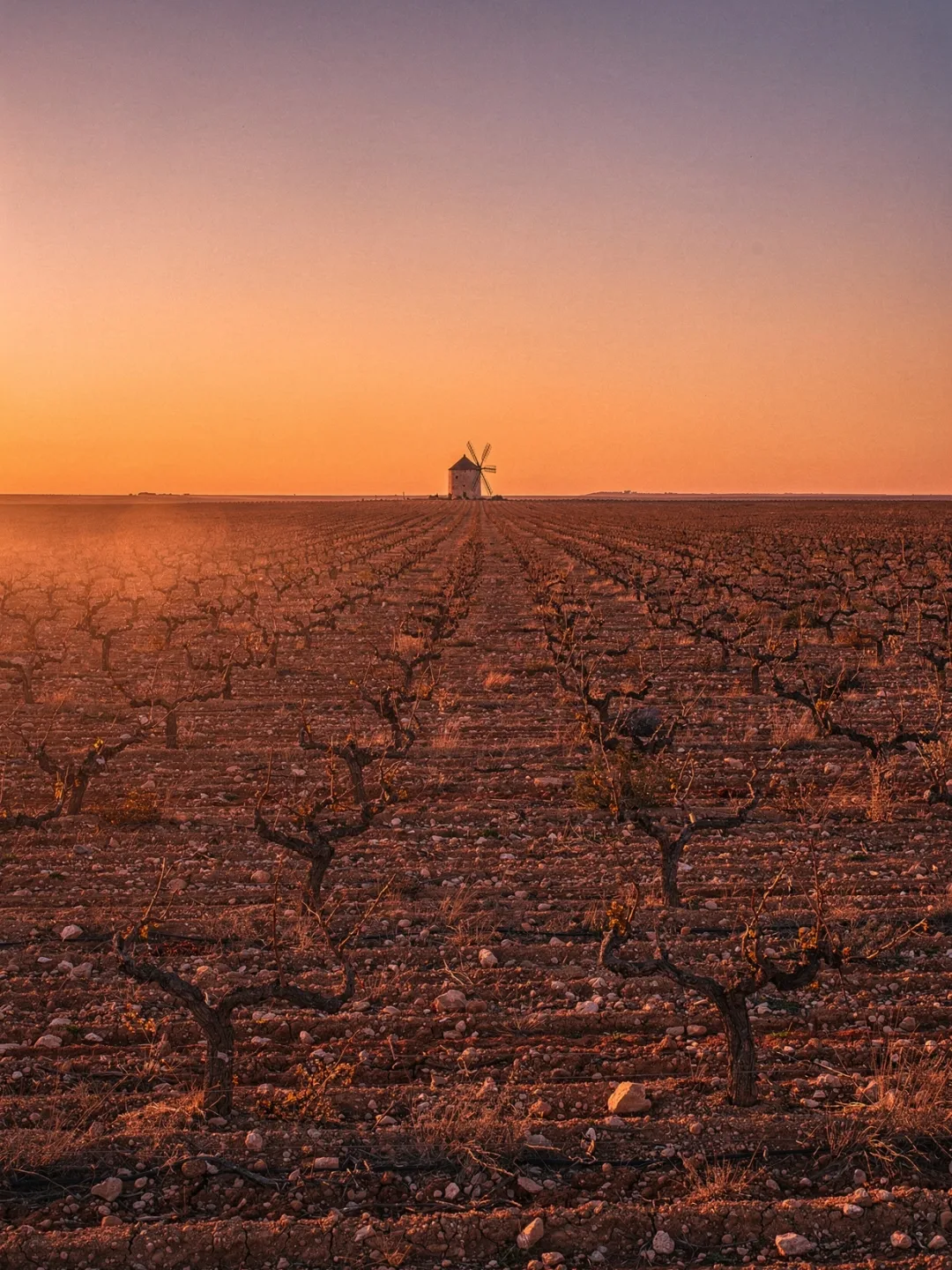
Anyone crossing the Meseta, the high plateau south of Toledo, from north to south climbs very gradually. At the northern edge of the zone, you're at 484 meters above sea level; in the center of the plain, at 700; near Manzanares, it drops again to 645. Most vineyards sit between 600 and 800 meters in elevation — across an area that, seen from below, looks as though there were no mountains there at all.
This elevation meets a mercilessly dry climate. Between 300 and 350 millimeters of rain fall here per year, alongside more than three thousand hours of sunshine. Fungal diseases struggle under these conditions. In exchange, the mercury climbs to as much as 45 degrees Celsius in summer, and winters can drop to minus 15 degrees.
Within a single day, the difference is even more dramatic. La Mancha ranks among the regions with the greatest temperature swing between day and night on the entire Iberian Peninsula. During the day, the berry builds up sugar under the blazing sun; at night, the temperature drops sharply and preserves what acidity would otherwise have long since cooked away. Without this nightly plunge, the wines would taste flat.
On such dry soil, a vine naturally bears little fruit. The regulations allow a maximum of ten thousand kilograms of grapes per hectare for the traditional, free-standing bush vines, the vaso, and somewhat more for wire-trained vines: thirteen thousand kilograms. These low yields aren't a concession to quality — they're simply what the plain produces without artificial irrigation.
In the end, almost every year brings enough sun for ripe, robust wines. The Denominación itself cites a typical alcohol content of between eleven and fourteen percent, and even higher in hot vintages. Winemakers here rarely fight against underripeness. They fight against too much of everything at once.