Pisto, Queso, Duelos
Wine & Food
La Mancha's cuisine is the cuisine of a stark, vast plain: lots of bread, lots of lamb, hardly any fish, little refinement. And it's exactly this that the wines pair with.
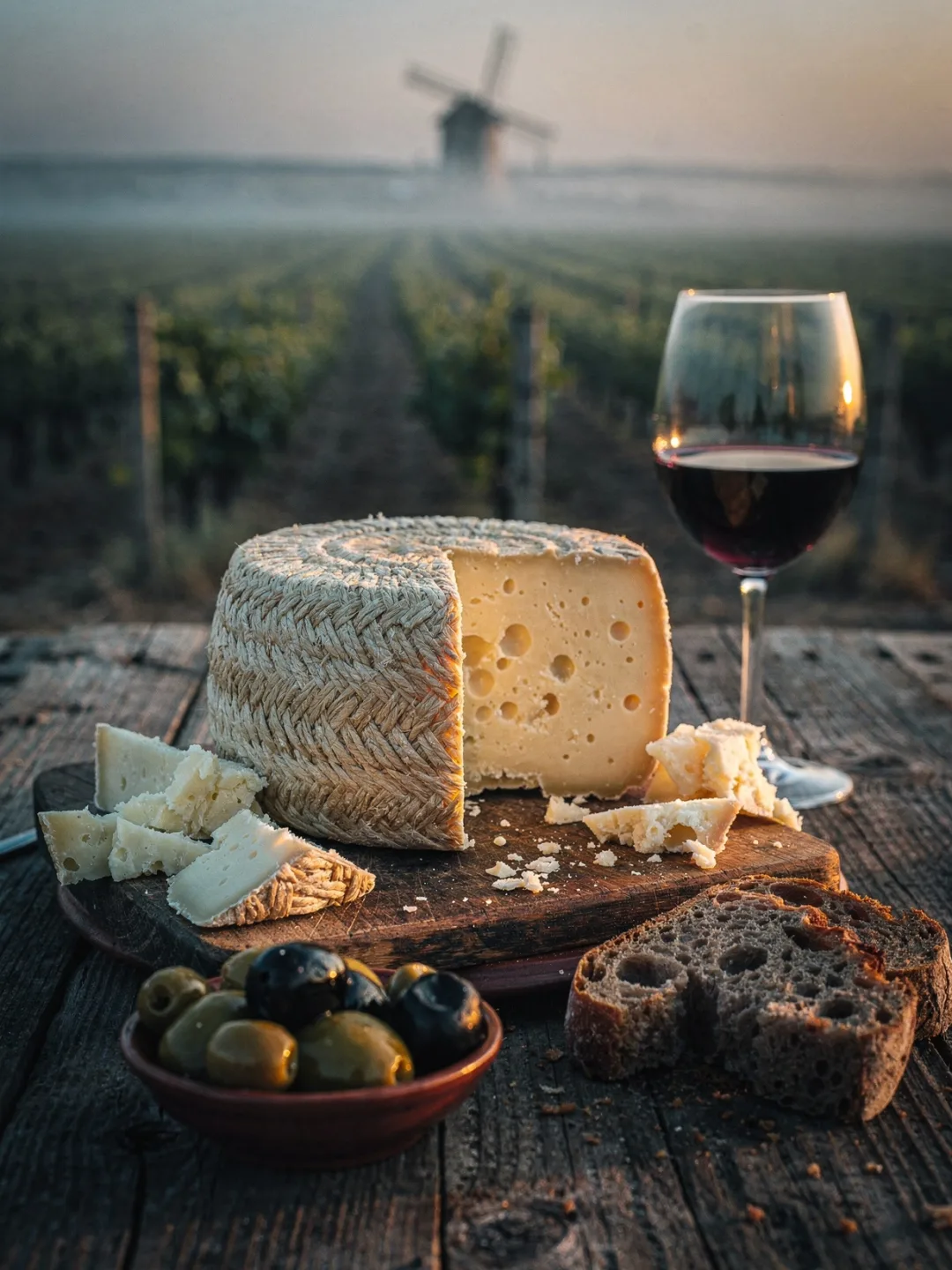
Queso Manchego, made from the milk of the native Manchega sheep, still bears the zigzag imprint of the esparto cord once used to press it into its rind. Young, aged one to four months, it tastes mild and pliant; as an añejo with over a year of aging, it turns hard, spicy, and almost sharp. Two cheeses under one name. Salt and aging soften the tannin of a Cencibel Reserva, which is why this aged cheese pairs so well with the aged red wine.
Pisto Manchego, by contrast, is a summer dish: tomato, pepper, zucchini and onion, slow-braised, often topped with a fried egg. Fat and sweetness need a counterweight. A chilled Airén, with its noticeable but never overbearing acidity, cuts through this dish just right, turning a heavy vegetable plate into something light again.
Gazpacho Manchego, often called Galianos, has nothing to do with the cold Andalusian soup despite its name. It's a hot stew made from game, usually rabbit, sometimes partridge, with pieces of unleavened flatbread, the Torta Cenceña, soaking up the broth. The name is said to come from galianas, the old cattle-droving routes toward France. This rich, spicy dish absolutely calls for a robust Cencibel, otherwise the more restrained wine gets lost next to the intense game.
At the start of Cervantes' novel, Don Quijote eats duelos y quebrantos on Saturdays, scrambled eggs with chorizo and bacon. It's a simple dish of poor country folk, named after the grief over dead livestock, from whose remains it was once made. Salty bacon and creamy egg don't need a heavy wine. A young, chilled Cencibel, or even a dry Airén, is more than enough to accompany this four-hundred-year-old breakfast.