On a Cencibel
Tasting
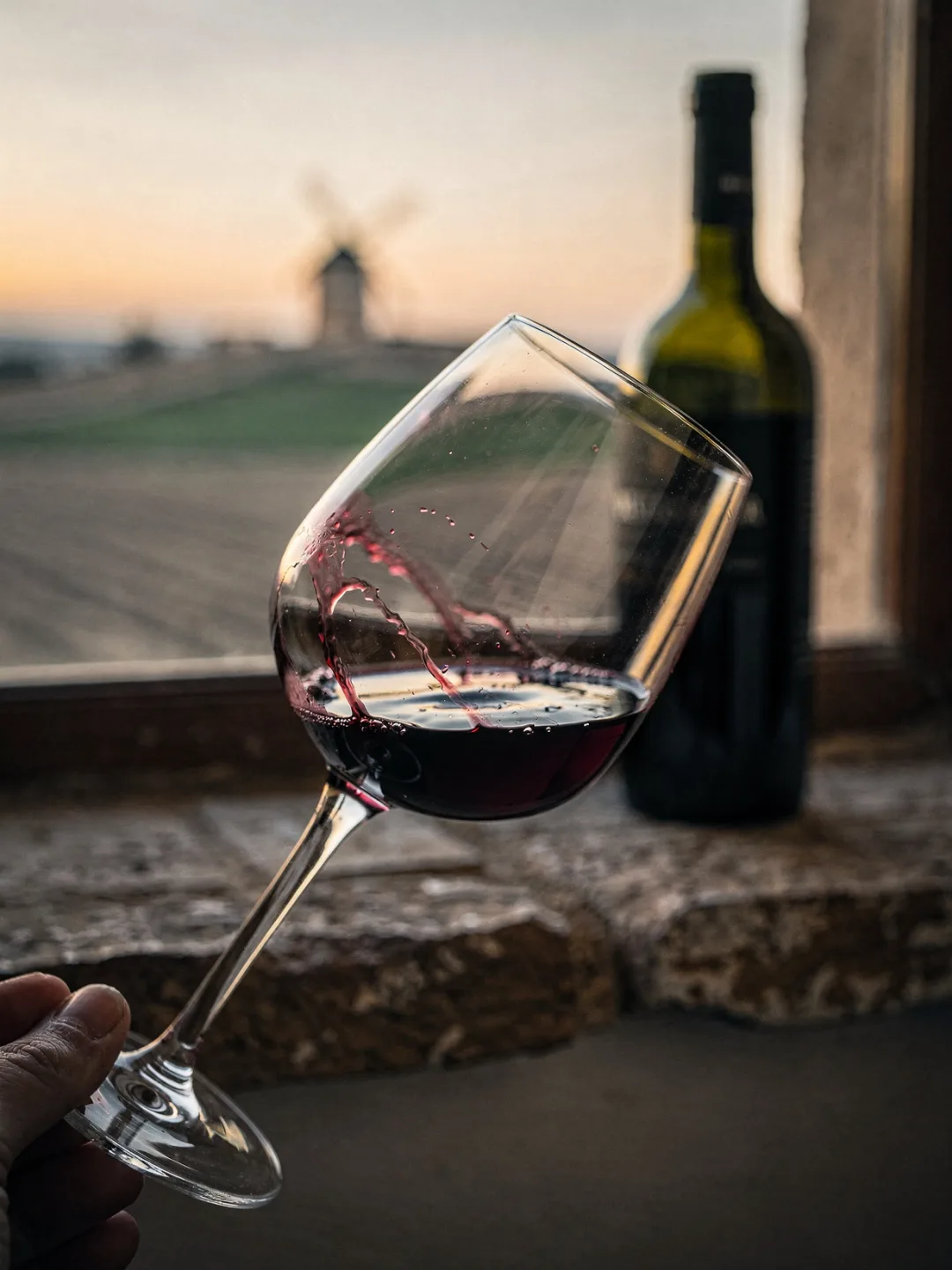
Tilt a glass of young Cencibel against a white sheet of paper. At the rim, a deep red-violet shows through, shifting toward garnet. It appears darker and denser than what you'd expect from Tempranillo grown in cooler regions. The Meseta sun is, quite literally, baked into the color.
On the nose, pure, unadulterated fruit comes first: dark cherry, sometimes blackberry, along with a hint of herbs from the dry surroundings — and this exact youthful character is described in the Denominación's regulations as "francos, afrutados" — open and fruity, with no detours. Swirling barely brings out more, because at this young stage the wine holds nothing but fruit.
On the palate, two forces meet. The tannin, felt as a dry grip on the gums, comes from the thick skins of ripe berries. The acidity, pulling along the sides of the tongue, the wine owes instead to the cool desert nights of the plain. A good Cencibel is officially described as tánico and balanced between alcohol and acidity, with a long, fruity finish. Without that acidity, the wine quickly tips into flabbiness.
Airén tastes completely different. It shouldn't be overlooked. Young, it's greenish to pale yellow, clear and fruity on the nose, lightly tart and balanced on the palate. The official description literally calls it "ligeramente ácidos." Served ice-cold, it's often the smarter wine on the table in La Mancha's summer heat — precisely because it doesn't promise much.
Finally, count how long the flavor lingers after you swallow. For a solid Cencibel, that's a good ten to fifteen seconds, carried by fruit rather than alcohol. It's exactly this balance of abundant sun and cool, acid-preserving nights that separates a good wine from this plain from one that simply tastes heavy and hot.