Tinaja, Steel, Barrica
Production
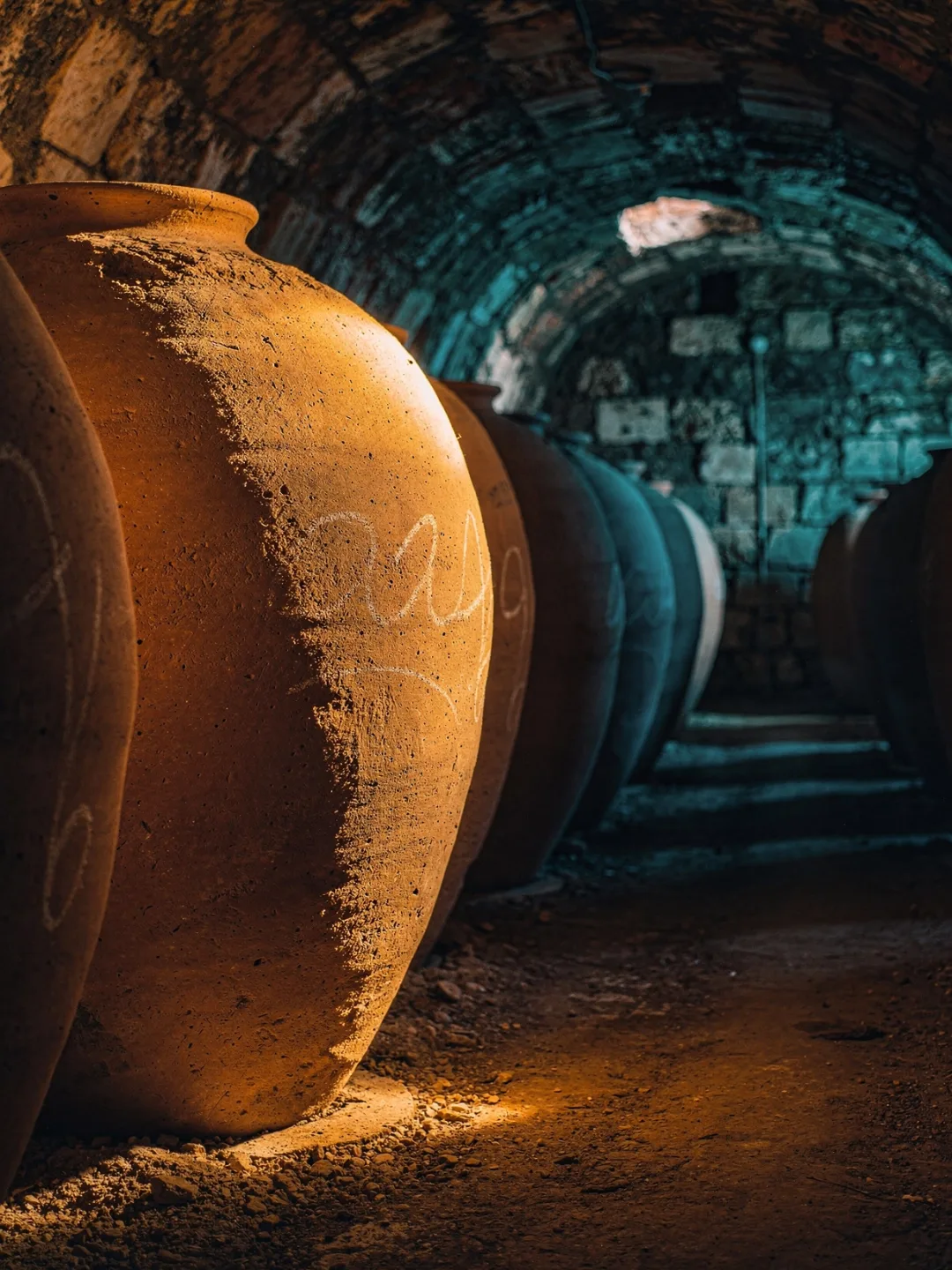
Before steel tanks existed, wine in La Mancha was aged in tinajas: bulbous clay vessels, often taller than a man, based on Roman models. Villarrobledo, one of the provincial towns in the region, lived for generations almost exclusively off the pottery trade making such vessels. Workers kneaded the clay soft with their feet before hands shaped it — work that only gave way to cheaper cement in the 1960s.
Today, the regulations of the Denominación prescribe exact temperatures. White and rosé wines may ferment at no more than 22 degrees Celsius. Young red wines may reach up to 28 degrees and must remain on the skins for at least three days so enough color and tannin transfer into the wine. Traditionally made red wines, which may also come from older vintages, allow even 30 degrees. Without cooling technology, this would be nearly impossible to control given the plain's summer temperatures.
With the aged categories, things get strict. A Crianza red needs at least 24 months of aging, six of them in oak. A white wine at the same level gets by with 18 months, also six in oak. Reserva requires a total of 36 months for red and 24 for white, Gran Reserva even 60 months for red and 48 months for white. For all three aged levels combined, the barrels may hold no more than 330 liters — significantly smaller than the 600-liter barrels permitted for simpler, barrel-fermented wines.
A niche phenomenon, but a lovely one: vino naturalmente dulce. For this, white grapes are left to shrivel in the sun or in drying chambers until the must reaches at least 300 grams of sugar per liter. It's then fermented at no more than 22 degrees. A general yield cap also applies: from 100 kilos of grapes, no more than 74 liters of wine may be produced. Press out more, and you press out water and bitter compounds along with it.
Part of the harvest never made it into a bottle. It went to the distillery. Tomelloso became the largest brandy-producing hub in the world during the twentieth century, and even Jerez houses like González Byass, Osborne, and Domecq ran their own distilleries there for so-called holandas, the raw spirit for their brandy. Surplus wine became high-proof spirit long before anyone gave serious thought to bottle labels.