Trucha, Roncal, Piquillo
Wine & Food
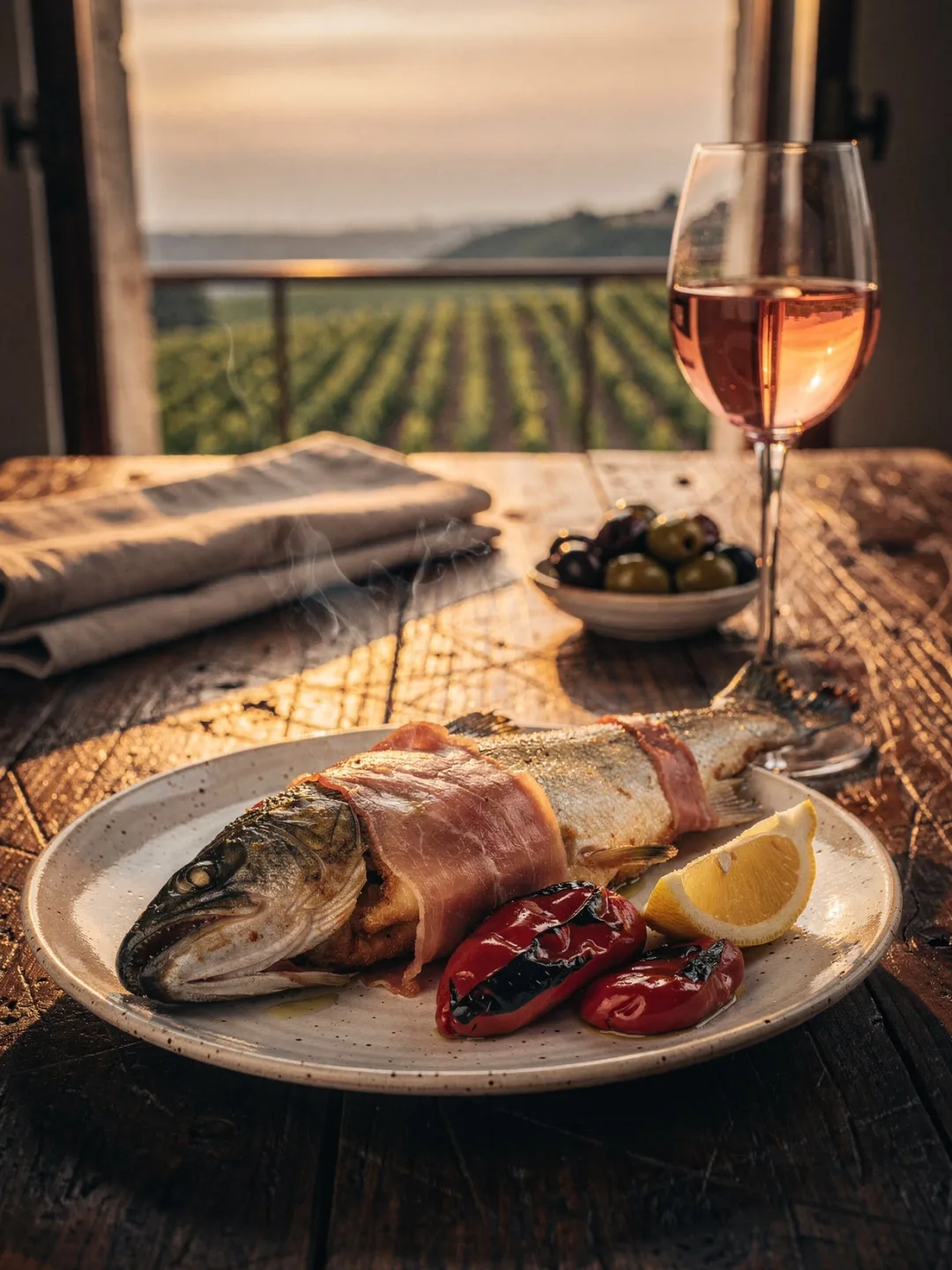
One dish stands for Navarra like no other: Trucha a la Navarra, a river trout stuffed with paper-thin Serrano ham, dusted in flour and fried until crisp. Ernest Hemingway ate it in a tavern near Pamplona back in the 1920s. Through his books he carried the dish's name out into the world, even though the recipe had already been cooked in the region's river valleys for centuries. The ham lends salt and fat to a fish that, on its own, tastes rather bland. This exact combination calls for a Rosado with bite, whose acidity cuts through the fat without overwhelming the delicate fish.
From the Ribera comes its counterpart: Menestra de Verduras de Tudela. Each vegetable — artichoke, asparagus, peas, beans — is cooked separately, since each needs its own cooking time, and only brought together at the very end. No heavy red wine suits this green, earthy dish. A young white wine made from Viura, or a pale Rosado, matches the freshness of the vegetables without drowning them out.
Things get heartier with Cordero al chilindrón: braised lamb in a sauce of peppers, tomato and onion. Pimientos del Piquillo de Lodosa are often served alongside. Protected since 1987, these peppers are traditionally roasted dry over an open flame, never touched by water. Fat in the lamb softens even robust tannin. A Reserva Tempranillo from Ribera Alta can show its full structure here without ever tasting harsh.
With cheese, the picture shifts once again. Roncal was, in 1981, the very first protected cheese designation of origin in Spain. To this day it's made from raw milk of the Latxa sheep breed across seven Pyrenean valleys and aged for at least four months. Its salty, faintly sharp flavor calls for a counterweight. A mature, barrel-aged Tempranillo becomes noticeably rounder against the salt. Surprisingly, a sweet vino de licor made from Moscatel also works beautifully, its acidity balancing the cheese's fat content.
In the end, every one of these dishes reveals the same underlying principle. Fat and salt make an edgy wine more approachable, whether fish, lamb or cheese is on the table. Too much sweetness in the food, on the other hand, makes any dry wine taste thin and sour — which is why, at dessert, you need a wine sweeter than what sits beside it.